New Services and Leadership at Sudbury Memorial, 1984–1994
Ten years, told in the hospital’s own pages.
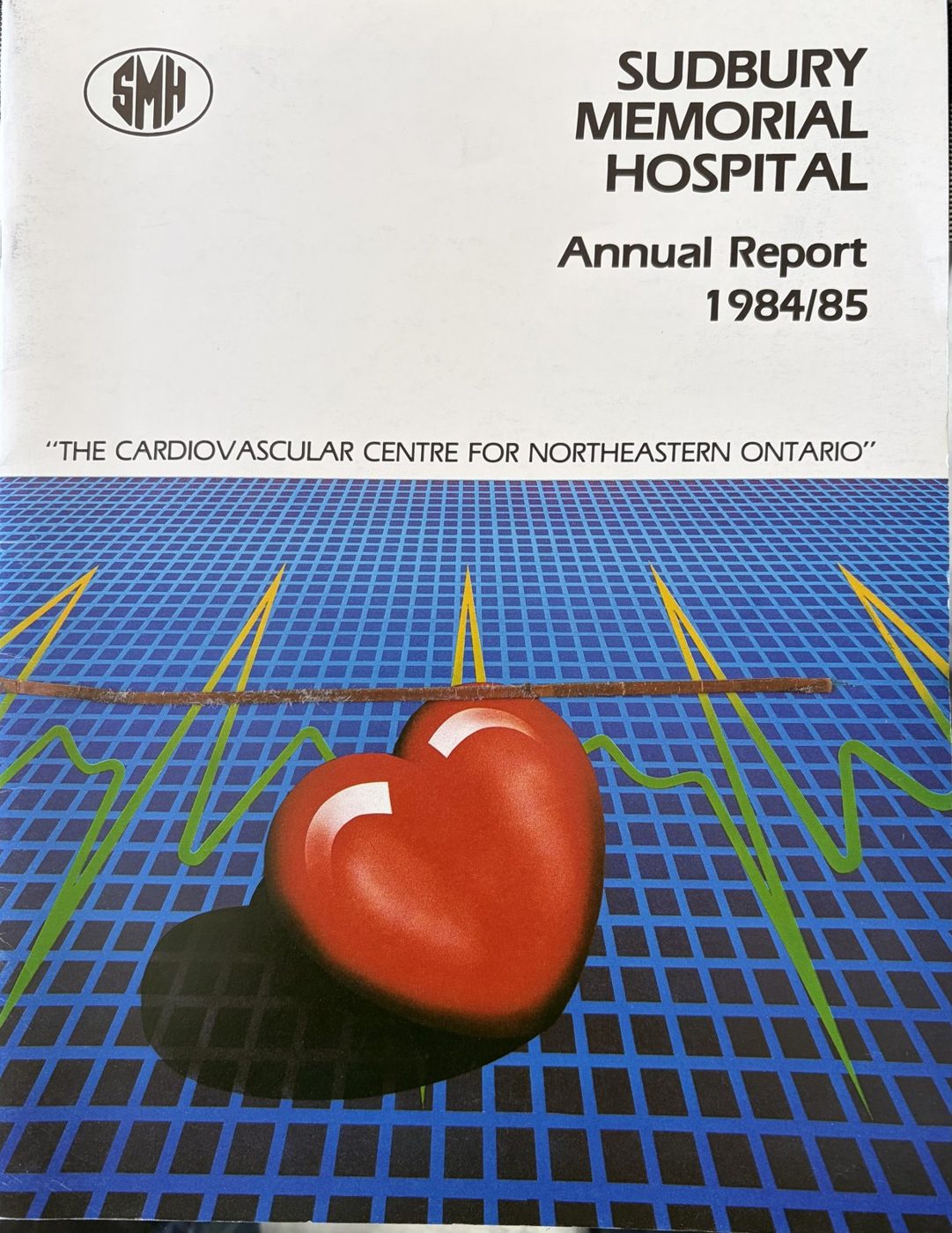
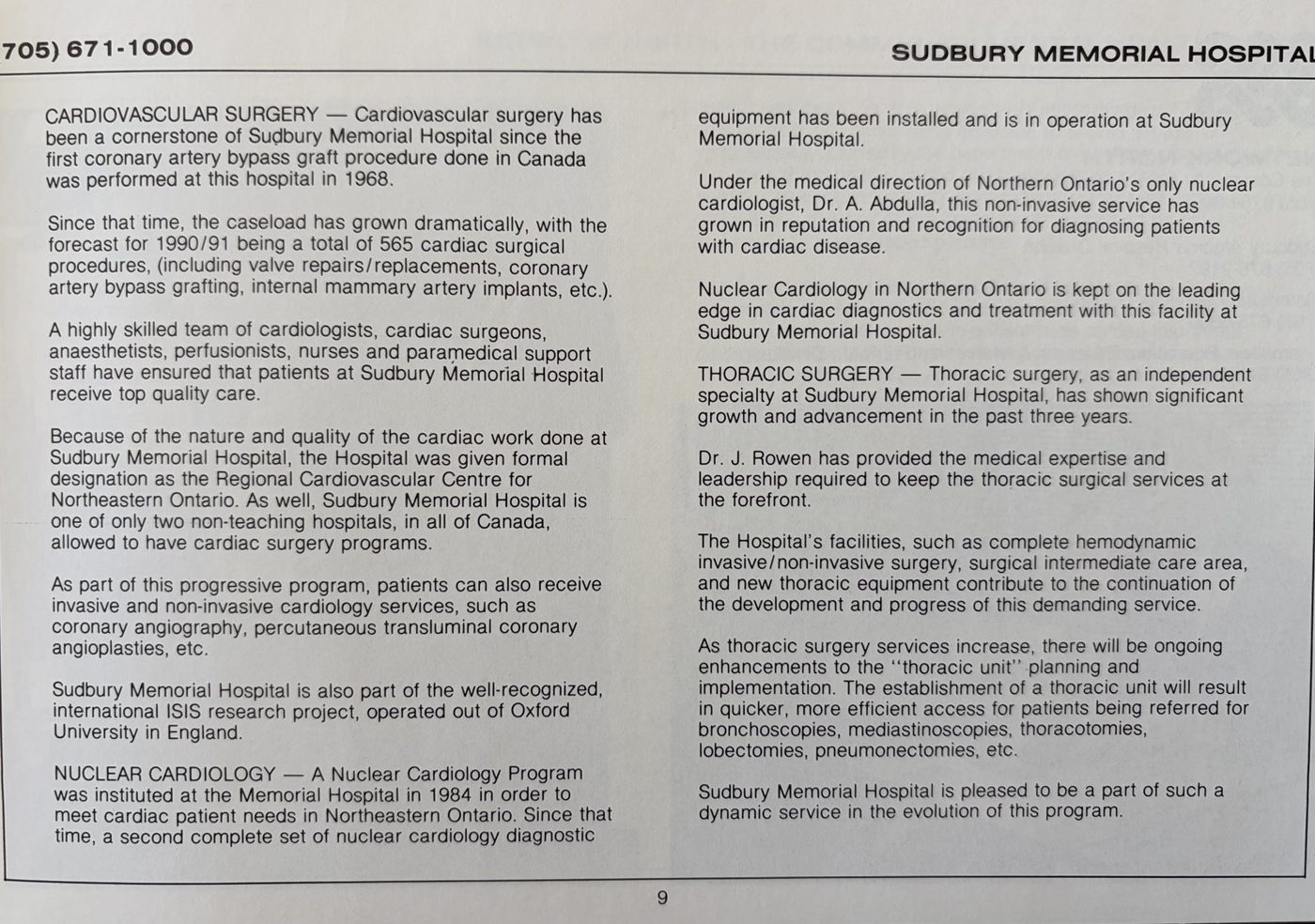
Sudbury Memorial Hospital already had a strong cardiac tradition when Dr. Abdulla arrived in 1984. Its surgeons, led by Dr. Paul Field, had performed the first coronary bypass operation in Canada in 1968, and in 1979 the Ministry of Health reinforced it as the Regional Cardiovascular Centre for Northeastern Ontario. Dr. Abdulla came to that foundation in 1984 and added new services — nuclear cardiology, a pacemaker clinic, a comprehensive cardiac rehabilitation program — and over the next ten years took on leadership of the Cardiovascular Department, a provincial role, and the community work described on the Heart Health Program page.
The evidence is in the hospital’s and the Foundation’s own annual reports, a booklet, a newspaper front page and a letter. They are shown below, year by year, as photographed pages. Click any page to read it. The credit for what was achieved is shared throughout with the surgeons, nurses, board members, volunteers, donors and political leaders who made it possible.
- 1984 — Director, Nuclear Cardiology; Director, Pacemaker Clinic
- 1984–85 — Organized and formalized the Cardiac Rehabilitation program, as its Director
- 1989 — Deputy Chief, Cardiovascular Department (cardiology, cardiac surgery and vascular surgery)
- 1990–92 — Chief, Cardiovascular Department
- 1990–94 — Cardiovascular Representative for Northeastern Ontario, Provincial Cardiac Care Network (Founder, 2000)
- To 1994 — Director, Sudbury Heart Health Program
Seven chapters on this page
Click or tap any title to go straight to it. The “Back to top” button, lower right, brings you back here.
- 1982/83The baseline: the year before he arrived
- 1984–1986Nuclear cardiology, the Pacemaker Clinic and cardiac rehabilitation
- 1986/87Fifty-four program components
- 1987–1989Approvals, fundraising and the case for a second lab
- 1990–1991The second lab and the Phase I Expansion
- 1990–1994A provincial role: the Cardiac Care Network
- 1994The farewell year, and the bridge to Aga Khan University in Pakistan
The baseline: the year before he arrived (1982/83)
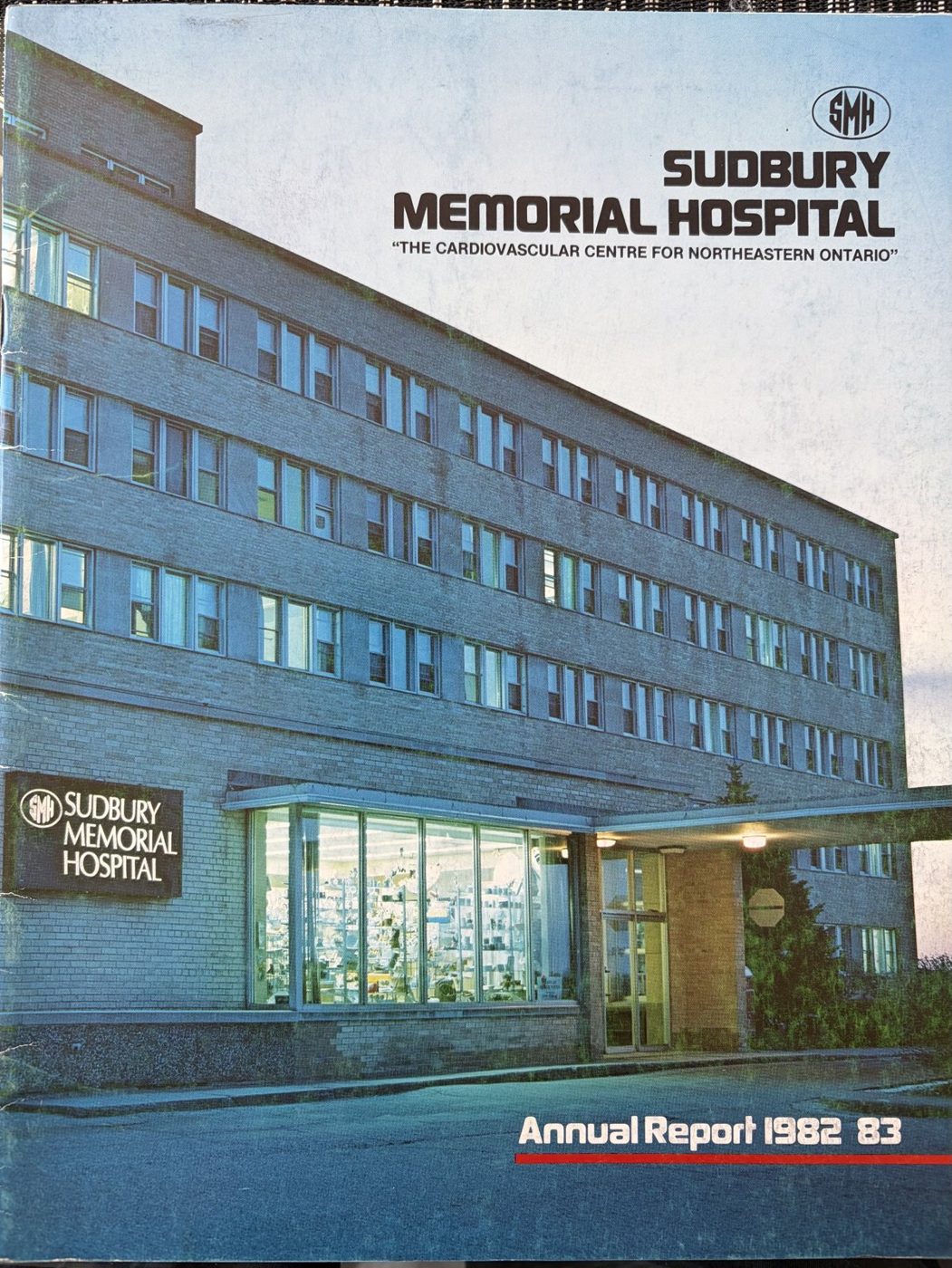
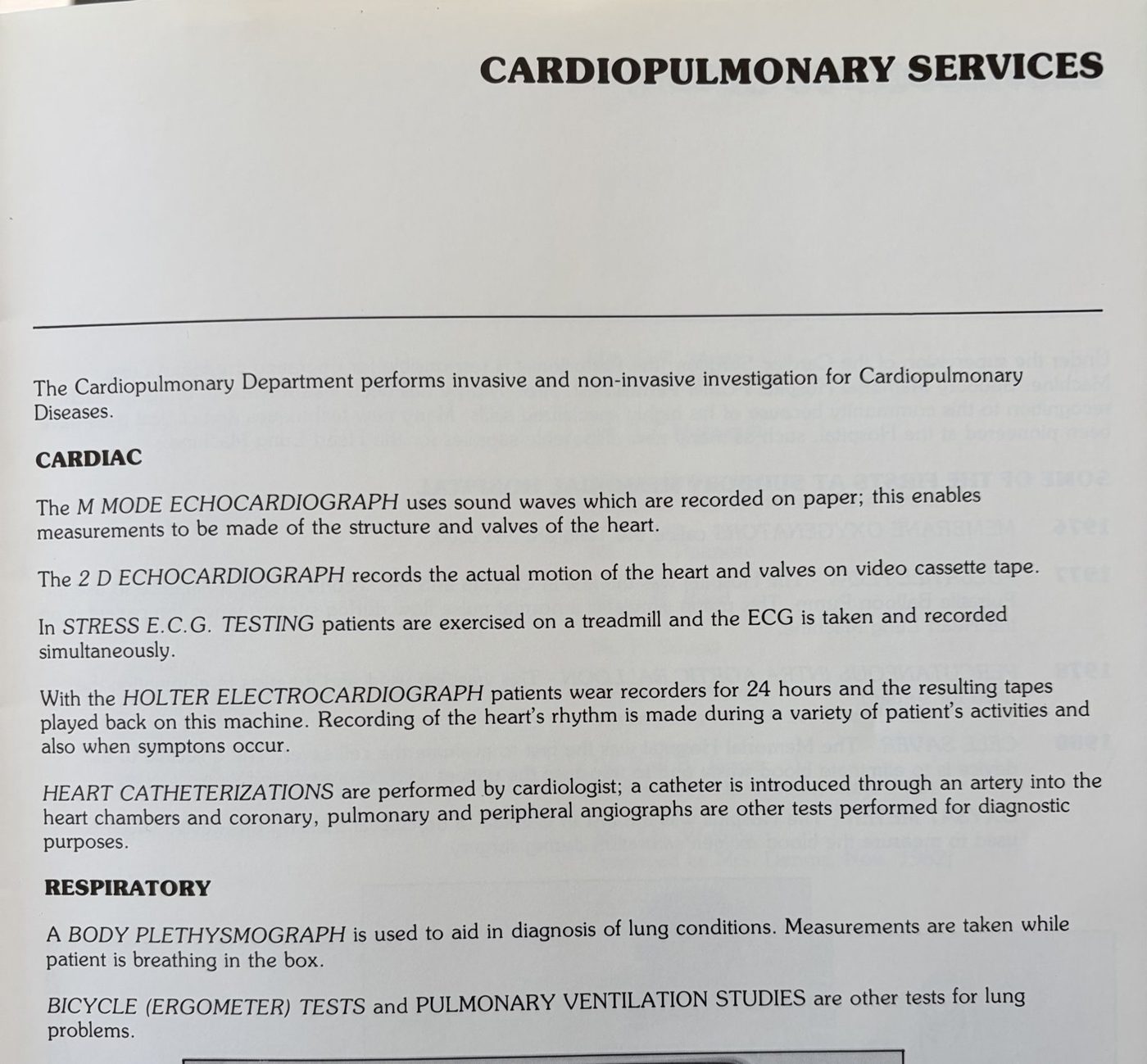
The hospital’s 1982/83 report lists its cardiopulmonary services: M-mode and 2-D echocardiography (which show the heart’s structure), stress ECG testing, Holter monitoring, heart catheterization and the lung-function tests. It does not list cardiac Doppler, nuclear cardiology, a pacemaker clinic or cardiac rehabilitation. That is the starting point.
1984–1986: Nuclear cardiology, the Pacemaker Clinic and cardiac rehabilitation
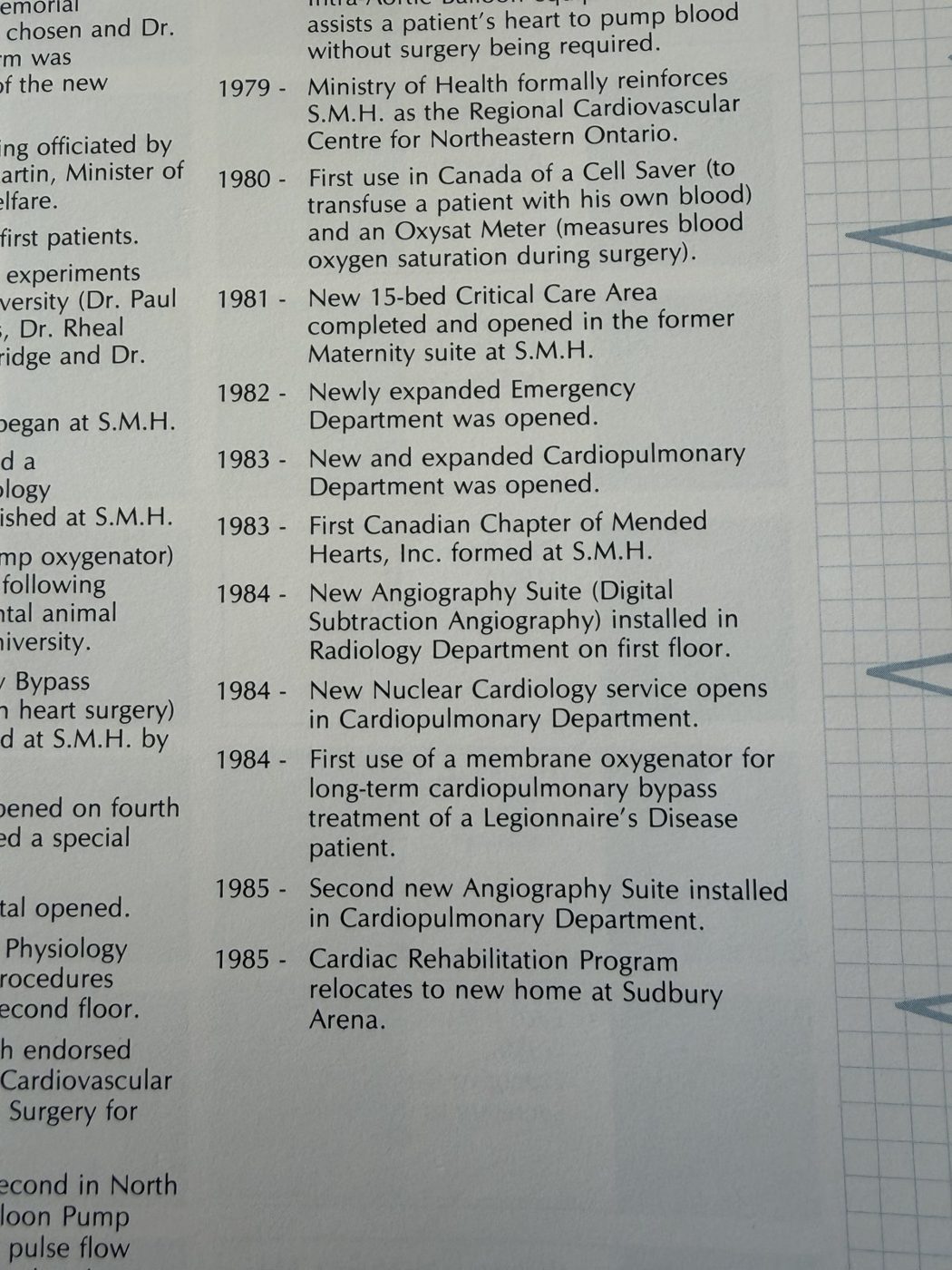
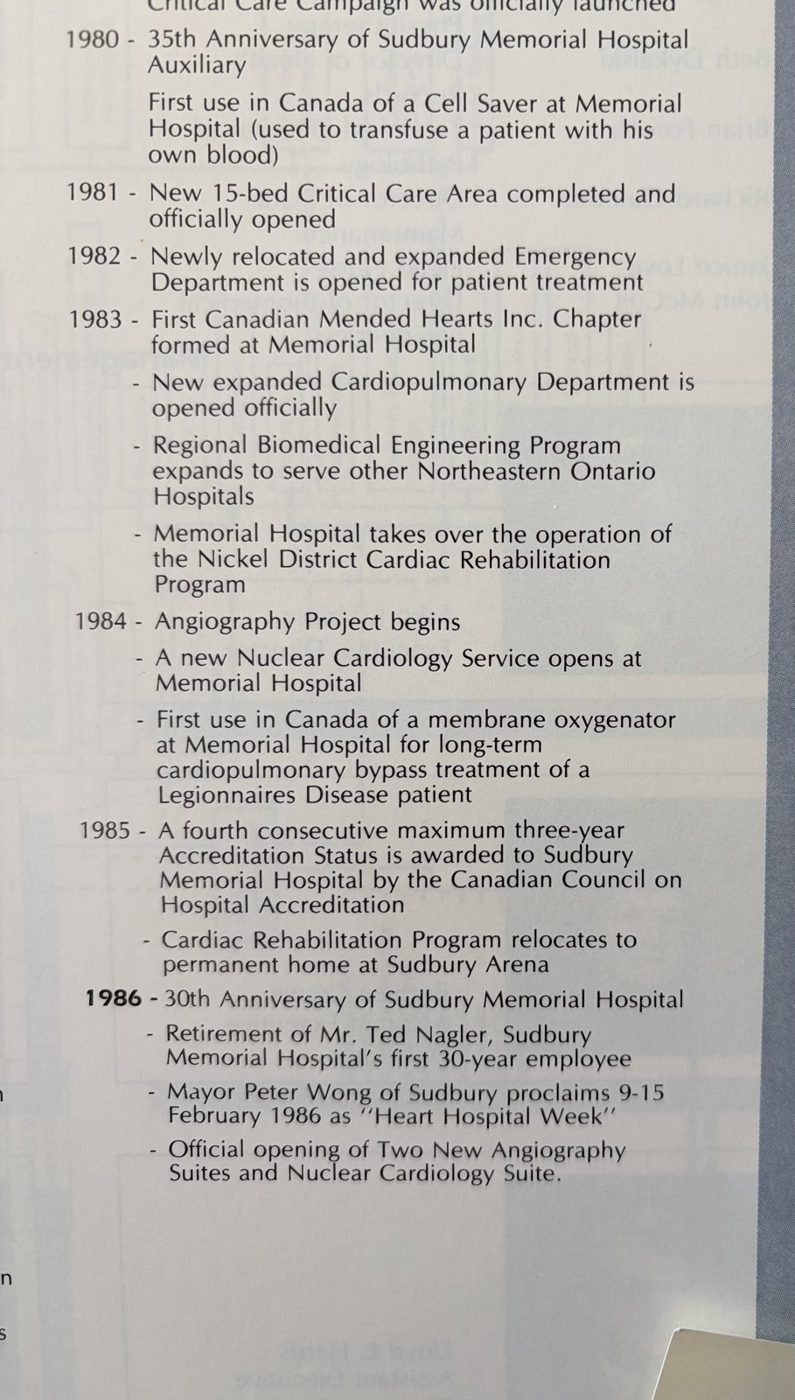
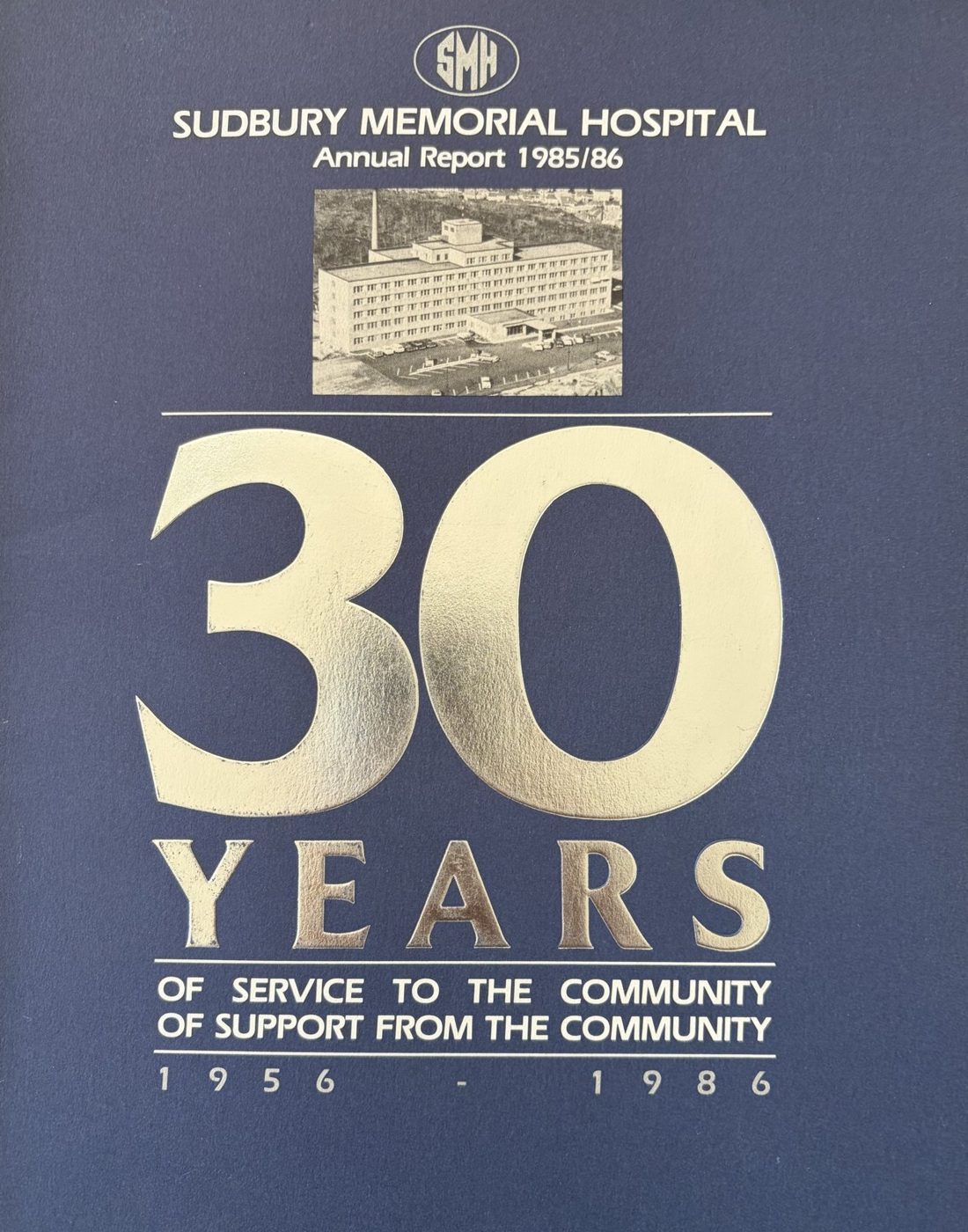
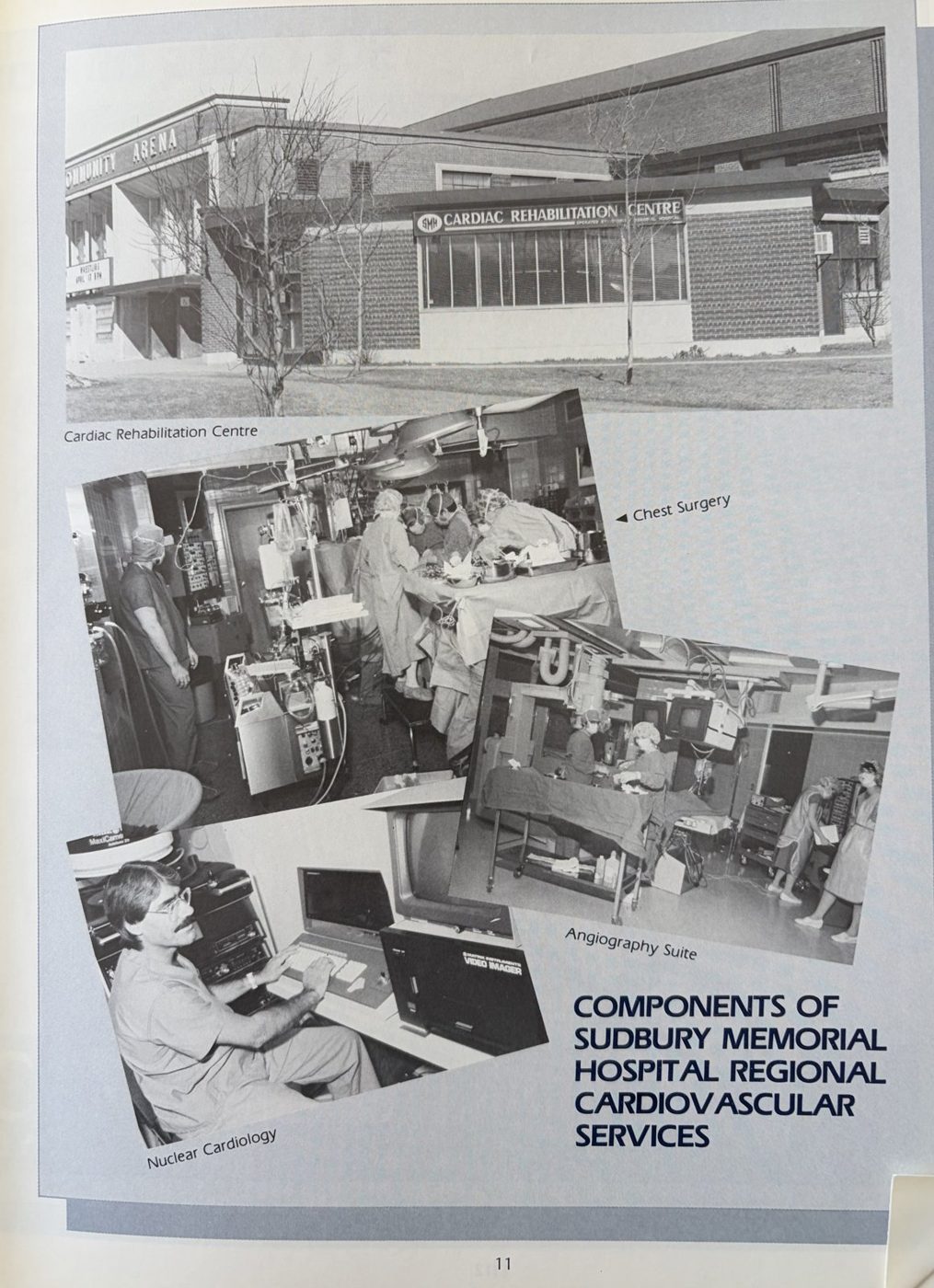
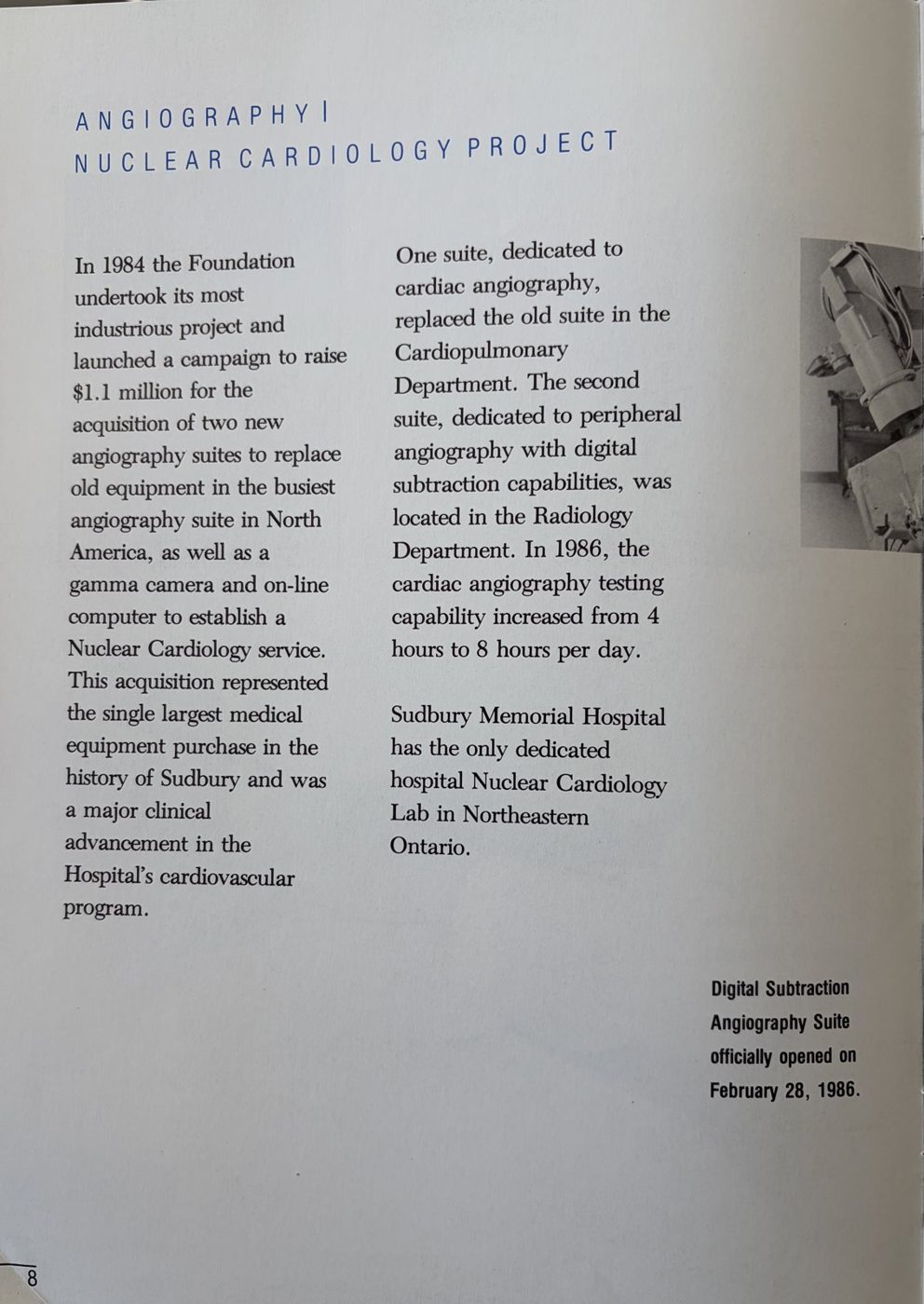
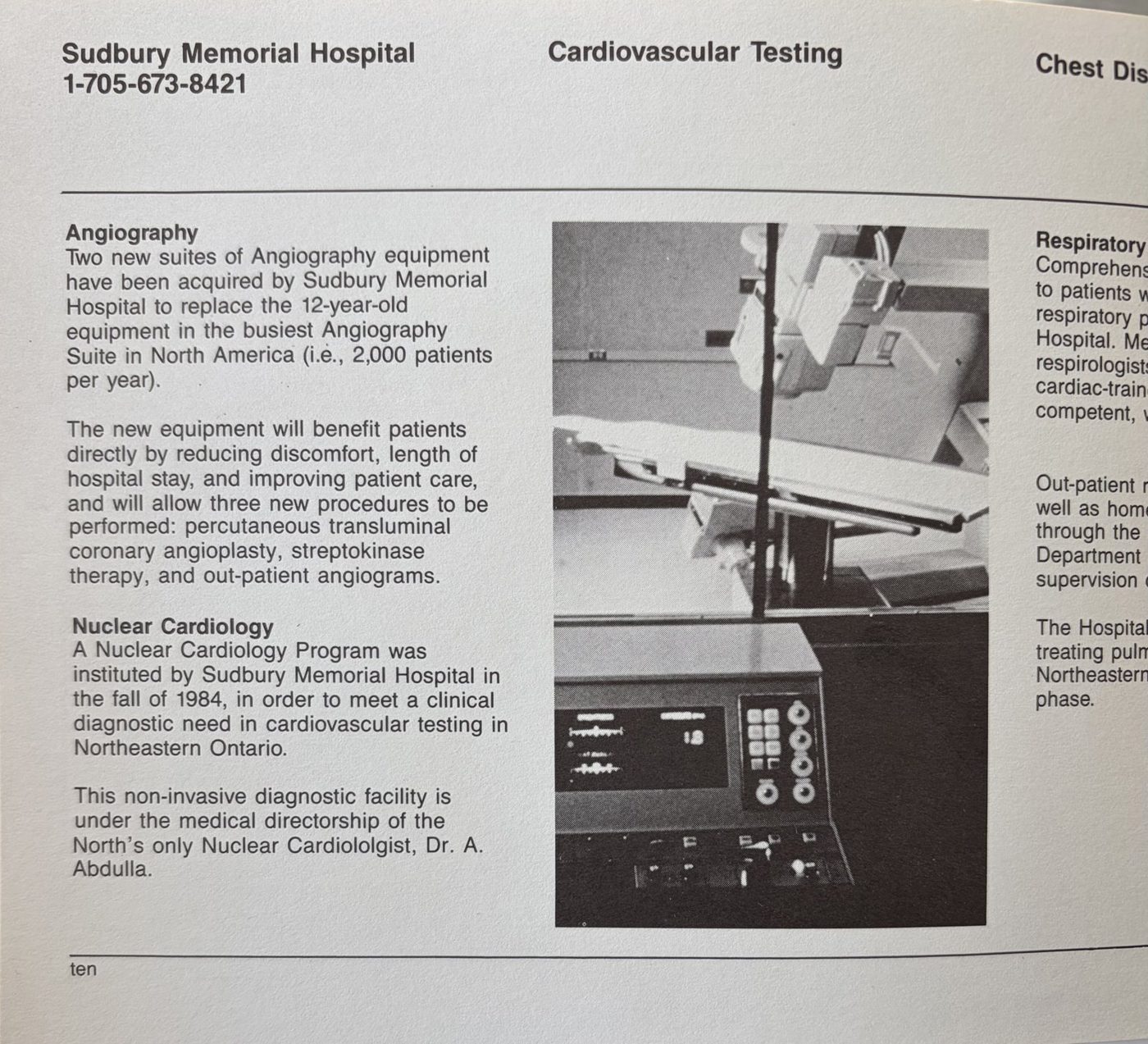
The hospital’s own timeline records what began in these years. In 1984 a new Nuclear Cardiology service opened in the Cardiopulmonary Department — the year Dr. Abdulla arrived — along with the new digital subtraction angiography suite. In 1985 a second angiography suite was installed, and the Cardiac Rehabilitation Program moved to its permanent home at the Sudbury Arena, where it became the centre of the Sudbury Heart Health Program. In 1986 the hospital officially opened two new angiography suites and the Nuclear Cardiology Suite.
Cardiac rehabilitation, and a nuclear scan done by the director himself
In 1983 the hospital took over the Nickel District cardiac rehabilitation program. It was a rudimentary exercise program, with no monitoring, no rehabilitation and no heart health education. Dr. Abdulla built a comprehensive cardiovascular rehabilitation program in its place, housed in its own Cardiac Rehabilitation Centre — the building shown at the top of the hospital’s 1985/86 collage. Lower left, he processes a nuclear cardiology scan.
The first rate-responsive pacemaker in Northeastern Ontario
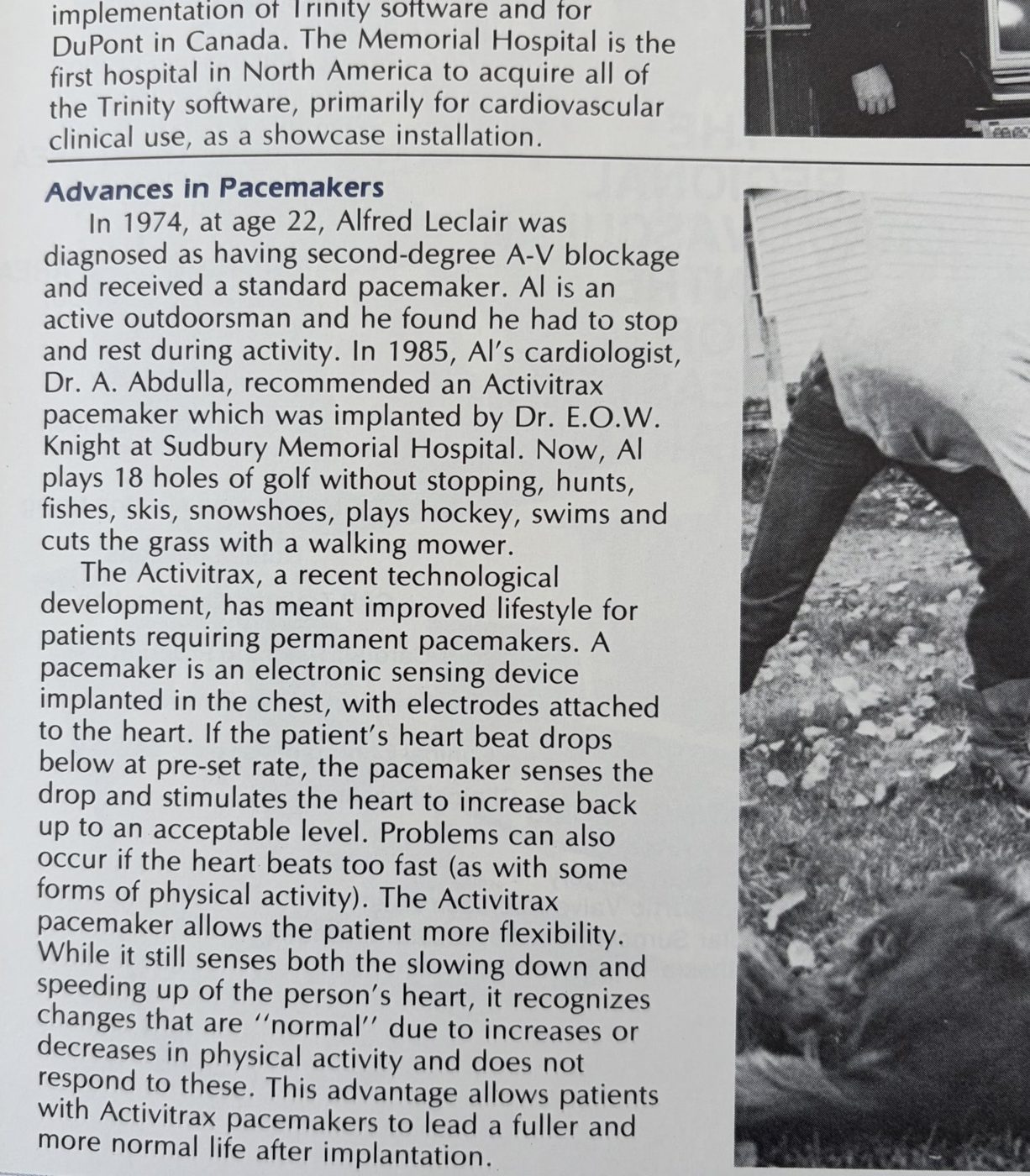
In 1985, Dr. Abdulla, Director of the Pacemaker Clinic, recognized that a young patient with heart block and a very poor quality of life needed a rate-responsive pacemaker. He chose the Activitrax and recommended it. It was the first of its kind implanted at Sudbury Memorial or anywhere in Northeastern Ontario. As was customary in the Cardiovascular Department, the surgeon, Dr. E.O.W. Knight, performed the implantation. The patient returned to a completely normal quality of life and could do all the physical activity he wished. The hospital’s own report describes him playing eighteen holes of golf, hunting, fishing, skiing, playing hockey and swimming.
Dr. Abdulla published the case in Medtronic News (Summer 1986) and then wrote a review paper, “Rate Responsive Implantable Pacing,” in Transplantation/Implantation Today (February 1987). Both are listed on his Research & Publications page.
Rate-responsive pacing was then a very new technology. Every earlier pacemaker only kept the heart from beating too slowly or stopping. The Activitrax did something different: it sensed the patient’s activity and made the heart beat faster when the body needed it. It had never been implanted in Northeastern Ontario. Choosing it meant recognizing that it would give this young man back a completely normal life, and being willing to recommend a device no one in the region had used before. The outcome is why the pacemaker’s manufacturer wrote up the case in its newsletter, and why a medical journal accepted Dr. Abdulla’s review article on the technique.
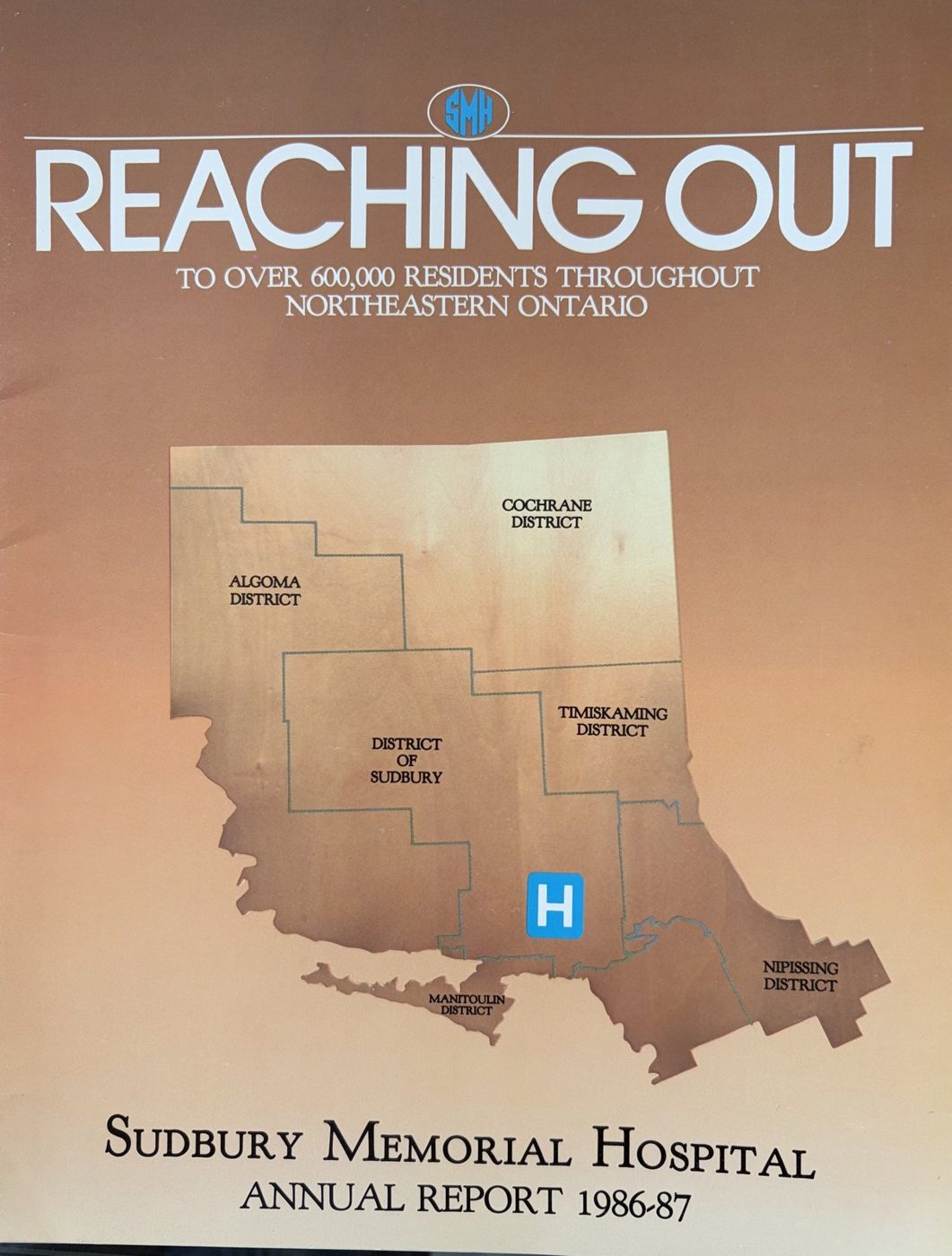
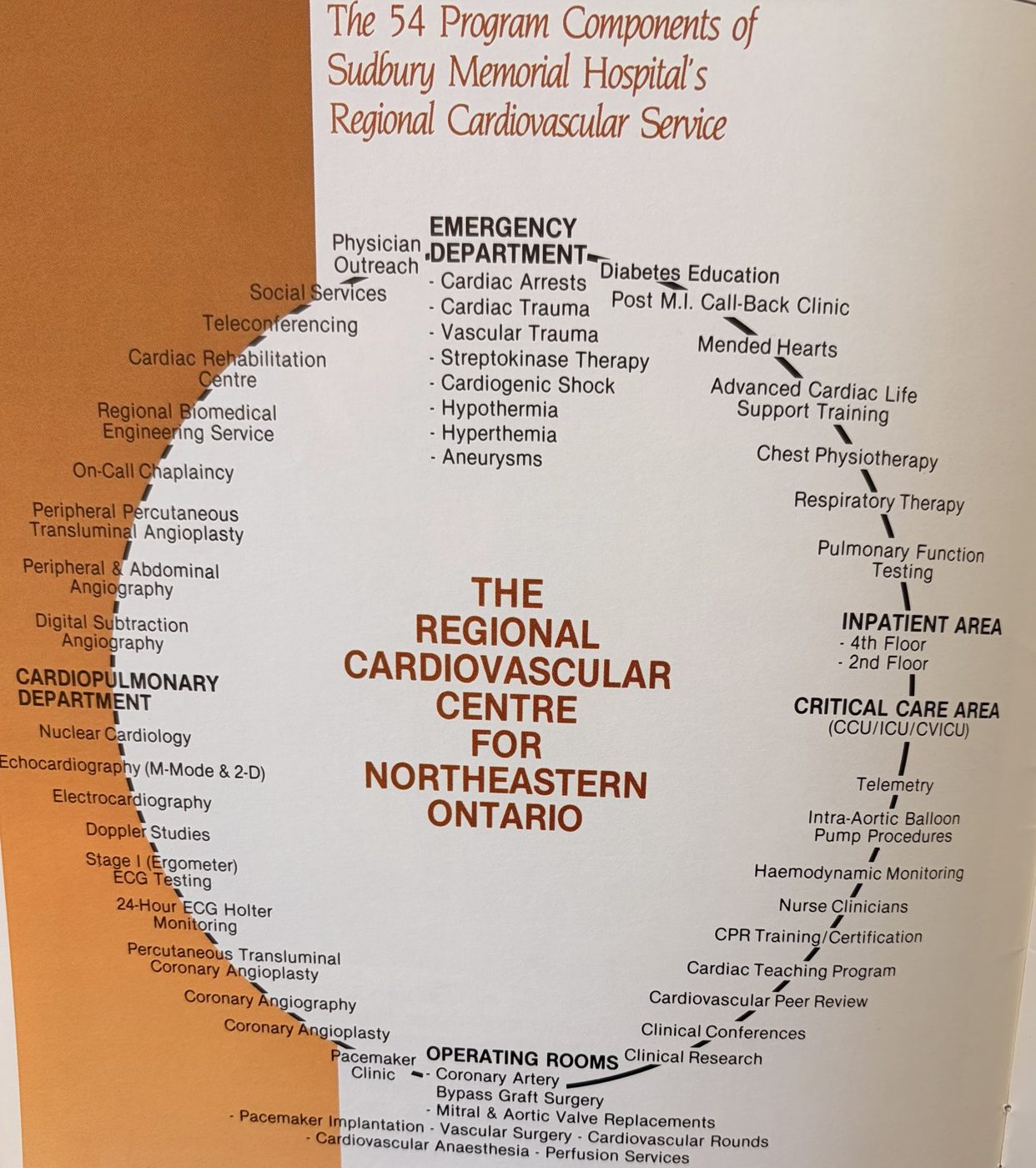
1986/87: Fifty-four program components
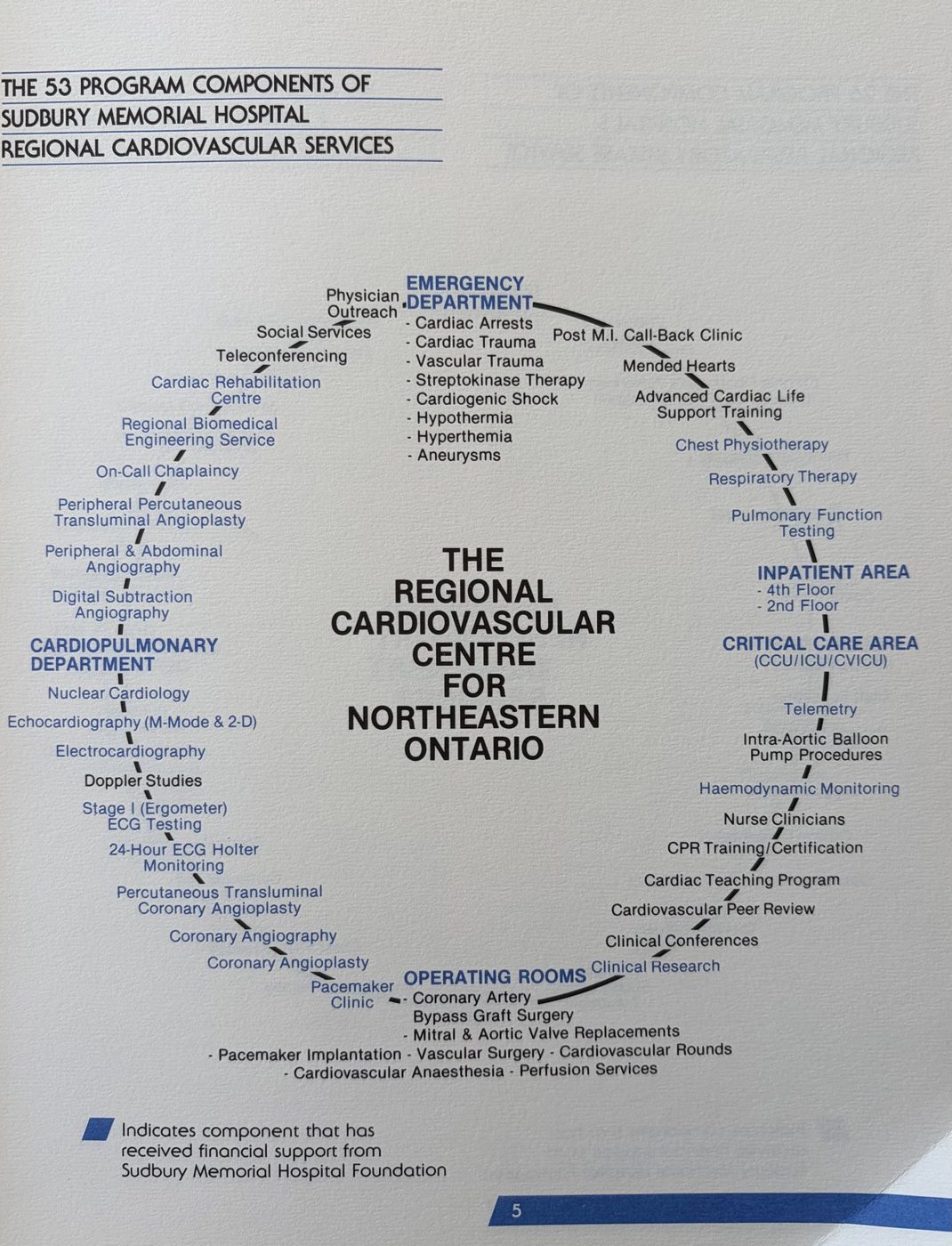
By 1986/87 the Regional Cardiovascular Service listed 54 program components. Dr. Abdulla added Doppler studies, which use ultrasound to assess the heart’s blood flow and hemodynamics, where before the lab only did M-mode and 2-D echo, which show structure. He also added nuclear cardiology, the Pacemaker Clinic and the Cardiac Rehabilitation Centre. None of these appears in the 1982/83 listing of services.
1987–1989: Approvals, fundraising and the case for a second lab
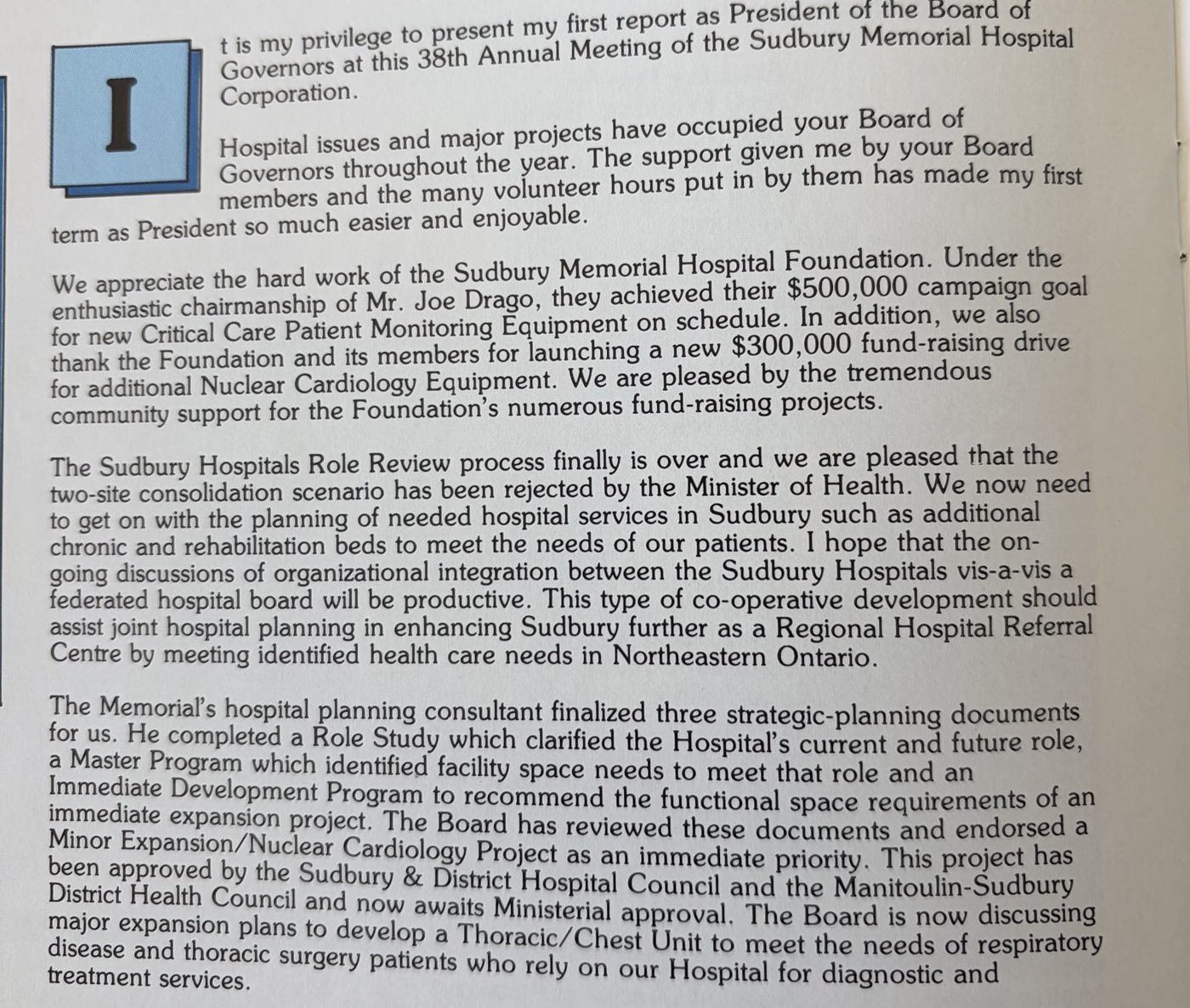
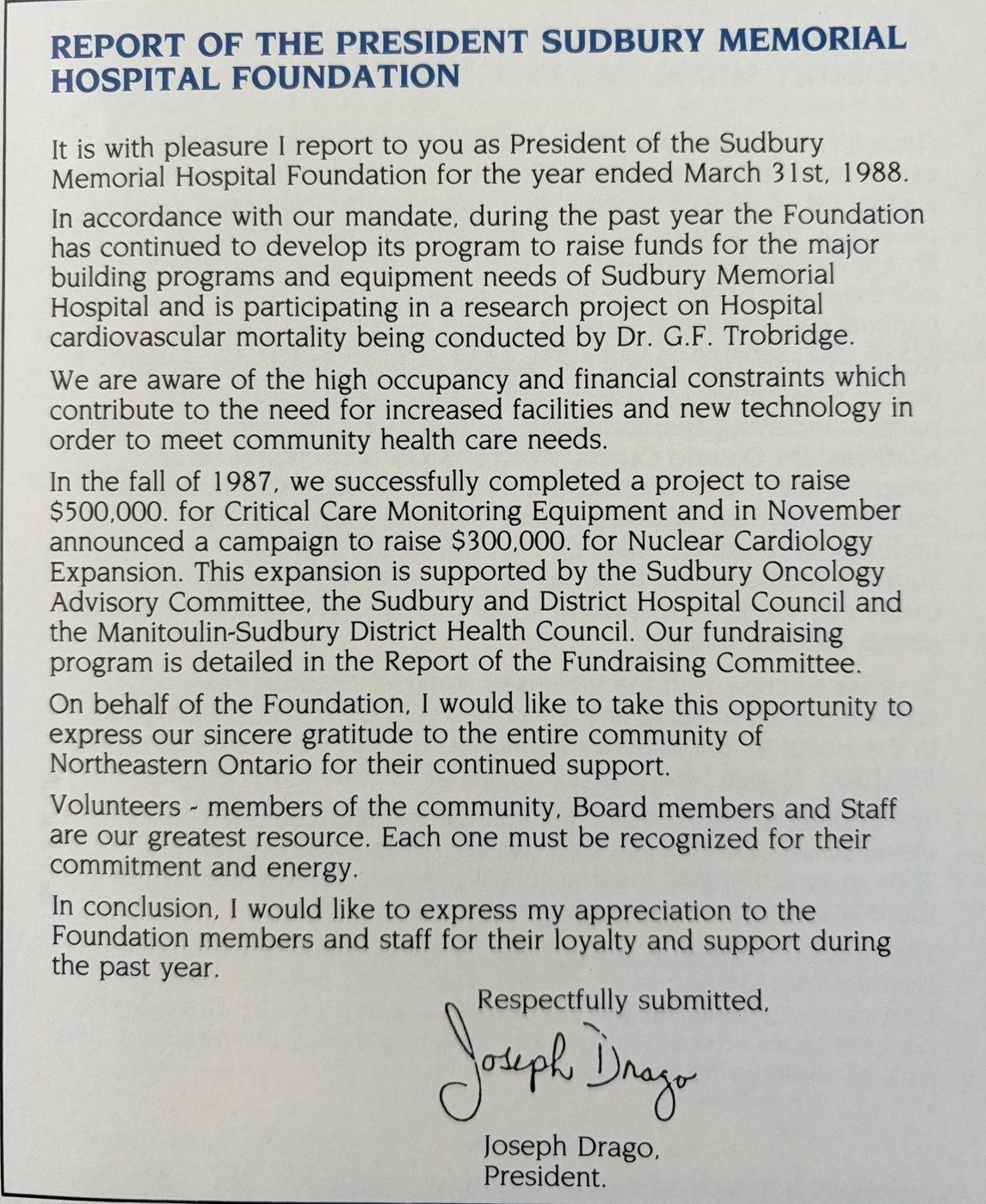
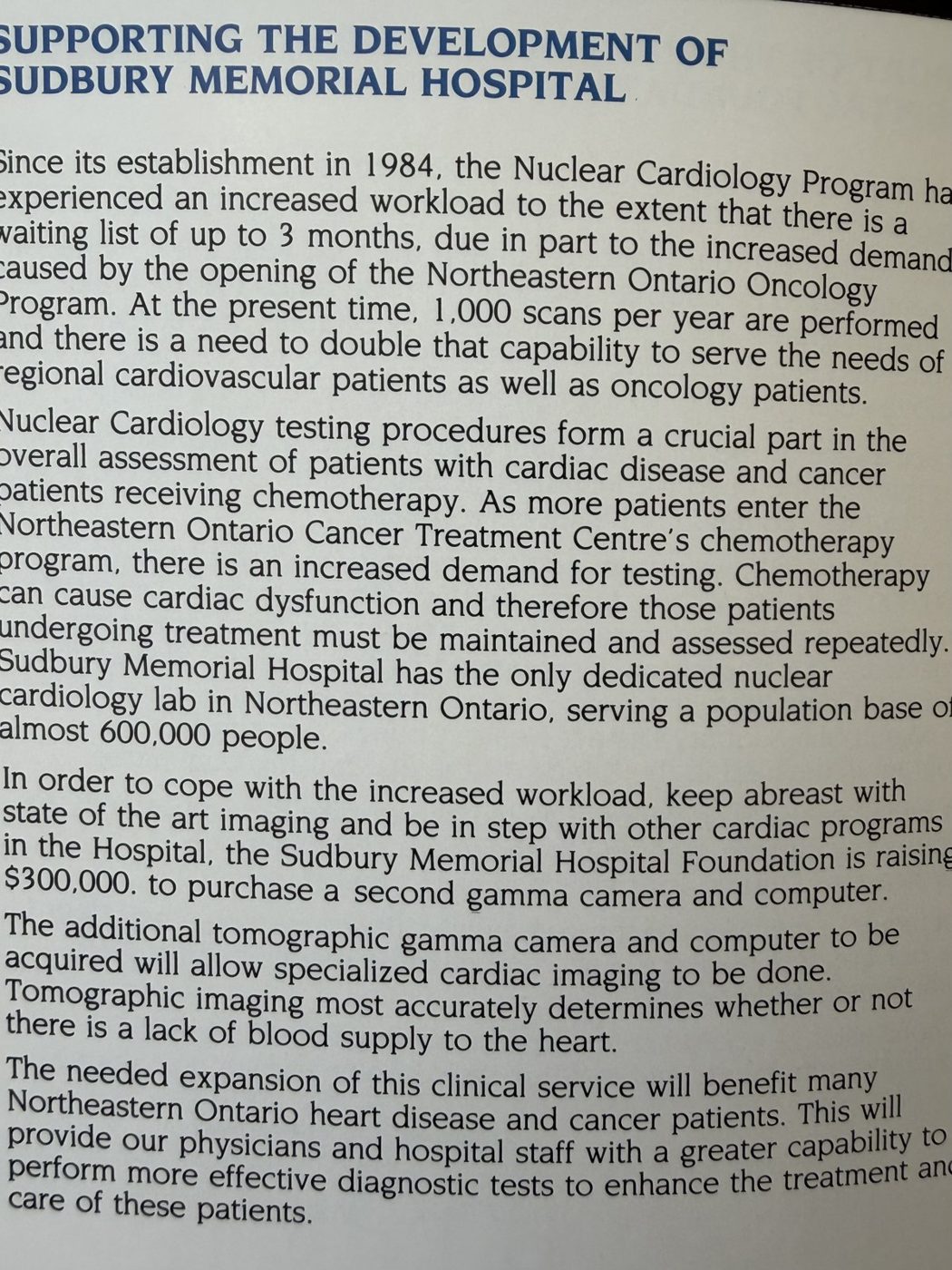
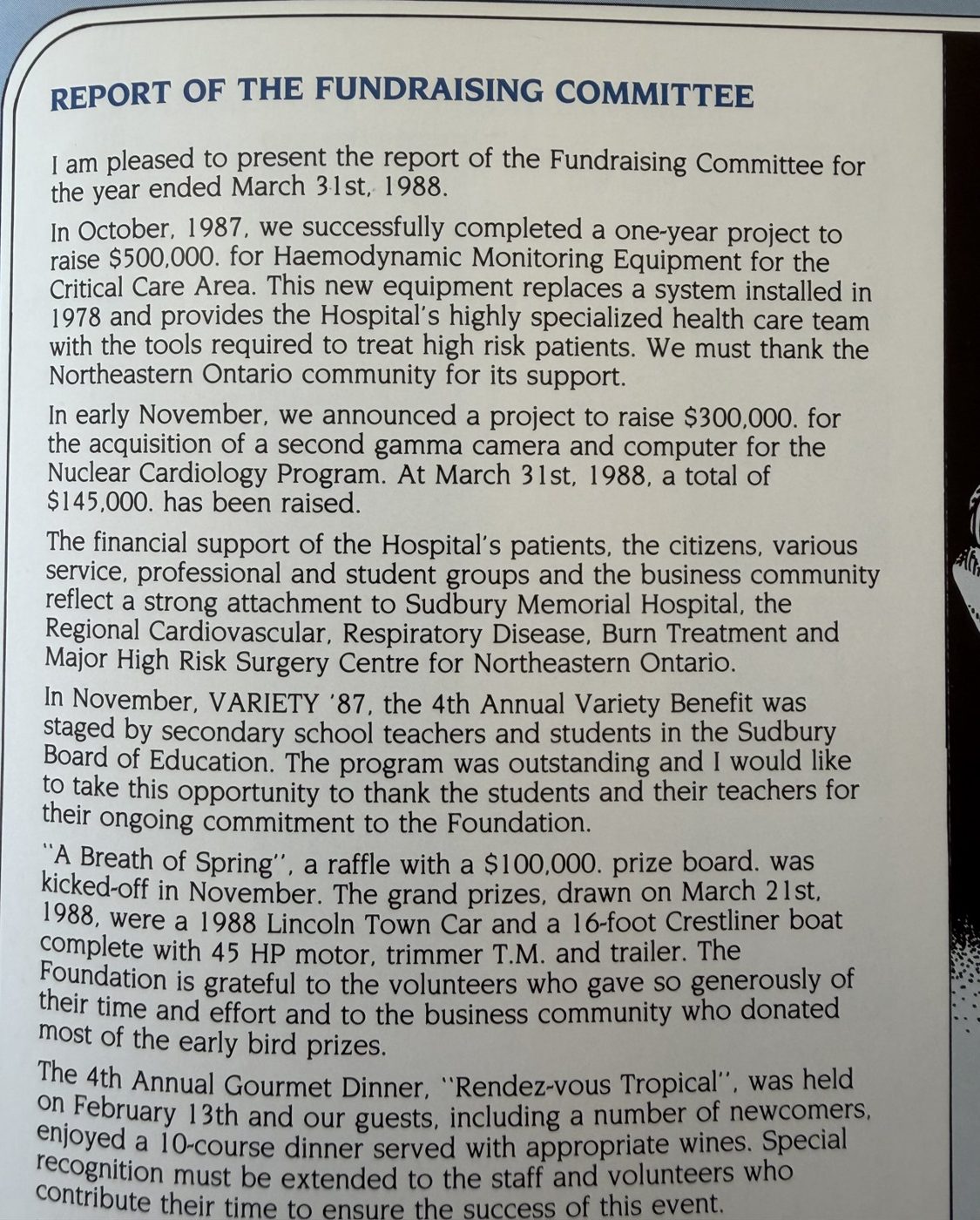
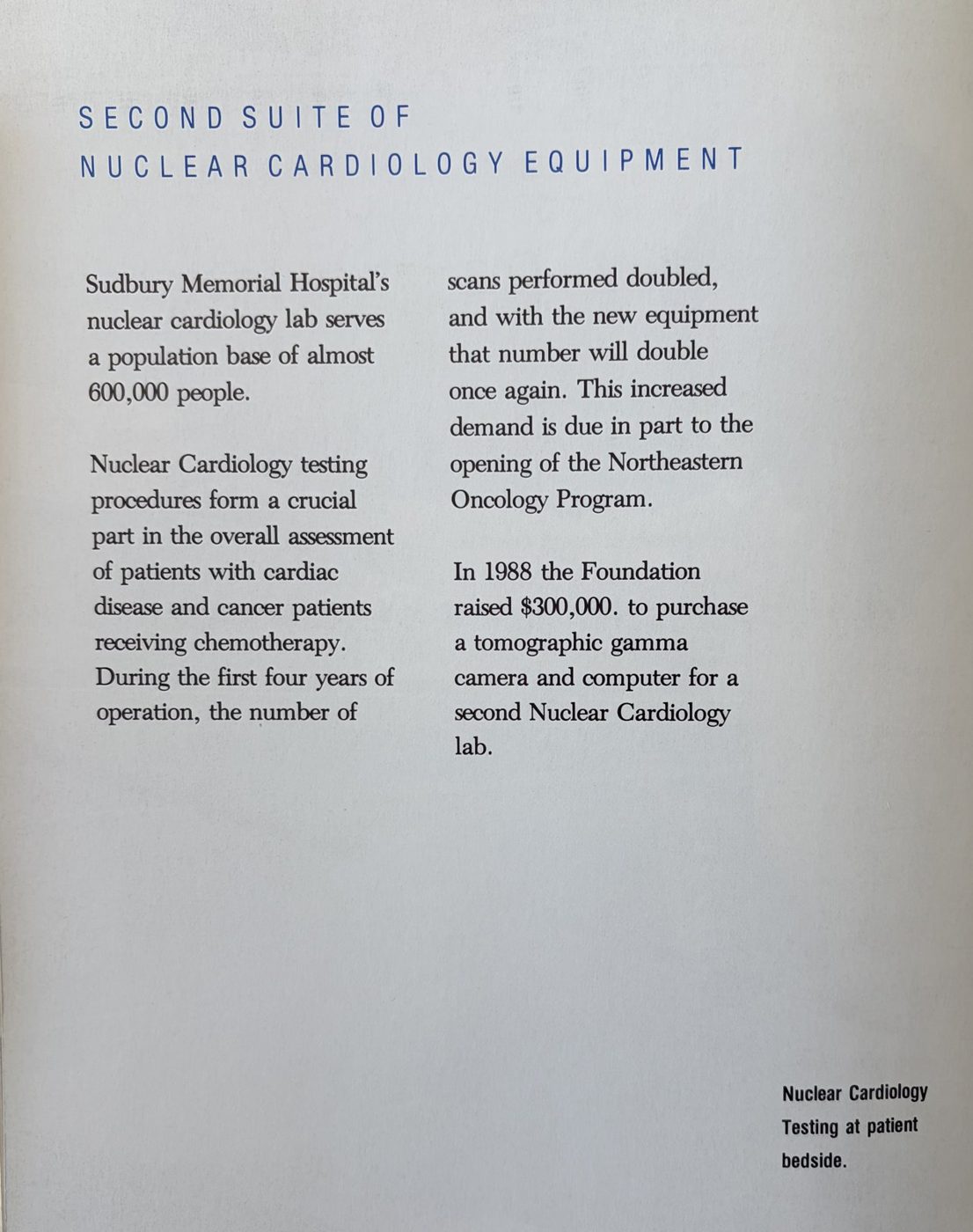
These were the years in which the programs were approved and the money was raised. The program grew so busy, so quickly, that it needed a second lab: by 1988 the nuclear cardiology waiting list ran up to three months, about 1,000 scans a year were being done, and the Foundation launched a $300,000 campaign for a second gamma camera and computer. The same campaign money, and the approvals that came with it, went on to benefit many other departments. Dr. Abdulla worked on three fronts at once: providing the care, getting the programs approved, and working in the community on the fundraising.
The Foundation’s 1985/86 and 1989 reports
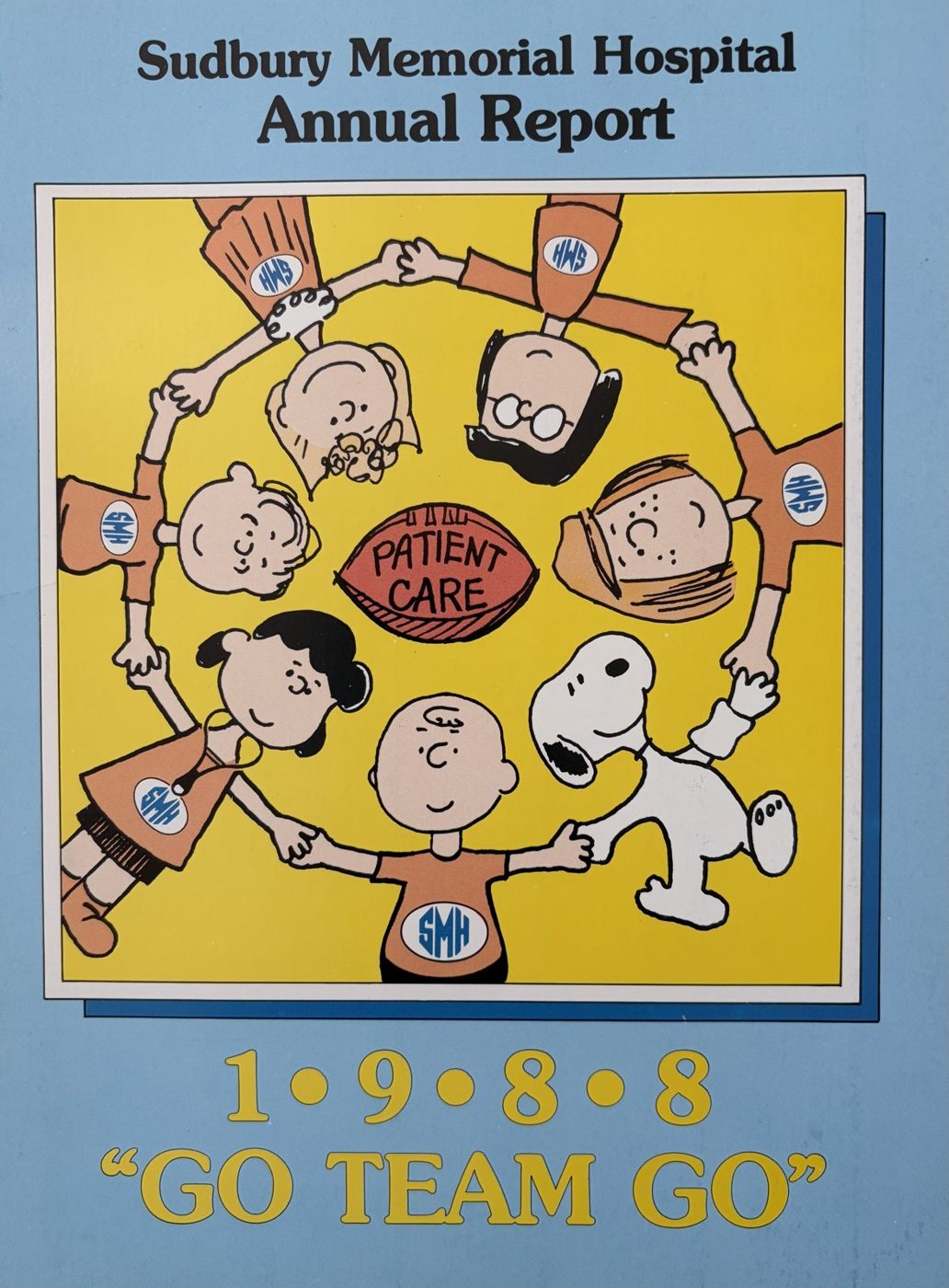
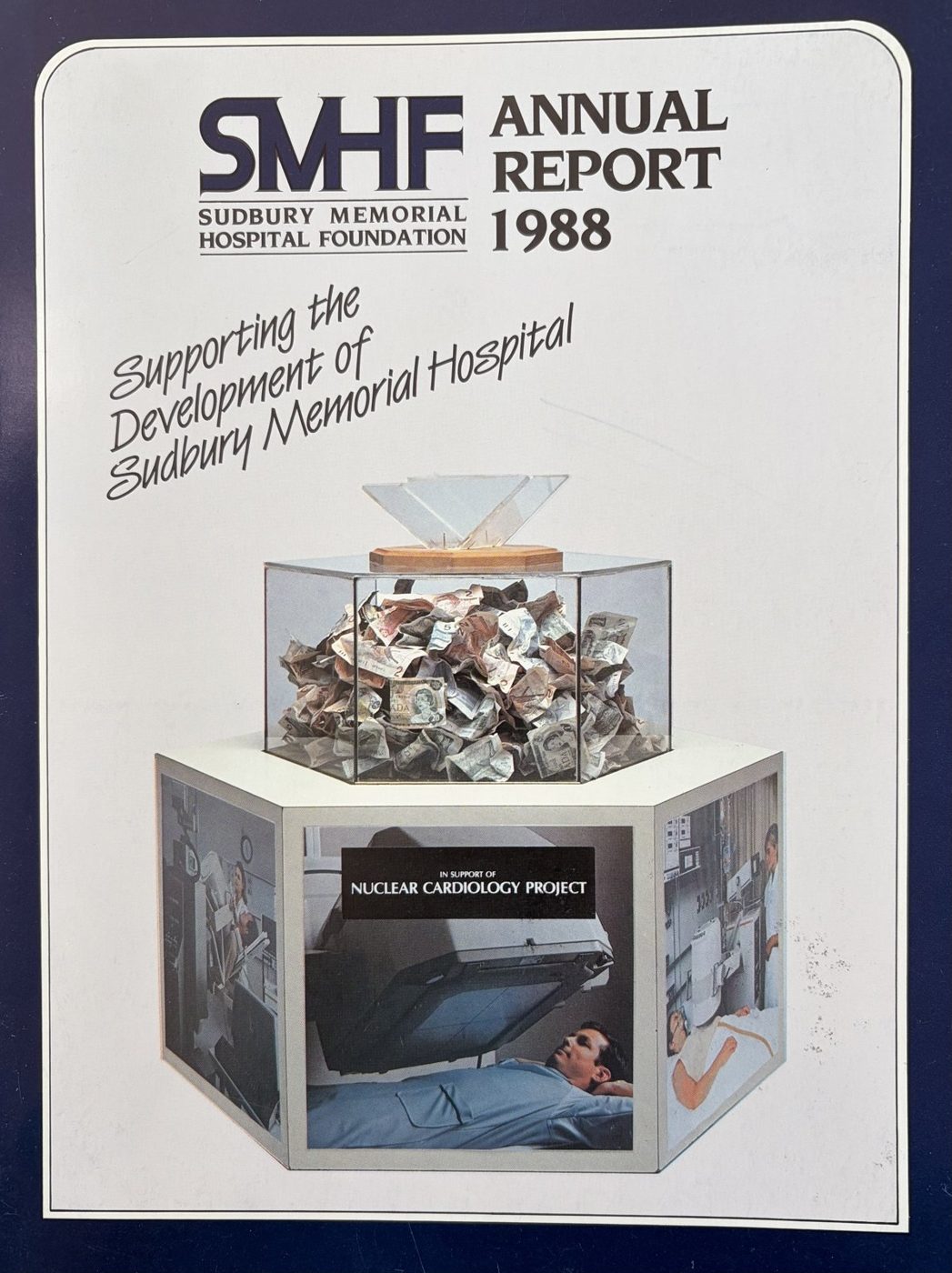
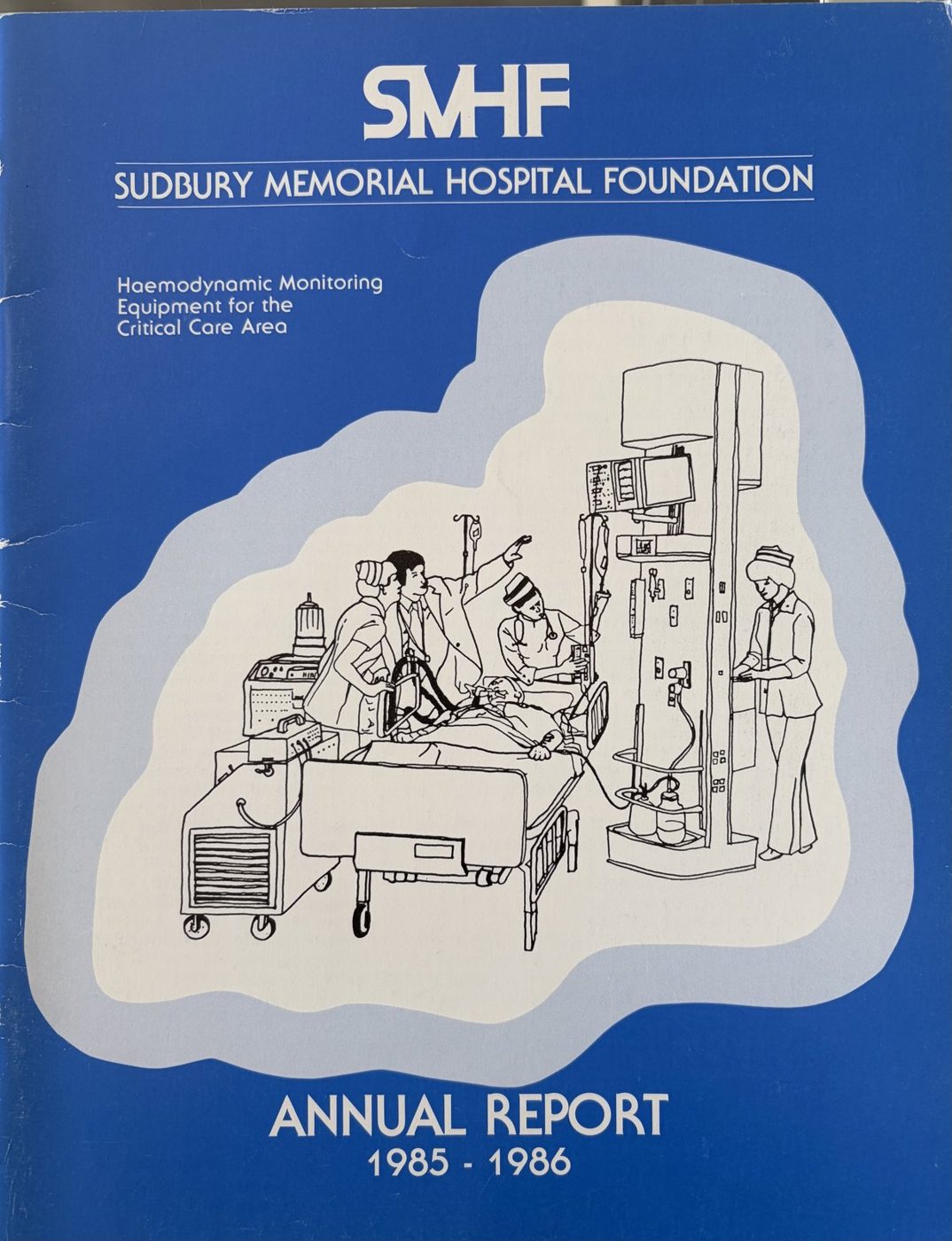
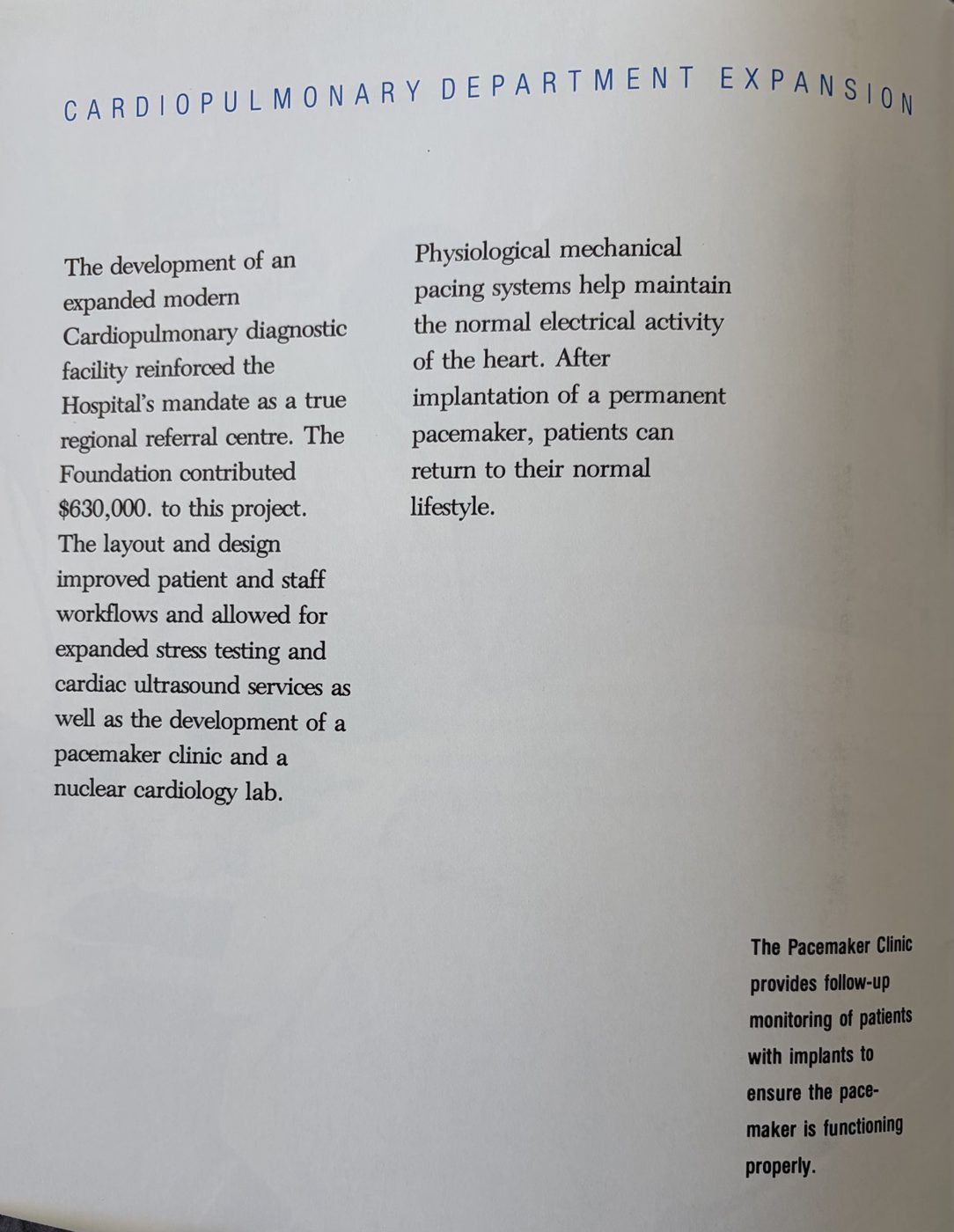
The Foundation’s reports show where the money went. The 1985/86 report marks in blue every component of the Regional Cardiovascular Services that the Foundation funded. The 1989 report records the Foundation’s $630,000 contribution to the expanded Cardiopulmonary Department, which brought the Pacemaker Clinic and the nuclear cardiology lab into one modern facility, and the 1984 campaign of $1.1 million for two angiography suites and the gamma camera that established the Nuclear Cardiology service, which the report calls the single largest medical equipment purchase in the history of Sudbury.
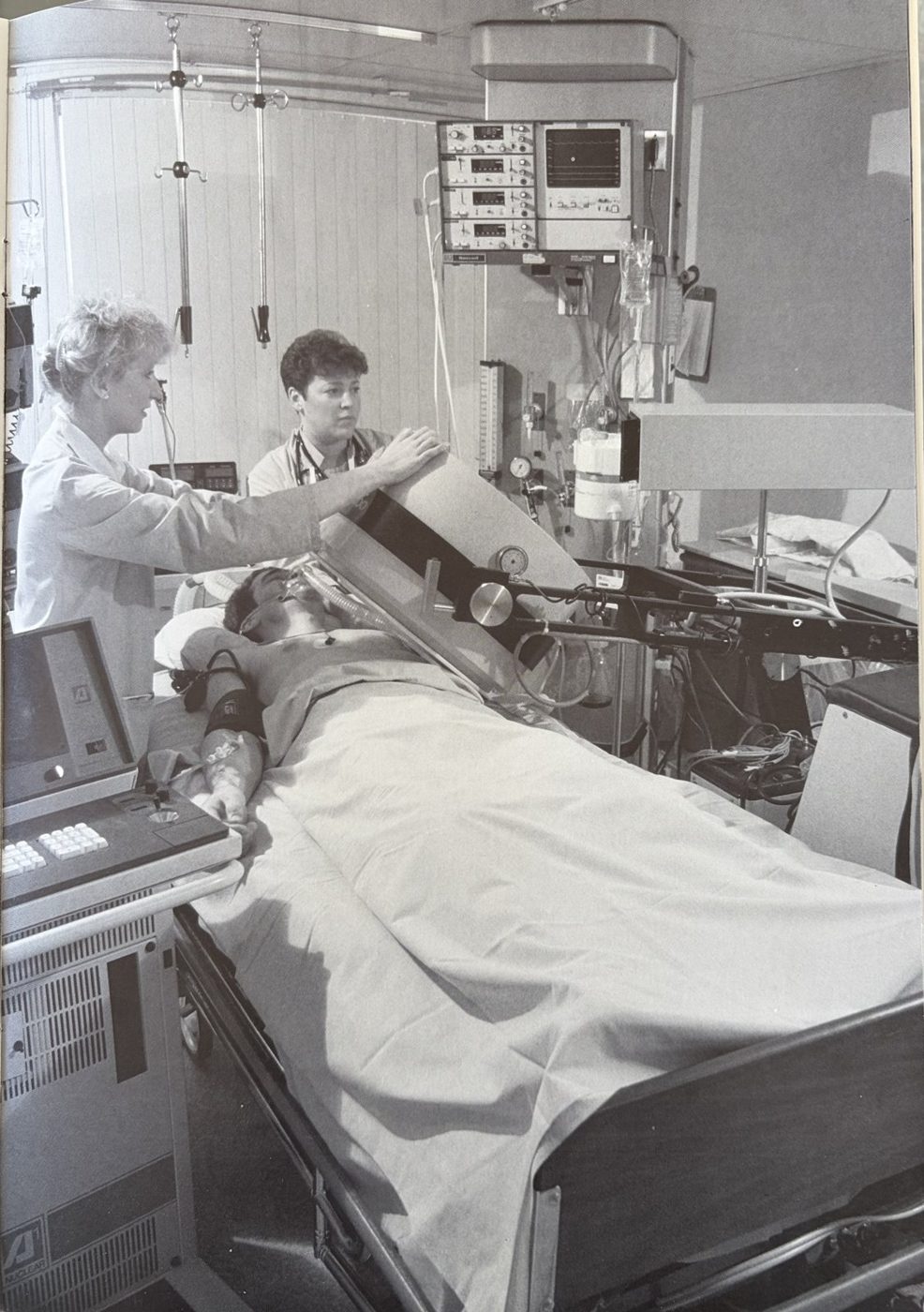
Nuclear cardiology at the bedside
1990–91: The second lab and the Phase I Expansion
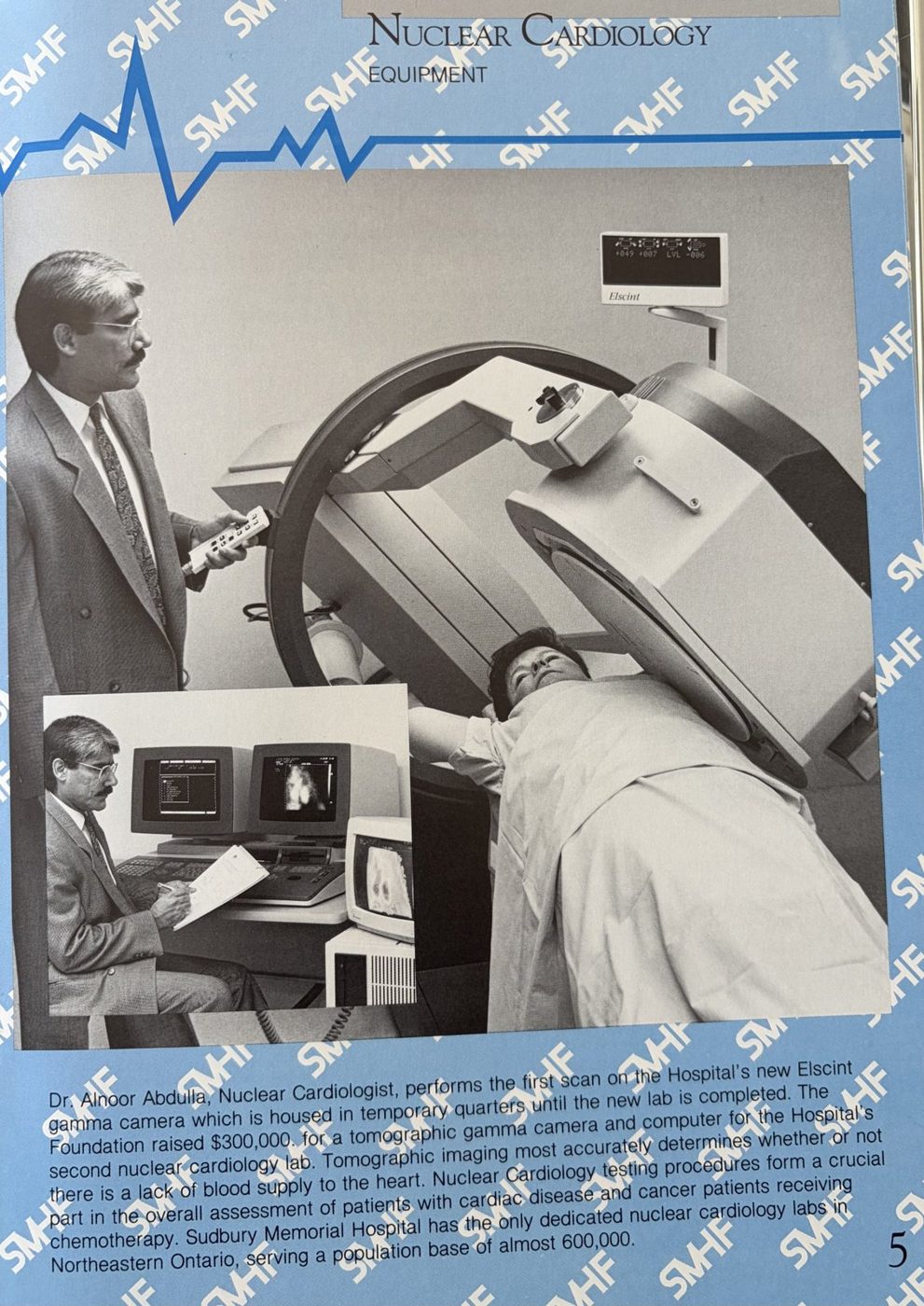
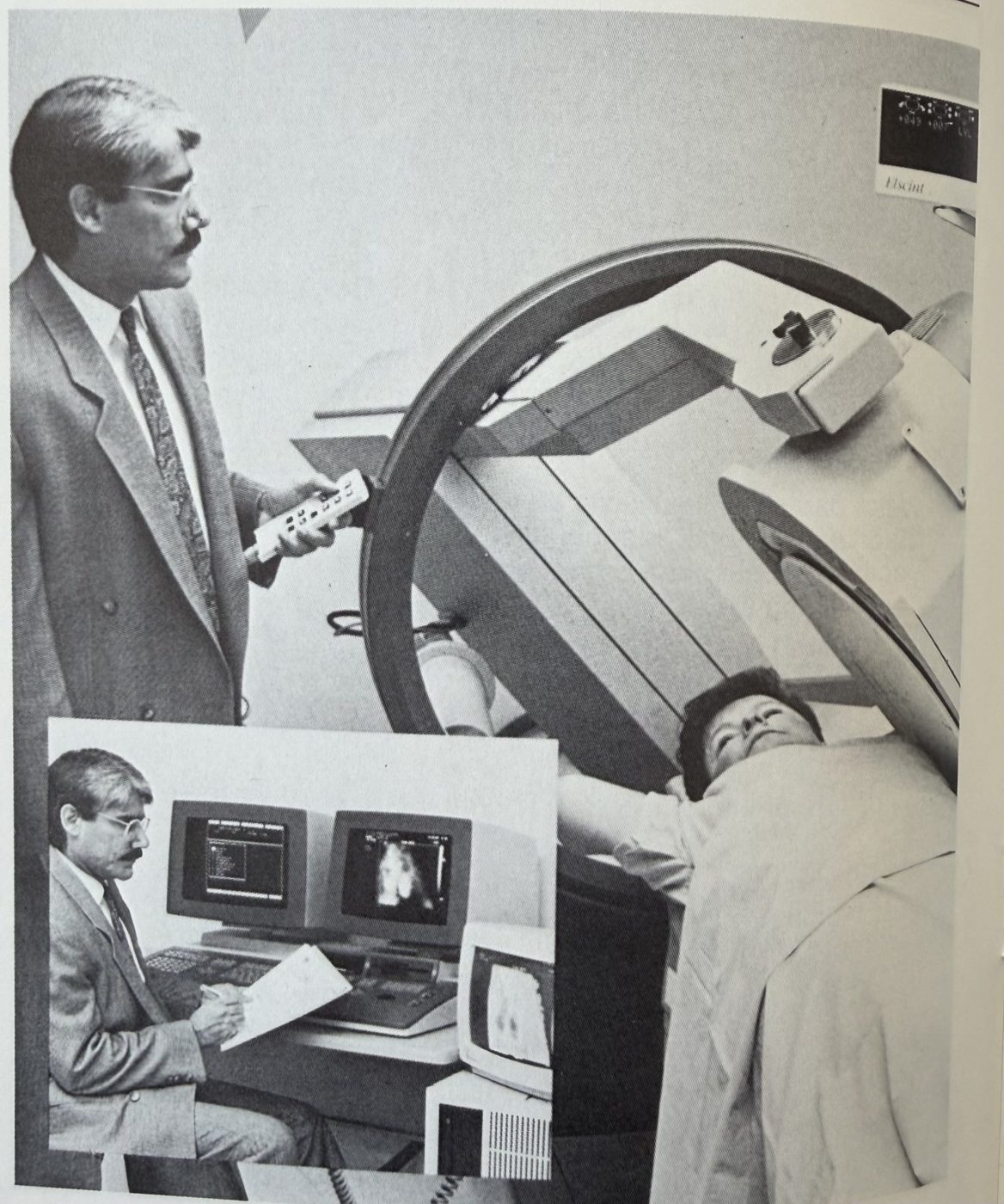
The second nuclear cardiology laboratory was built as part of a hospital expansion. In the meantime the new Elscint gamma camera was housed in temporary quarters, where the Foundation’s report photographed Dr. Abdulla performing the first scan on it. The Elscint was a high-technology tomographic system that few Canadian labs were using; he had learned it during his fellowship in California.
What the expansion brought to the hospital
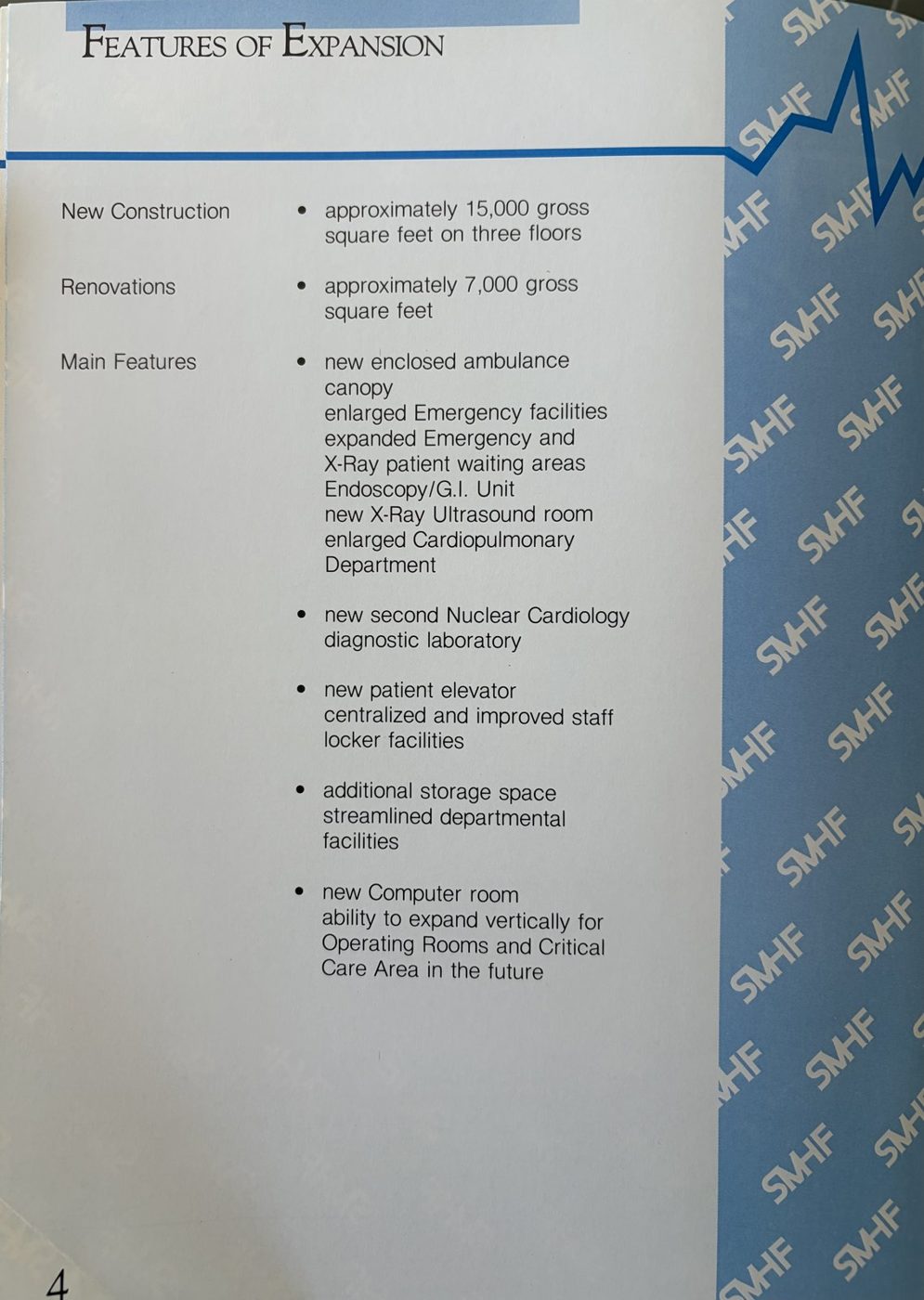
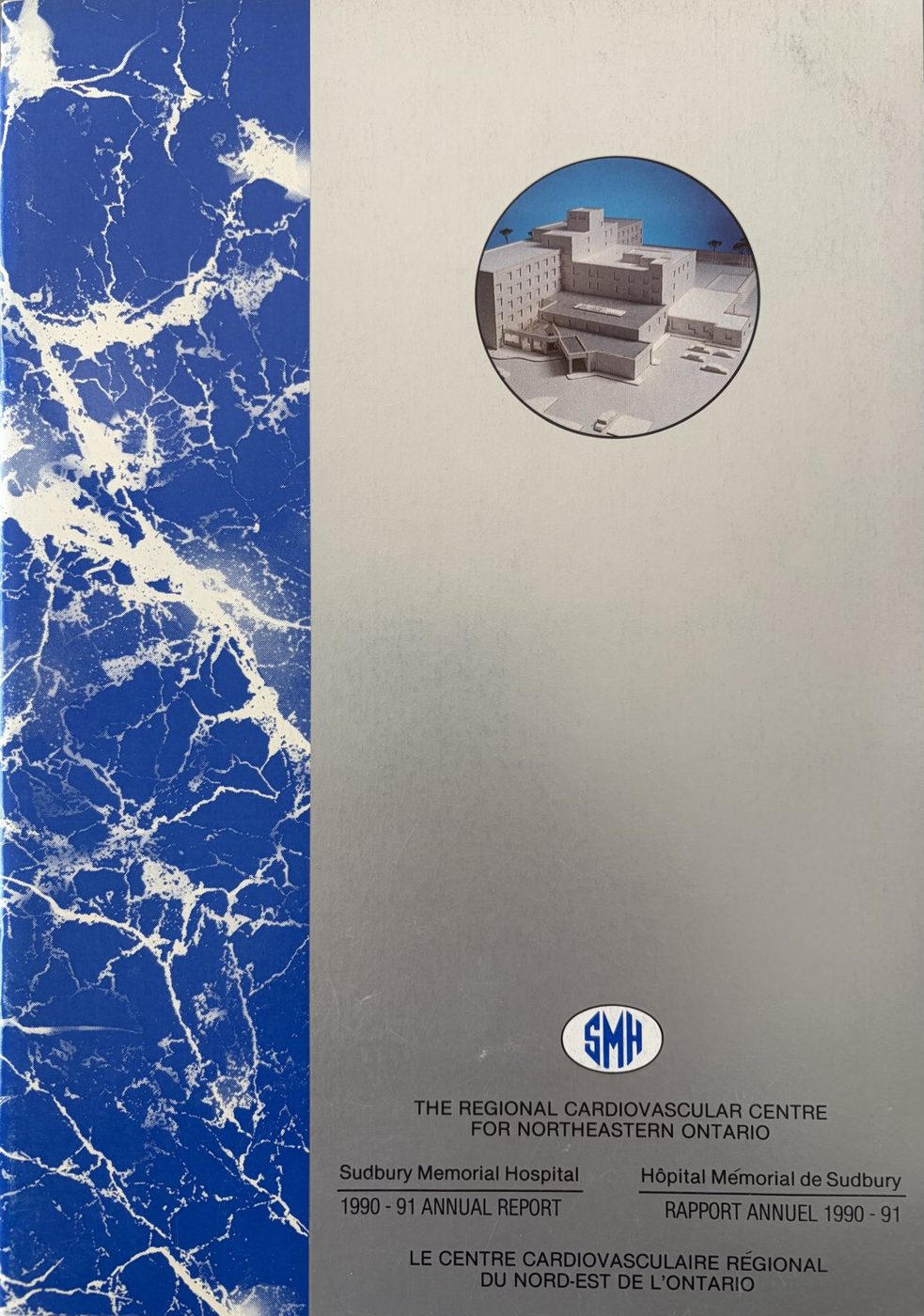
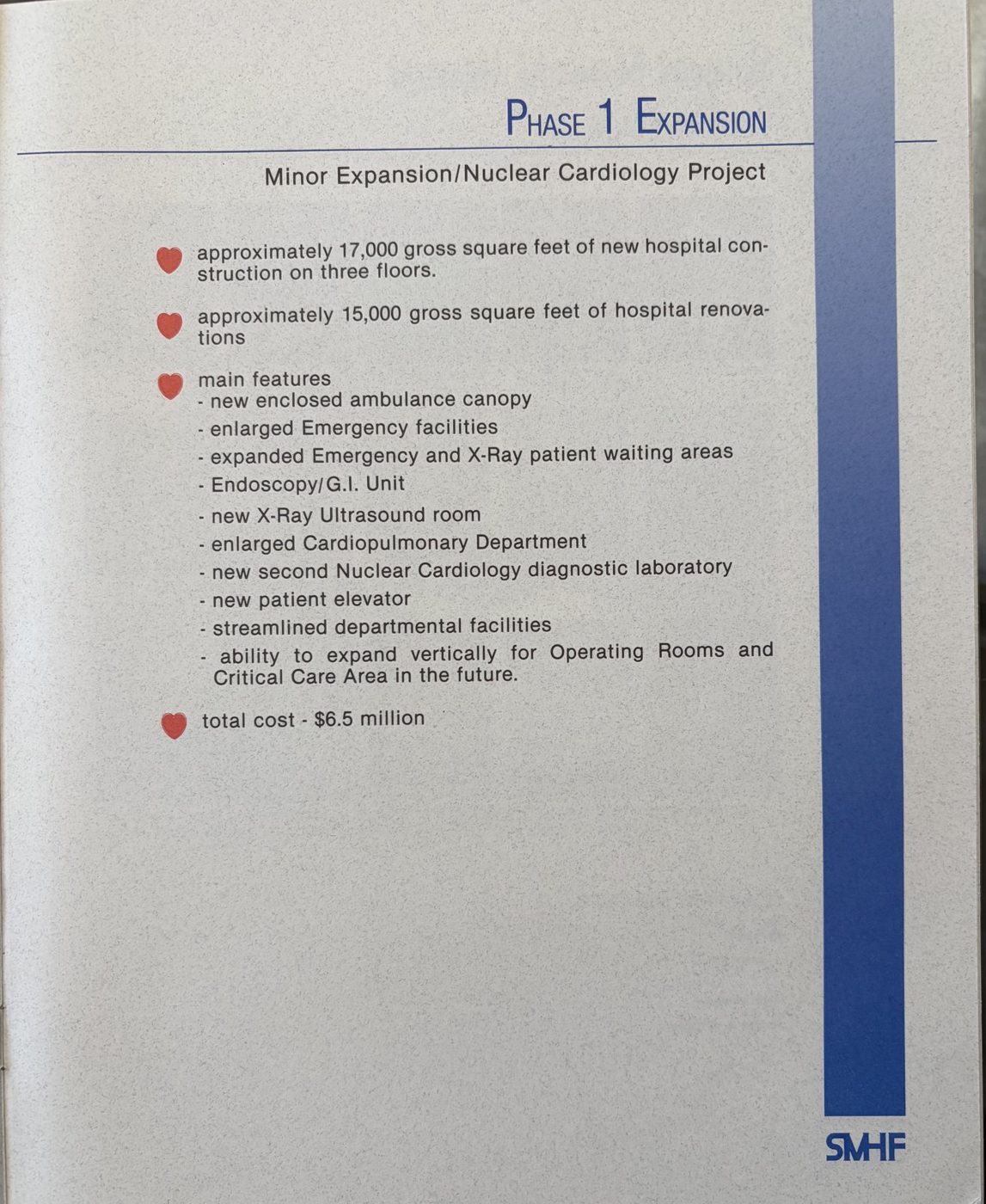
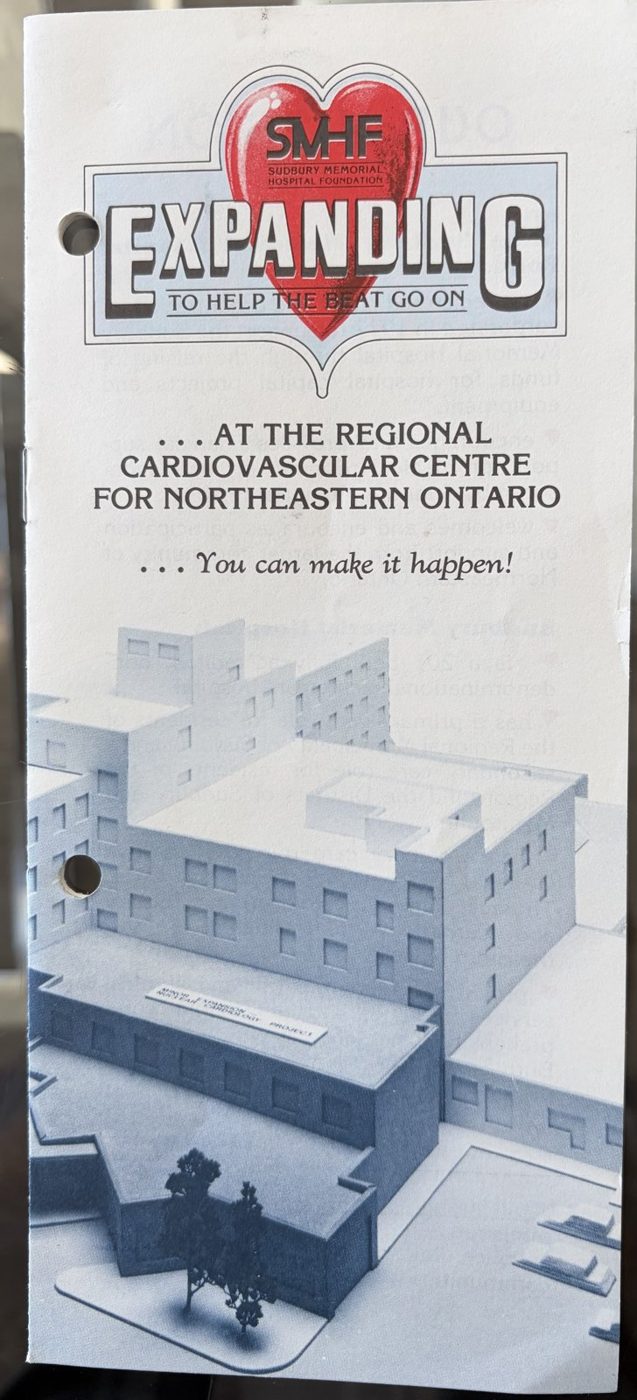
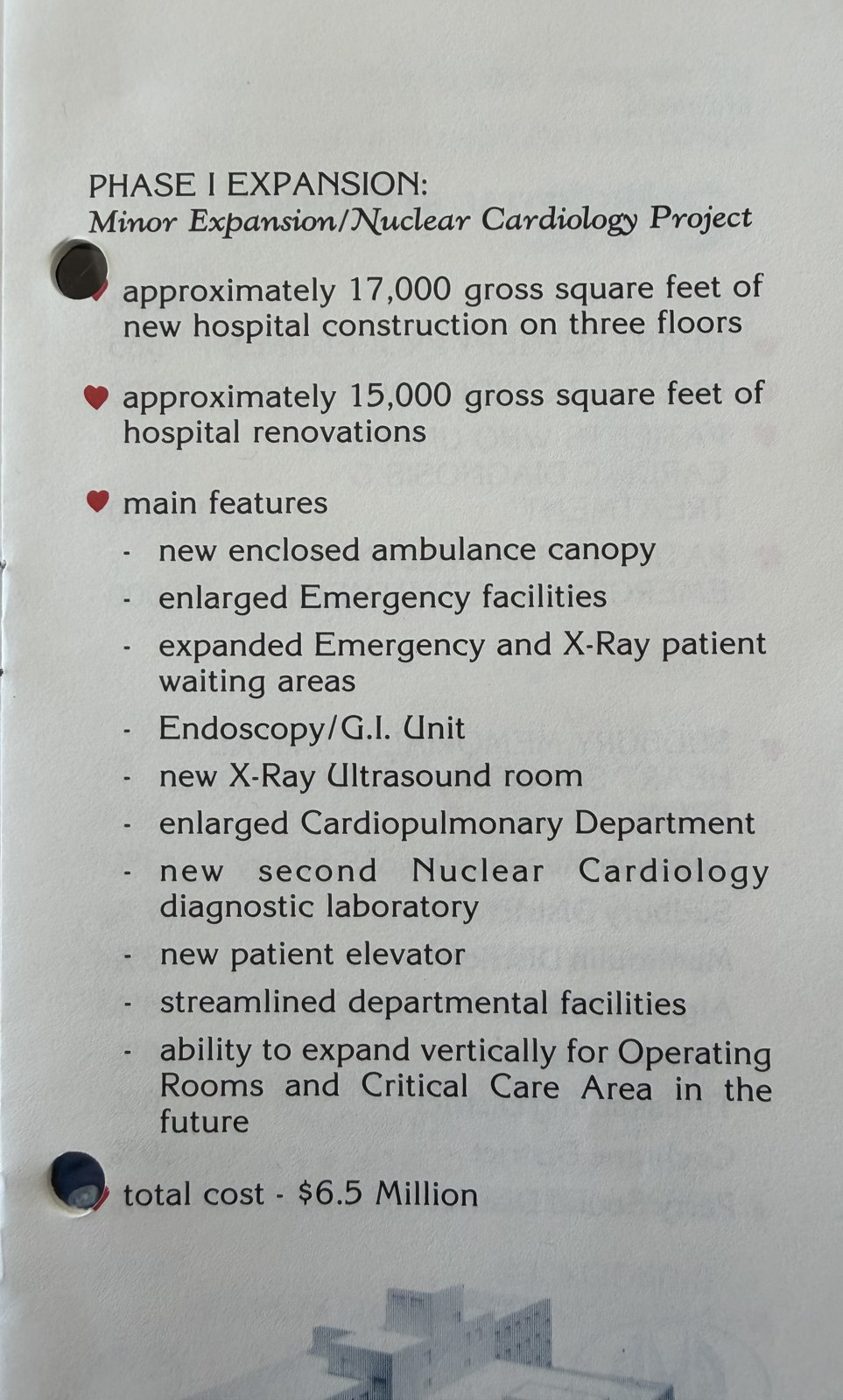
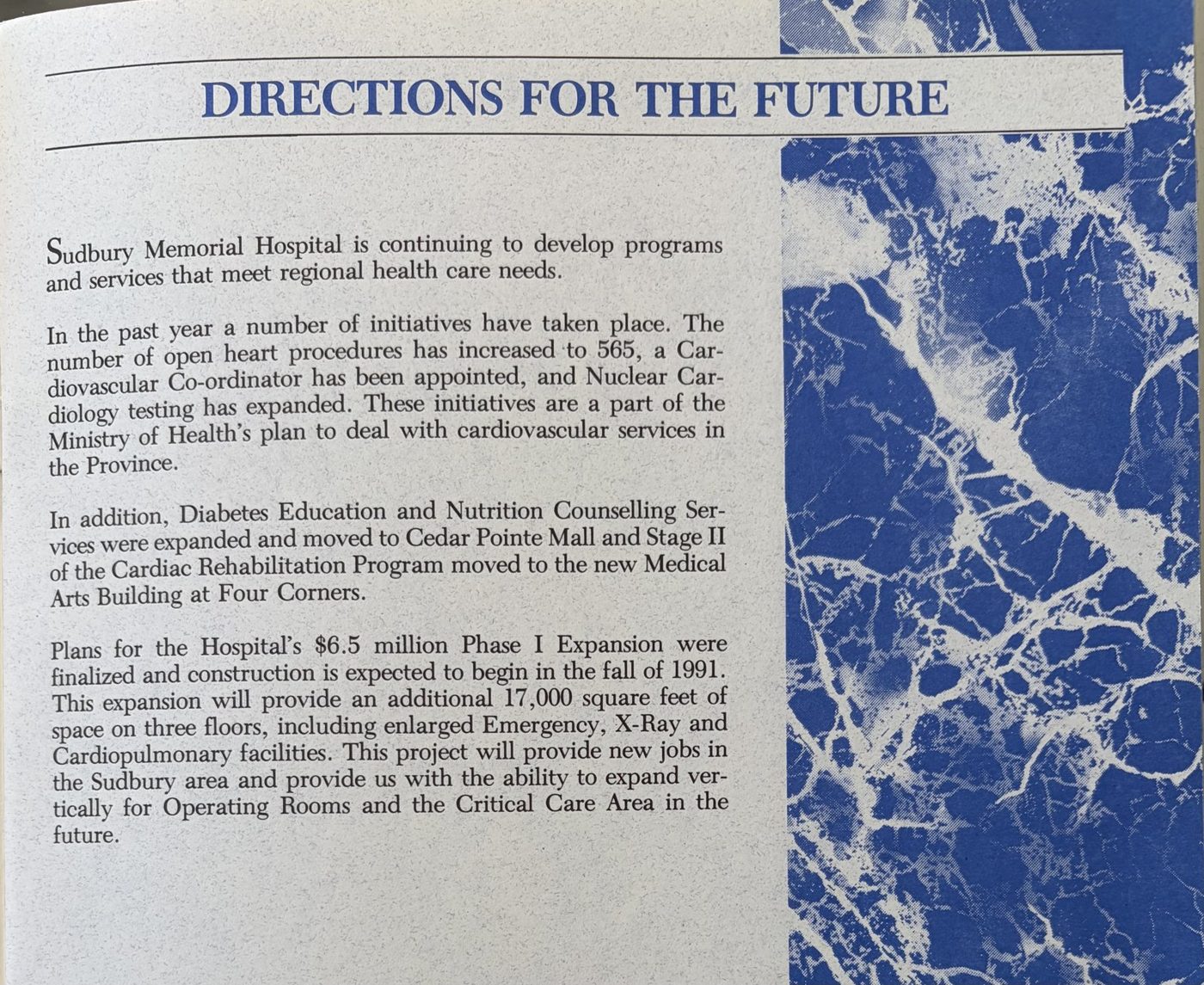
The Phase I Expansion cost $6.5 million and added about 17,000 square feet of new construction, with a further 15,000 square feet renovated. The campaign was launched because of the need for the digital angiography suite and the nuclear cardiology program, but the benefits went across the hospital: a new enclosed ambulance canopy, an enlarged Emergency Department, expanded Emergency and X-ray waiting areas, a new Endoscopy/G.I. Unit, a new X-ray ultrasound room, an enlarged Cardiopulmonary Department, the new second Nuclear Cardiology laboratory, a new patient elevator and a new computer room. Many departments benefited from the approvals that grew out of the digital angiography suite, the nuclear cardiology program and the fundraising. (The 1990 report gives the early plan as about 15,000 square feet of new construction and 7,000 renovated; the 1990–91 report and the later booklet give the final figures.)
A provincial role: the Cardiac Care Network and the Cardiovascular Co-ordinator
Alongside his hospital career, Dr. Abdulla held a provincial role that was not a hospital appointment. In 1990 he joined the provincial Cardiovascular Advisory Committee, a powerful body that advised the Ontario government. He was the only member from a community hospital, the others being from university-affiliated centres, and Dr. Willie Keon of the Ottawa Heart Institute chaired it. Its main recommendation was a provincial Cardiac Care Network to oversee and evaluate tertiary cardiac care at the nine centres (eight university centres and Sudbury). Dr. Abdulla became a founding member and the cardiovascular representative for Northeastern Ontario, a post he held until 1994, two years after his term as Chief ended, when he left for the Aga Khan University. The Minister of Health and the Cardiac Care Network asked him to continue representing Northeastern Ontario at the provincial level. In 2000 the Network recognized him as a Founder.
Each member of the Network was given a government-funded Cardiovascular Co-ordinator to collect data on his centre. Dr. Abdulla chose and trained Tim Wharton for the post, and the 1990–91 hospital report, below, records the appointment. Dr. Abdulla presented Sudbury’s results at the monthly meetings and pushed for the programs and funding it needed.
Raising the money
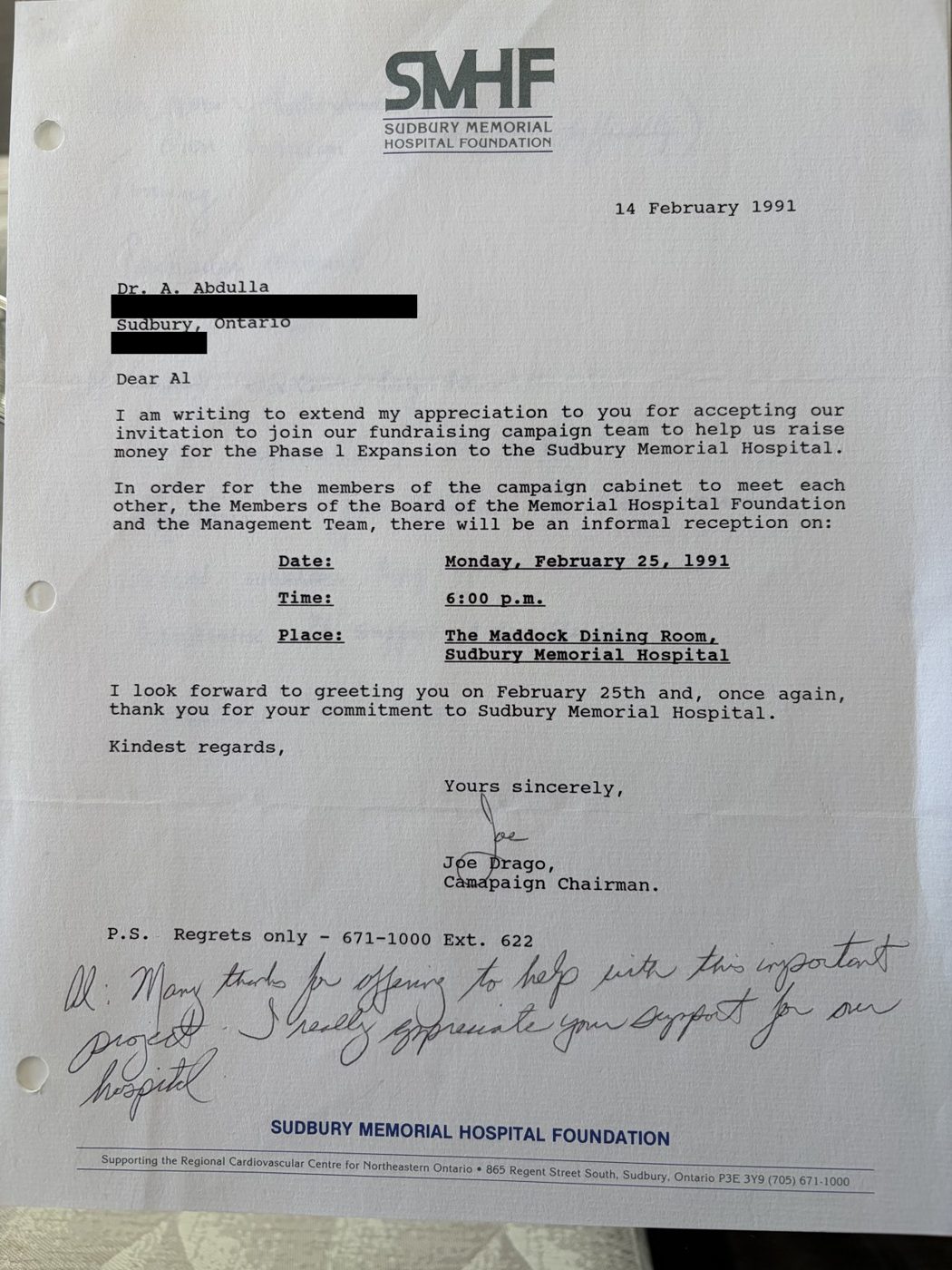
In February 1991, Joe Drago, Campaign Chairman of the Sudbury Memorial Hospital Foundation, wrote to Dr. Abdulla to thank him for joining the fundraising campaign team for the Phase I Expansion. In a handwritten note he added, “Many thanks for offering to help with this important project. I really appreciate your support for our hospital.” Dr. Abdulla was the only practising physician on the campaign team, which otherwise consisted of board members, volunteers and politicians. He worked hard on the fundraising, along with many other people, going around the city and to the corporations to explain what the expansion was for.
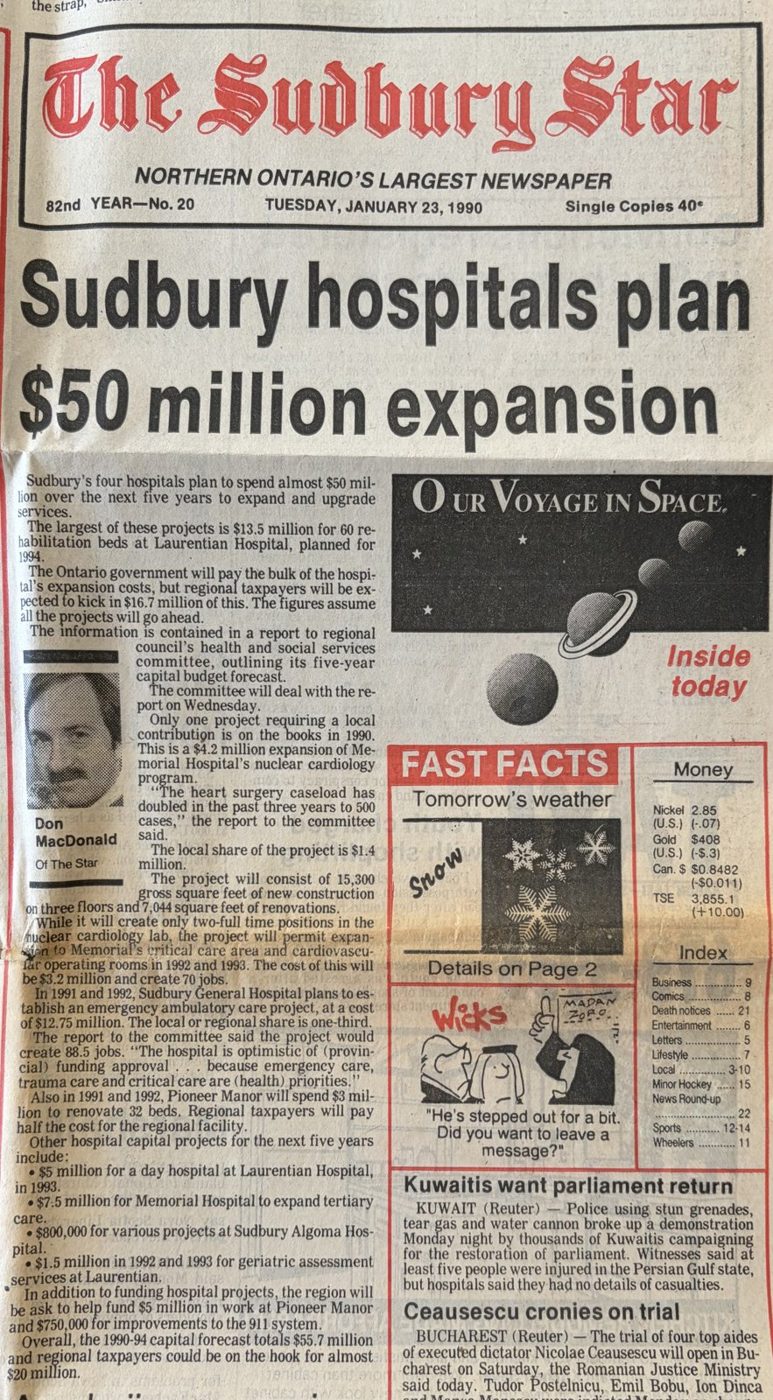
The campaign had strong backing from local political leaders, including Regional Chairman Tom Davies and MPP Shelley Martel, and the hospitals lobbied the Ministry of Health well: in January 1990 the Sudbury Star reported that Sudbury’s four hospitals planned almost $50 million of expansion over the next five years.
1994: The farewell year, and the bridge to Aga Khan University in Pakistan
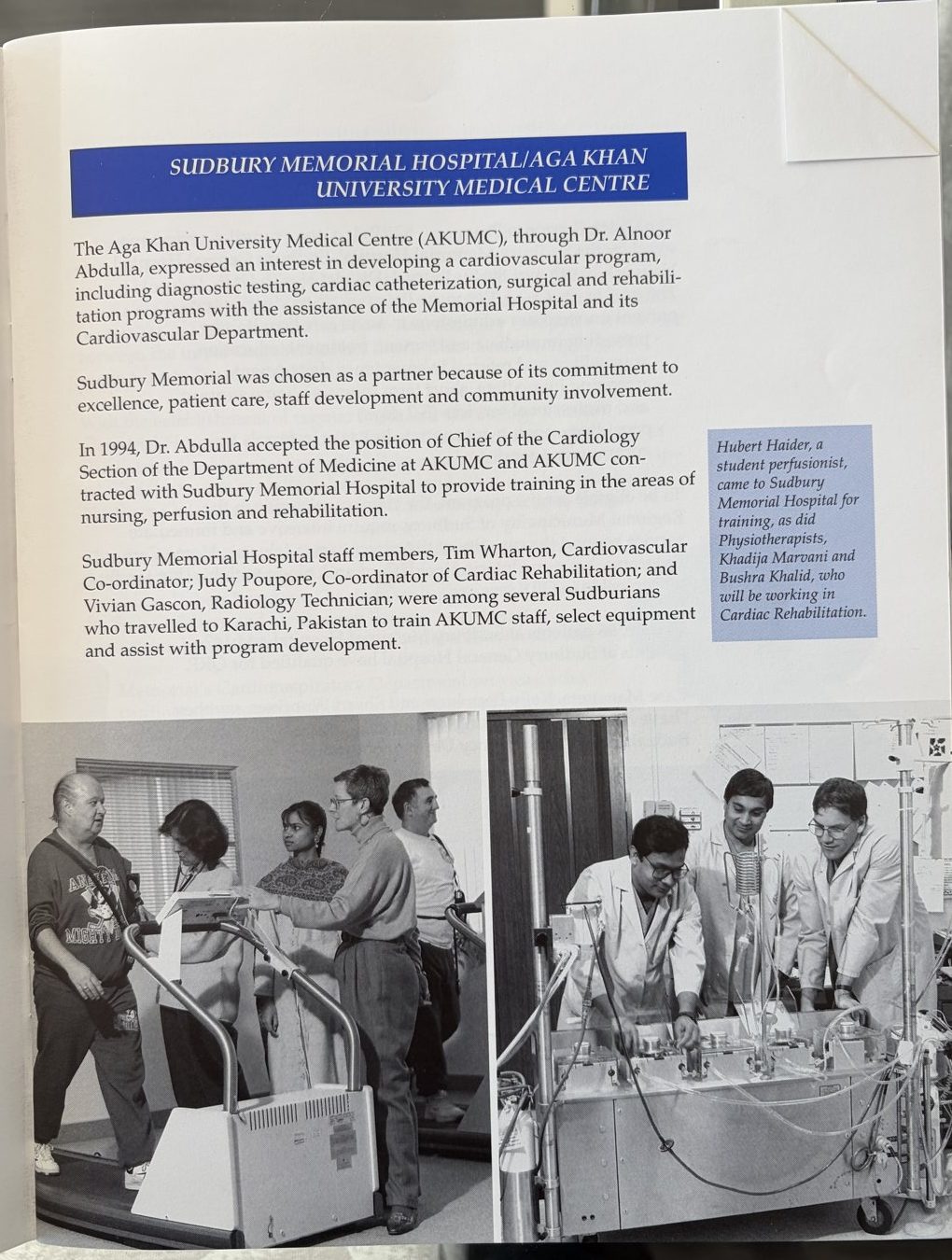
The 1994/95 reports are Dr. Abdulla’s farewell year at Sudbury. He had arrived in 1984; in 1994 he left to set up a new, complete, comprehensive Cardiovascular Program at the Aga Khan University. The hospital’s report records the partnership: the Aga Khan University Medical Centre, through Dr. Abdulla, wanted to develop a cardiovascular program, and chose Sudbury Memorial as its partner. In 1994 he accepted the post of Chief of the Cardiology Section at AKUMC, and Sudbury staff — including Tim Wharton, Cardiovascular Co-ordinator; Judy Poupore, Co-ordinator of Cardiac Rehabilitation; and Vivian Gascon, Radiology Technician — travelled to Karachi to train AKU staff and help with program development. Karachi nurses, perfusionists and physiotherapists in turn came to Sudbury Memorial for training. (The AKU story continues on Building the Aga Khan University Cardiac Program, 1994–1998 and the opening day page.)
The nurse who built the team in Karachi
The key person Dr. Abdulla took with him was Monique May, a highly experienced cardiac nurse who had worked in the hospital’s cardiac program and by then was working at his own outpatient cardiac centre in Sudbury. She was not on the hospital’s staff, which is why the hospital’s report does not name her. He chose her to train the nurses in the CCU, the ICU and the cardiac cath lab, and she was one of the most instrumental people in getting the AKU Cardiac Program going. She stayed in Karachi for six months and kept coming back for the next two to three years. On opening day she is the nurse who wheeled in the first patient, and His Highness acknowledged her with a hand on her shoulder — see the AKU Cardiac Program opening: the first patient, and His Highness’s blessing. The night before, she and Dr. Abdulla cleaned the cath lab themselves until about three in the morning (read that story).
Putting Sudbury on the provincial map
Dr. Abdulla did not only build services inside the hospital. He also made sure that Sudbury was seen and judged at the provincial level. Through his work on the provincial Cardiovascular Advisory Committee, the Cardiac Care Network, and as Sudbury’s representative for Northeastern Ontario, he brought the program into the same conversation as the university cardiac centres, so that nobody at the academic centres was in any doubt that high-level cardiology and cardiovascular work was being done in Sudbury.
The province-wide outcome studies of the Provincial Adult Cardiac Care Network of Ontario then compared all nine of the province’s cardiac surgery centres: eight university-affiliated academic hospitals and Sudbury, the only community-based centre. The Sudbury data were from the period when Dr. Abdulla was Chief of the department (1991–92), and he collected them himself. They showed that Sudbury, a community hospital, had the lowest mortality of the nine centres. The published papers, in Circulation, one of the leading cardiology journals in the world, did not name the individual hospitals. But in December 1994 The Ismaili, Canada reported the hospital’s Executive Director, Esko Vainio, as saying that a recent province-wide study of heart surgery at the nine adult cardiac surgery units found that Sudbury Memorial had the lowest mortality rate of the nine, with the shortest post-operative hospital stay (see the AKU page). Dr. Abdulla is named among the authors of these studies, published between 1994 and 1997 (two of them in Circulation) and listed on the Publications page.
What the Sudbury years made possible
Those ten years were Dr. Abdulla’s most productive as a clinician, a program builder, a teacher and a community organizer. In Sudbury he added nuclear cardiology, a pacemaker clinic and cardiac rehabilitation, directed a heart health program, led a department, and helped raise the money for the buildings and equipment the services needed. That experience is what prepared him to put together the complete Cardiovascular Program at the Aga Khan University in Karachi.
The community side of these years — the program Dr. Abdulla is most proud of — is told on the Sudbury Heart Health Program page.