Medical Navigation & Patient Advocacy
Dr. Abdulla works as an independent patient advocate.
Forty-plus years of clinical leadership, now applied to helping individual patients and families find their way through complex, multi-system illness — for clients across Canada, the United States, and around the world.
This work continues in the same pro bono spirit that has run through Dr. Abdulla's entire career. He does not charge for it, and does not solicit new clients — families reach him by word of mouth from around the world, and he continues to make himself available to them out of the same commitment to service that has defined his life's work.
Dr. Abdulla is no longer providing direct medical care to patients. He reviews clinical pictures with families, explains medical terminology and treatment options discussed by care teams, helps prepare questions for treating physicians, and supports clearer communication. He does not diagnose, prescribe, replace treating physicians, or make treatment decisions on behalf of patients.
“This service provides patient advocacy, education, and guidance only. It is not an emergency medical service, and Dr. Abdulla is not the physician of record for any patient. This service does not diagnose medical conditions, prescribe medications, or provide treatment plans. All medical decisions, diagnoses, treatments, and prescriptions remain solely between the patient and their treating physicians and healthcare providers.”
“As you may know, I am no longer providing direct medical care to patients, and you are not my patient. At all times you should follow the advice of your doctors and make decisions in concert with them.
I offer this guidance freely to anyone who reaches out to me, regardless of faith or background. For many, our connection is as fellow members of the Aga Khan Ismaili community, and it is in that spirit — as your faith brother — that I offer brotherly advice. For others, it is simply as a friend, one person looking out for another. Either way, all my discussions with you and your family are offered in that same spirit: I will try to answer your questions, educate you, and guide you, so that you can successfully navigate your care going forward with your doctors.
I am not billing any agency for this service, and I am not charging any fee. I do this pro bono, as my own Time & Knowledge service, which I have been doing for decades, for many people in Canada and around the world.”
Unifying the Specialist Silos
Synthesizes fragmented specialist data into a single, coherent clinical roadmap — ensuring patients do not fall through the gaps that open up between disconnected specialty teams.
Navigating Complex Systems
Draws on decades of institutional knowledge of how hospital systems actually work to secure optimal, timely care for private clients facing serious or ambiguous diagnoses.
Stable, Medically-Sound Leadership
Provides families managing multi-system illness with grounded clinical judgment focused on long-term health outcomes and genuinely informed decision-making.
Why Medical Navigation?
Modern healthcare is powerful but fragmented — a patient with a complex or multi-system illness may see half a dozen specialists who rarely speak directly to one another. Dr. Abdulla's Medical Navigation practice exists to close that gap: acting as a single, clinically fluent point of continuity who can read the whole picture, ask the right questions of each specialist team, and help a family make confident, well-informed decisions at every stage of care.
This work draws directly on a career spent building the very systems patients now have to navigate — as a front-line clinician, department chief, program founder, and principal investigator on major international cardiac trials. Few advocates bring that combination of bedside experience and institutional insight.
2012 – Present
Medical Navigation & Cardiac Education Consultant, Vancouver, BC
Applying 40+ years of clinical leadership to provide high-level strategic oversight for families managing complex cardiovascular and multi-system illnesses — a genuinely international practice, spanning:
What This Looks Like in Practice
Four anonymized examples — details changed or omitted to protect privacy — of the kind of situations families bring to Dr. Abdulla.
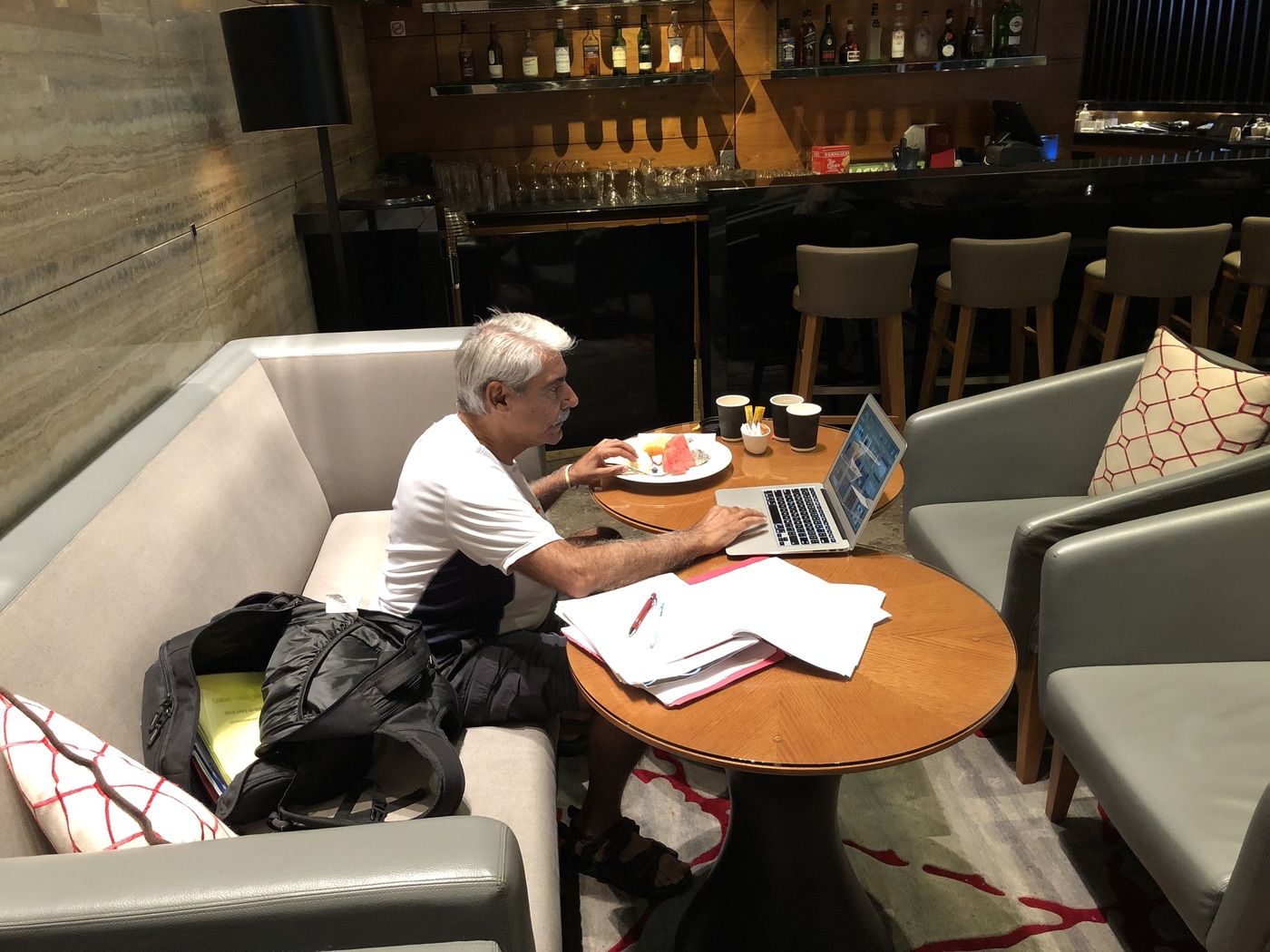
A relative was admitted to a tertiary hospital's intensive care unit with a dangerous heart rhythm and fluid building up around her heart. Over the following days, as the ICU team rotated between physicians, doctors drained the fluid and worked to control the rhythm — but no one had yet connected these findings back to her medical history: she had survived three prior cancers, one of which had involved radiation to her chest. Reviewing her full record with the family, Dr. Abdulla recognized the underlying process was very likely oncological rather than primarily cardiac — a recurrence at the lining of the heart itself, in the same territory he had spoken about years earlier in a 2019 keynote on cardio-oncology, before it existed as a formal cardiology subspecialty. When a chest MRI confirmed it, the next physician on rotation initially treated the case as already settled. Dr. Abdulla worked through the chart with her, step by step, until it was clear the case needed to go back to the oncology team who already knew the patient — and made sure that transfer actually happened. The oncology team has since confirmed the diagnosis and started her on a course of radiation treatment.
A family physician in Central Asia, who had heard of Dr. Abdulla through a mutual contact, called about a four-year-old boy whose lips and fingertips turned blue from time to time. Working through an interpreter with the family, Dr. Abdulla suspected a congenital heart defect and arranged for an echocardiogram locally, which confirmed a hole between the heart's upper chambers, with blood beginning to flow the wrong way as pressure built on one side. He arranged for the child to be seen at a pediatric cardiology centre in a neighbouring country and helped arrange the means for the family to travel there, where the child remains under specialist care today. Word of the case reached a relative elsewhere in the family, who had her own three-month-old daughter checked as a precaution — and found a similar but far smaller defect, stable and straightforward to repair locally, needing no referral at all. Two children, two very different paths, reached only because a family somewhere in the world knew how to find him.
A patient came to him when another cardiologist's practice changed hands — someone who had been treated for atrial fibrillation the same way for years. On his very first full assessment, Dr. Abdulla recognized the treatment itself was working against the patient: this wasn't ordinary atrial fibrillation, but a rarer, vagally-mediated form, where the usual first-line medications push the arrhythmia in the wrong direction rather than correcting it. He changed the medication regimen accordingly, and the patient improved dramatically almost immediately. They have remained close friends ever since.
Medical navigation isn't only the dramatic turning points — catching a missed diagnosis, arranging a referral across borders. Just as often, it's the steady, unglamorous work of staying on top of every result as it comes in. A Tajik family, living in Moscow for work, was managing their son's cardiac care with Dr. Abdulla's guidance from Canada — and over the course of it, lab reports arrived from Moscow in Russian, on no fixed schedule, each one needing to be translated, read correctly, and weighed against everything already known about the case before he could advise the family on what it meant and what to do next.
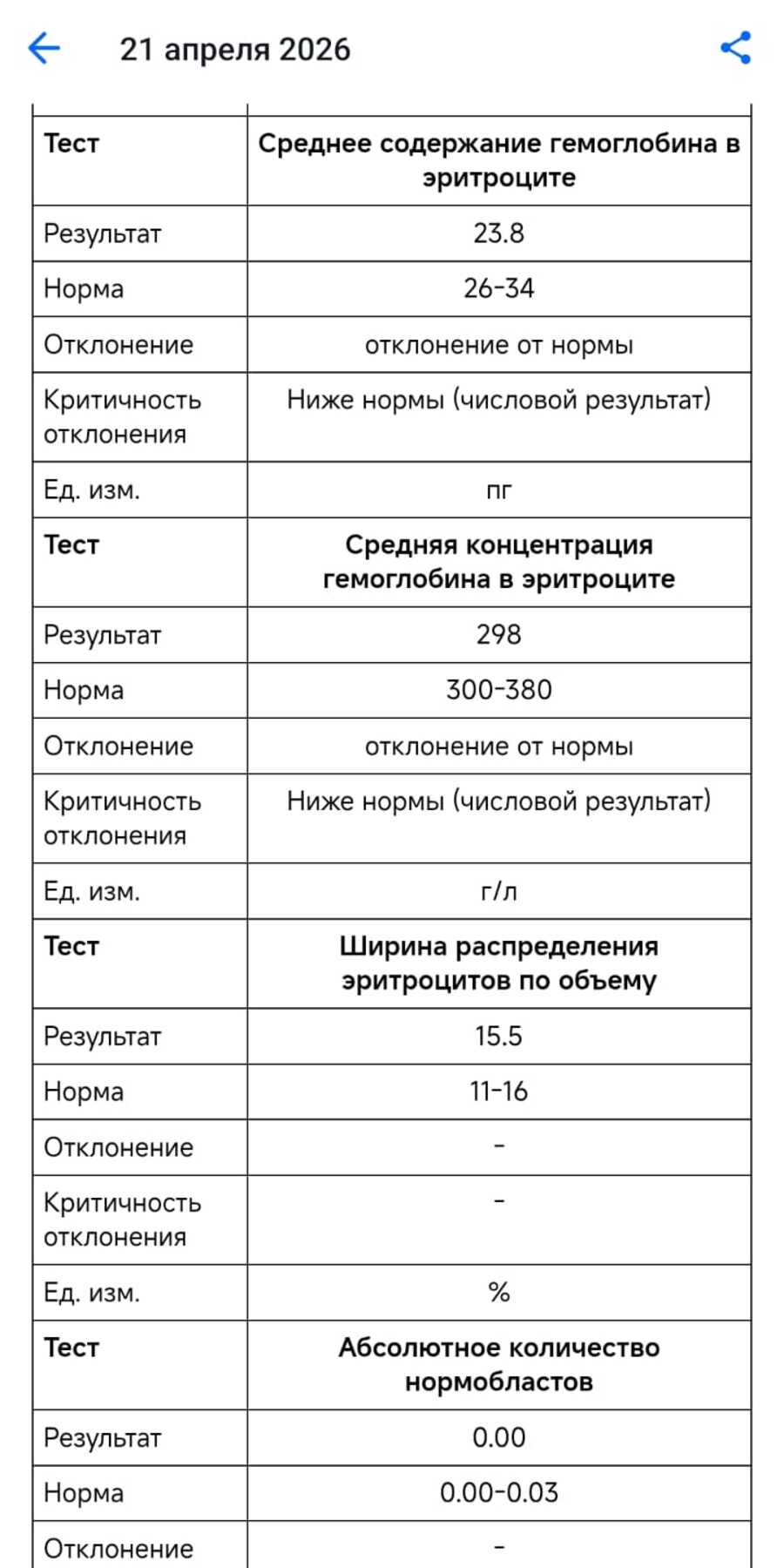
That case is one example of something Dr. Abdulla sees again and again: people find their way to him across geography, politics, race, and religion, and he does what he can to help in every case.
Documented Case Examples
Two further cases, drawn directly from Dr. Abdulla's own working files — patient-identifying details redacted, shown here to illustrate what sustained, cross-specialty navigation actually looks like on paper.
A Decade of Coordinated Care
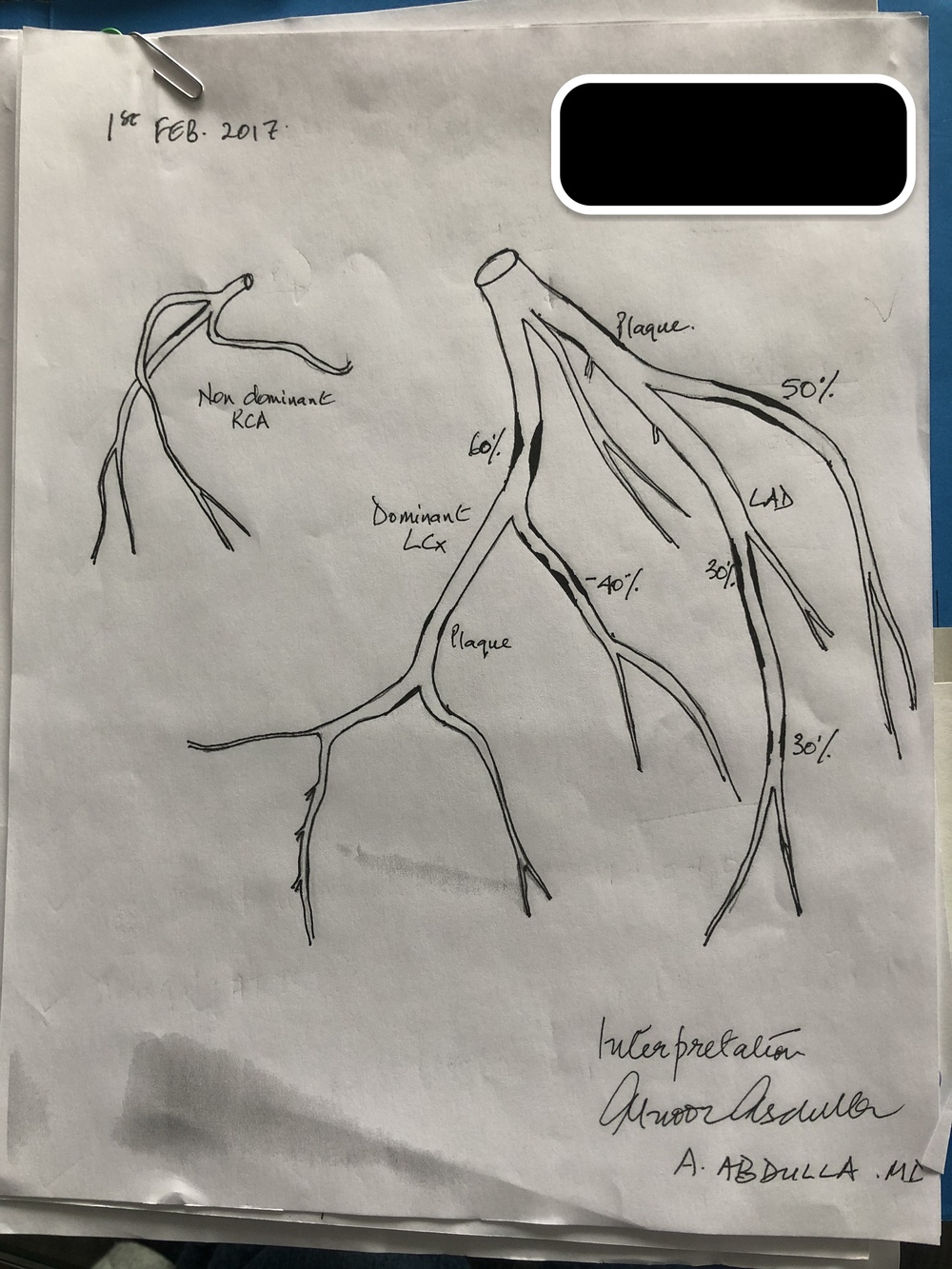
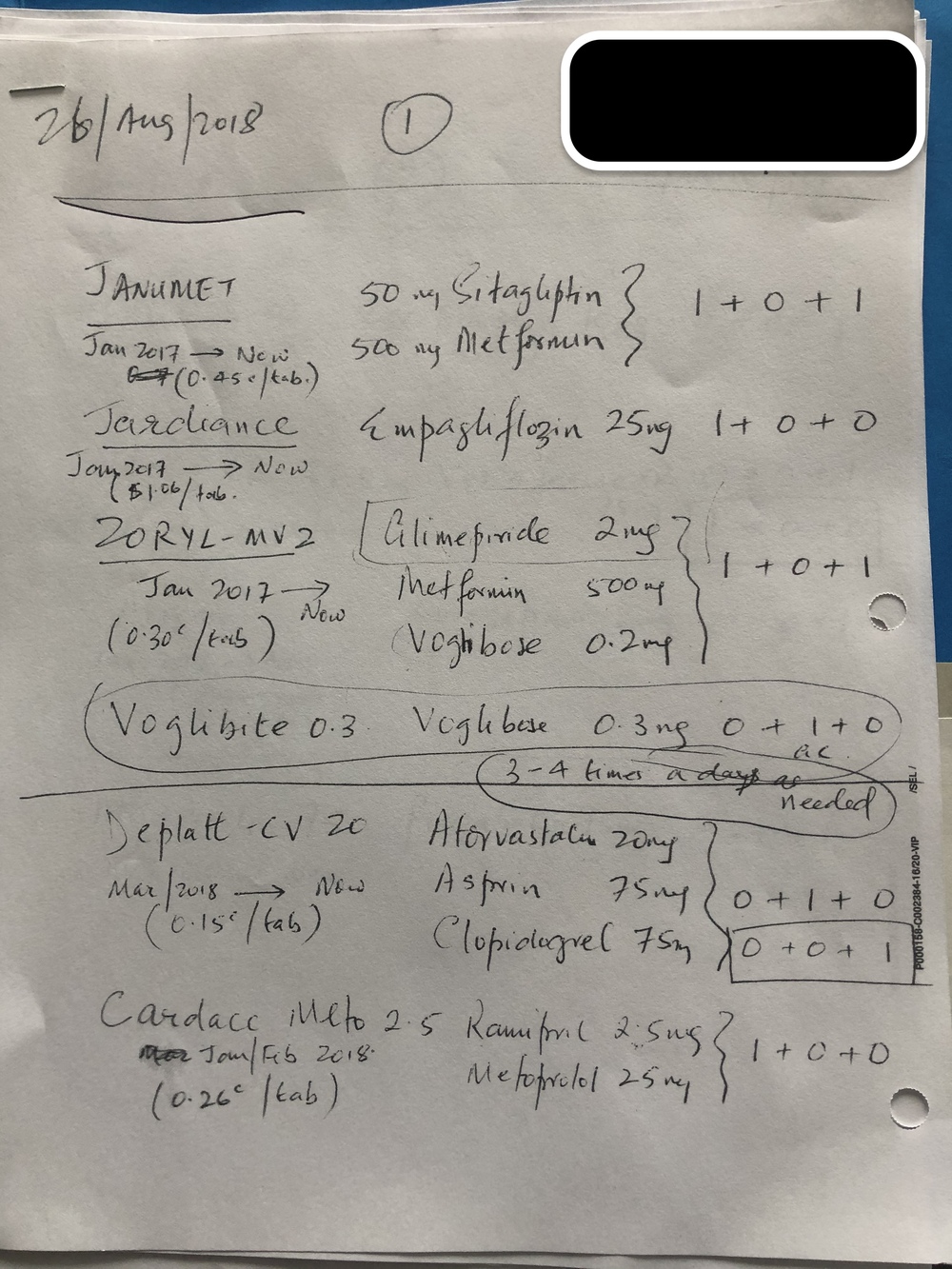
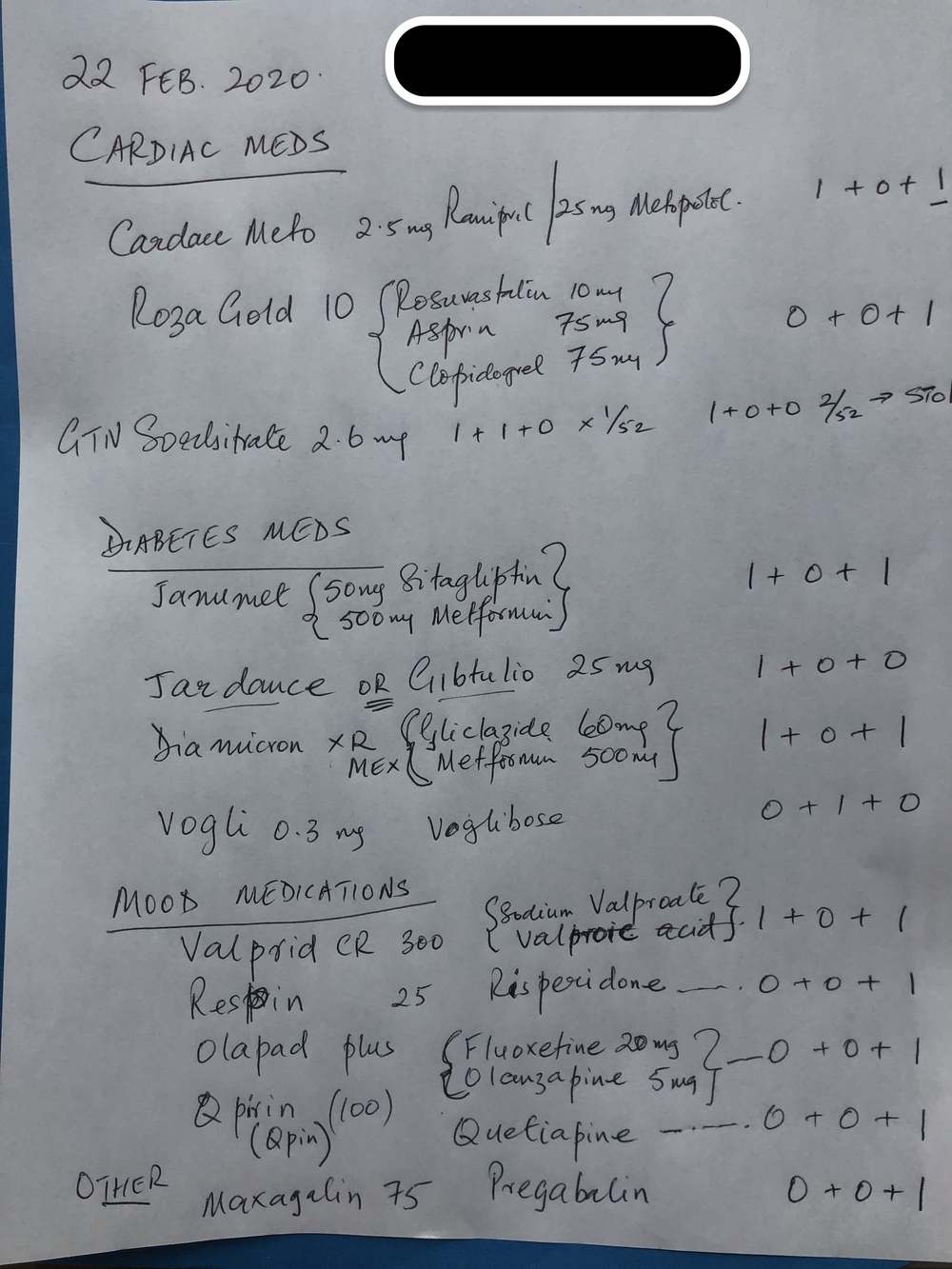
A professional working in Canada reached out about his father's cardiac care in India, after an angiogram raised the question of bypass surgery. Dr. Abdulla reviewed the video and images himself, working out the interpretation above so father and son could understand the anatomy together — and, in consultation with the treating team, the family chose medication over surgery. Over the following years, as the picture grew more complex — a diabetes specialist, then a psychiatrist, whose medications could interact with his heart medications — Dr. Abdulla continued helping the family and each new physician coordinate care across that widening circle of specialists. The patient has since migrated to Canada and is thriving; his son now speaks proudly, to anyone who will listen, about the doctor who helped guide his father's care for the better part of a decade.
A Long-Distance Second Opinion
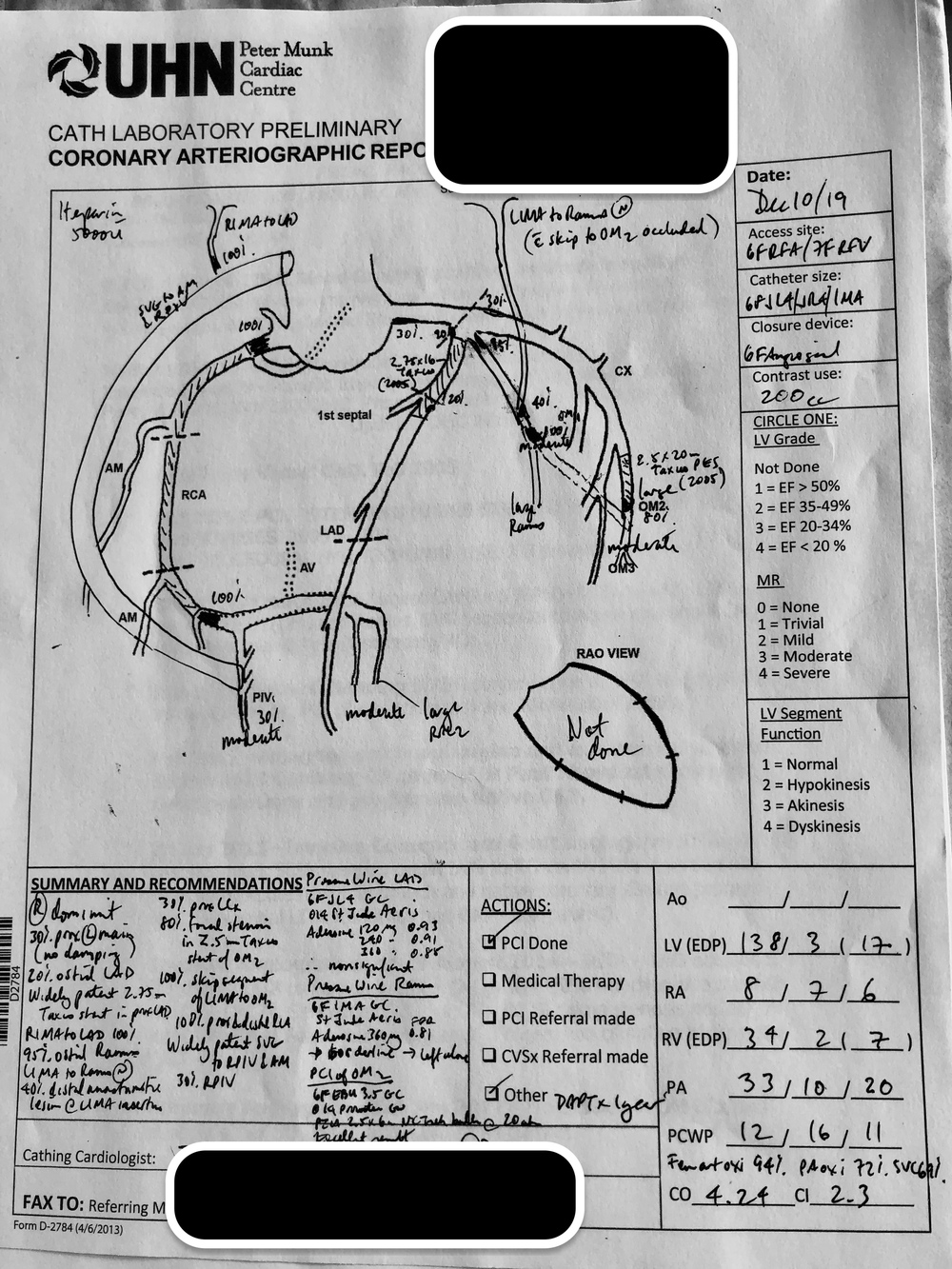
A family whose relative was already under specialist care at a major Toronto teaching hospital reached out when the treating team faced a difficult call: after a previous bypass and multiple stents, should the next step be another angioplasty, another bypass, or medication alone? The cardiologist managing the case — a former colleague of Dr. Abdulla's from his years working in Toronto — shared additional angiogram footage with him directly. Reviewing it, Dr. Abdulla identified that the underlying problem was a previously placed stent that had become crushed during a subsequent bypass surgery, while the artery was being stabilized to sew in the graft. When that graft later became occluded, blood flow was impeded through the crushed stent, causing the angina — not a new cholesterol blockage — which pointed toward a high-pressure balloon technique to open the crushed stent, rather than a repeat bypass. The treating cardiologist made the final call and carried out the procedure himself; the patient has done well in the years since.
How Patient Advocacy Can Help
Helps families understand complex hospital environments — from admission through discharge planning and follow-up care.
Translates dense, fast-moving medical consultations and specialist recommendations into clear, understandable language.
Offers an objective clinical perspective, so families can weigh treatment pathways without added confusion.
Helps families communicate with medical staff, so questions get asked and care plans are understood.
What Is a Patient Advocate?
A patient advocate is someone who helps patients understand, navigate, and make informed decisions about their healthcare. A patient advocate may assist with:
- Understanding the clinical situation and key concerns
- Reviewing available reports, test results, and specialist input
- Explaining medical issues in plain language
- Helping families prepare informed questions for treating physicians
- Providing education and advocacy while keeping decisions with patients and their care teams
Healthcare systems can be complex and overwhelming, particularly with serious illness, multiple providers, or insurance issues — a dedicated patient advocate helps ensure clear information, appropriate care, and consistent support throughout.
This is Dr. Abdulla’s role
Independent patient advocates
Independent professionals who support patients and families directly, outside any hospital or agency, as Dr. Abdulla does, pro bono.
Hospital or healthcare-facility advocates
Employed by hospitals to help patients address concerns and improve their care experience.
Family members or caregivers
Often act as informal advocates, speaking on behalf of the patient.