Cardiologist · Medical Navigator · Visionary Clinical Leader
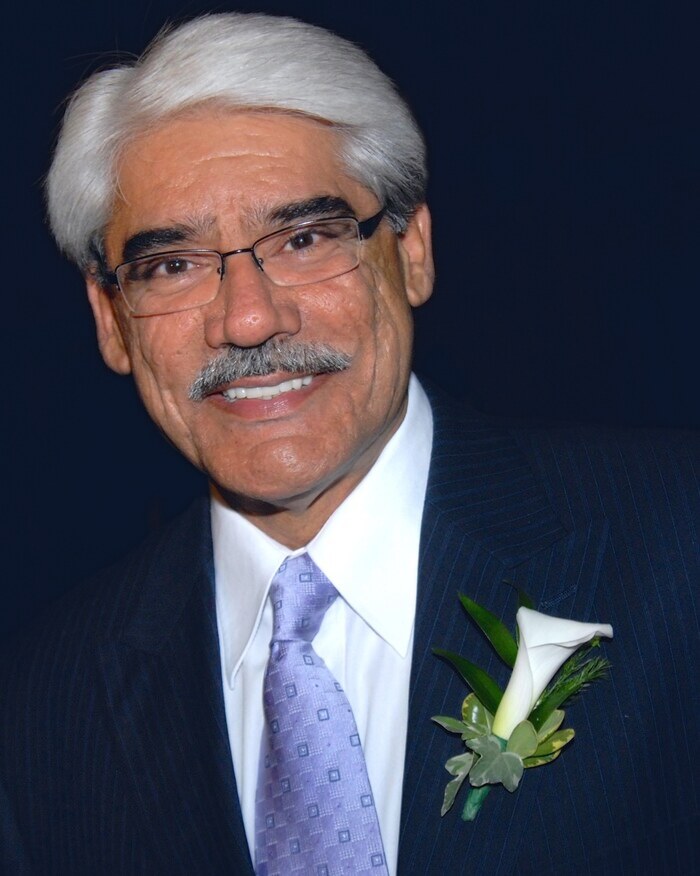
Alnoor Abdulla, M.D.
FRCP(C), FACC (Emeritus), FCCP, FACP
Dr. Abdulla specializes in Medical Navigation and Patient Advocacy, helping families find their
way through complex, multi-system illnesses. A distinguished Fellow of the Royal College of Physicians and
Surgeons of Canada and the American Colleges of Cardiology, Physicians, and Chest Physicians — triple
board-certified (ABIM) in Internal Medicine, Cardiovascular Diseases, and Interventional Cardiology. His
career has been defined by tertiary-level cardiac practice as well as innovative leadership, and establishing
landmark tertiary cardiac programs across North America, South Asia, and Africa. Today, he brings that same
institutional depth and clinical rigor to his work in Medical Navigation and Patient Advocacy.
40+Years in cardiovascular medicine
3Continents of program leadership
54Peer-reviewed publications & abstracts
2012Medical Navigation & Advocacy practice founded
01 · Professional Anatomy
About Dr. Alnoor
From refugee to a founding force in cardiovascular medicine across three continents — a career built on
rigorous training, institutional leadership, and an enduring commitment to service.
“For over four decades, my career in cardiology has been
guided by a single principle: providing world-class tertiary care where it is needed most. From establishing
cardiac programs in urban North American centers to building infrastructure from the ground up in Asia and
Africa, my mission has always been to bridge the gap between complex medical systems and patient
well-being.”
“My first mission wasn't just to become a doctor; it was to ensure my family's
future — and to bring world-class cardiac care to communities that lacked it.”
Dr. Abdulla was born in Tanzania, East Africa, and started his university
education in Uganda. Due to the expulsion and exodus from Uganda in 1972, he arrived in Canada as a refugee
at the age of twenty, with no family, no contacts, and no resources — only a determination to build a life
of service. He went on to sponsor and fund the education of his father, brother, and children, who today
serve as professionals in medicine, pharmacy, law, and commerce, graduating debt-free.
That personal history shaped a professional mission: building the tertiary cardiac infrastructure entire
regions were going without. Dr. Abdulla trained at Makerere University Medical School in Uganda and
completed his M.D. at the University of British Columbia in 1975, followed by residency in Internal Medicine
at UBC and subspecialty fellowship training in Cardiology — both Invasive and Nuclear — at UCLA and the
University of Southern California. He is triple board-certified by the American Board of Internal Medicine
in Internal Medicine, Cardiovascular Diseases, and Interventional Cardiology, and is also a Fellow of the
Royal College of Physicians and Surgeons of Canada.
Over the next four decades, he went on to found and lead complete tertiary cardiology programs — such as
Chief of the Cardiovascular Department in Sudbury, Ontario, and founding Head of Cardiology at the Aga Khan
University in Karachi, Pakistan — as well as establishing specialized cardiology services within existing
programs, such as the Nuclear Cardiology service in Lancaster, California, and a stand-alone cardiac
catheterization and angiography program without on-site surgical backup in Peterborough, Ontario. (See full
Professional Background below.)
His academic appointments span three countries: Clinical Instructor at the University of Southern
California, Adjunct Professor at Laurentian University, Lecturer at the University of Toronto, Associate
Professor at the University of Ottawa Heart Institute, and Professor of Medicine at the Aga Khan University,
where he was the founding Head of Cardiology. He has also served on numerous boards as Executive Member and
Chairman.
He has received wide recognition for his excellence and service to his profession and community — among
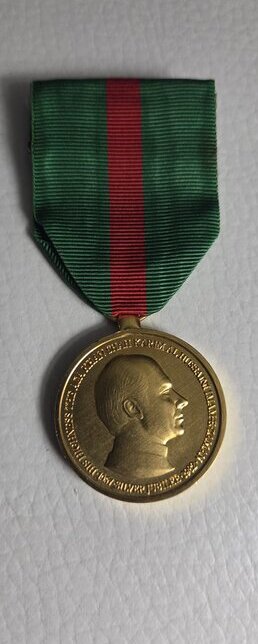
them the Aga Khan Silver Jubilee Service Medal in 1983, the Governor General of Canada's Commemorative Medal
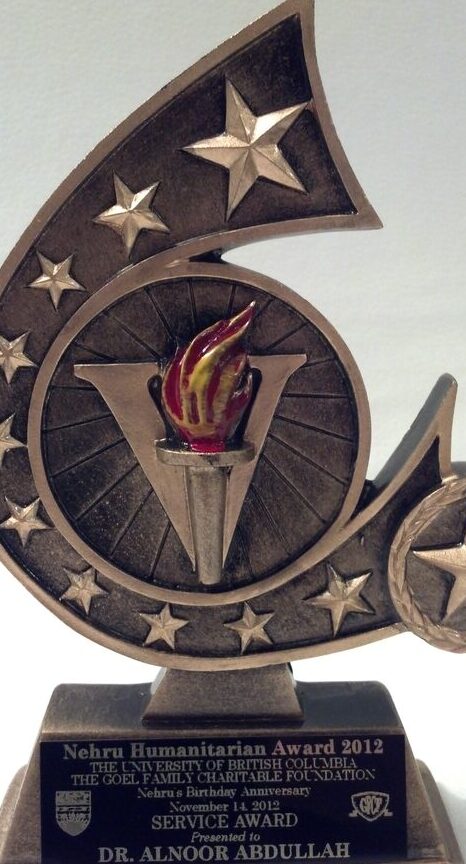
for “Service to Canada” in 1993, marking the 125th anniversary of Confederation, and the Nehru
Humanitarian Service Award from UBC / Goel Family Foundation in 2012 — recognitions he considers an
extension of the lifelong commitment to service that defines his career. (His full record of Honours &
Awards is noted below.) Since 2012, he has devoted his practice to Medical Navigation and Patient Advocacy,
helping families find their way through the often-confusing landscape of complex healthcare.
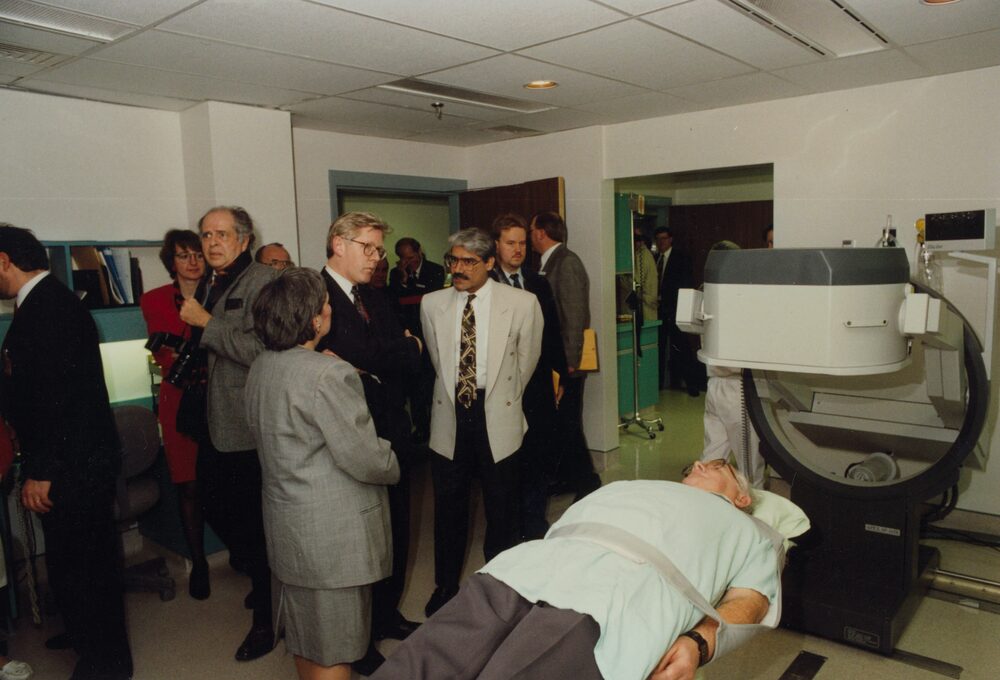
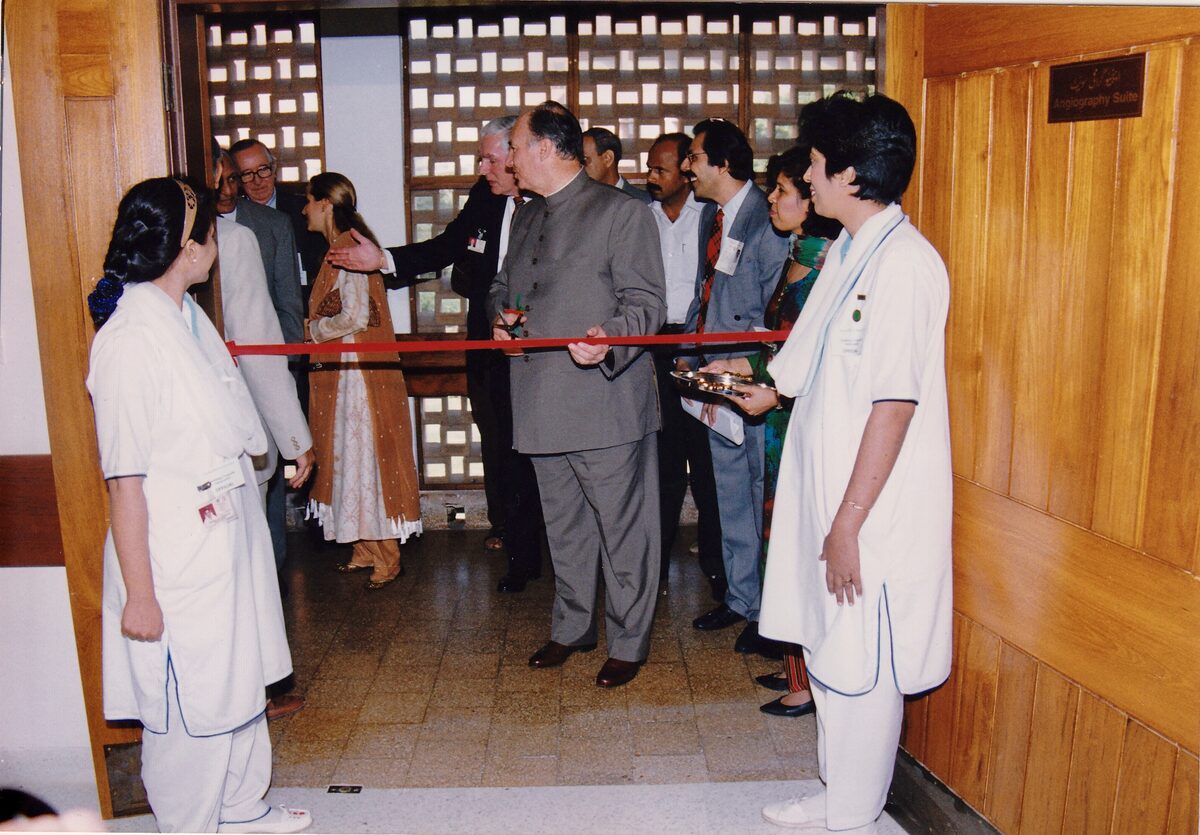
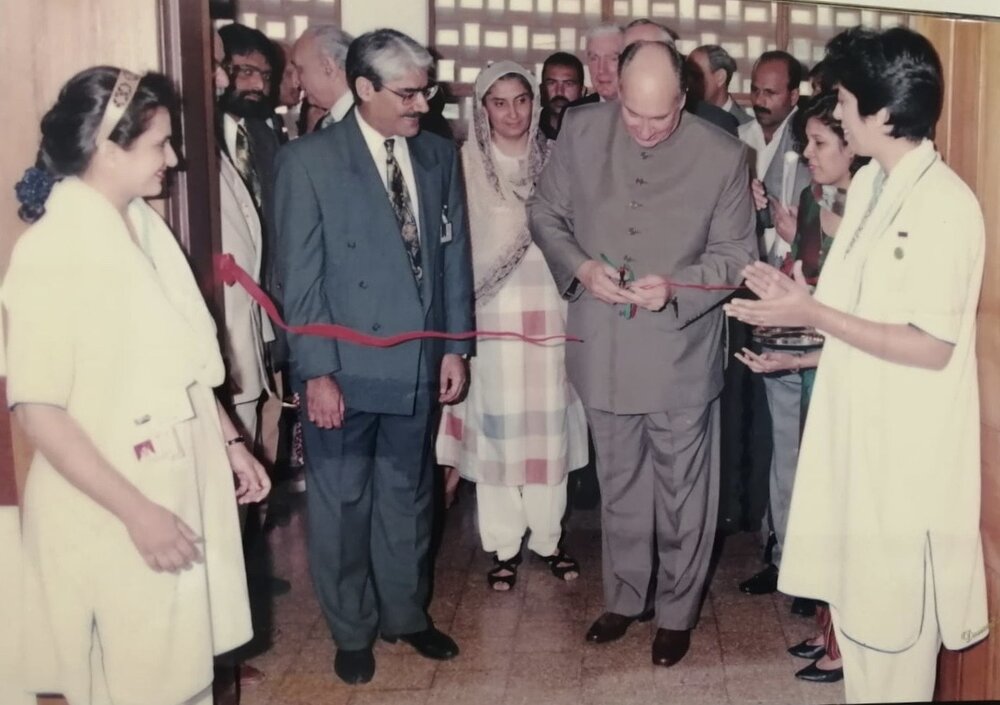
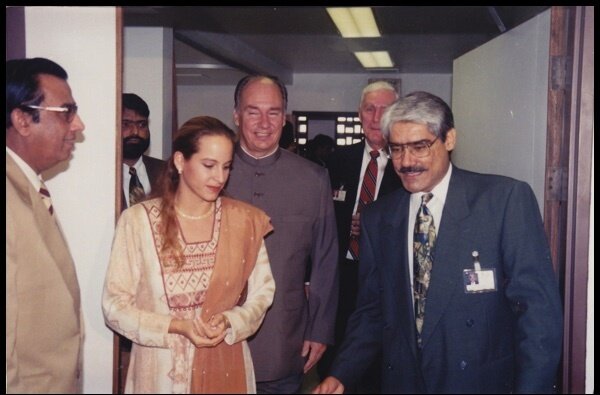
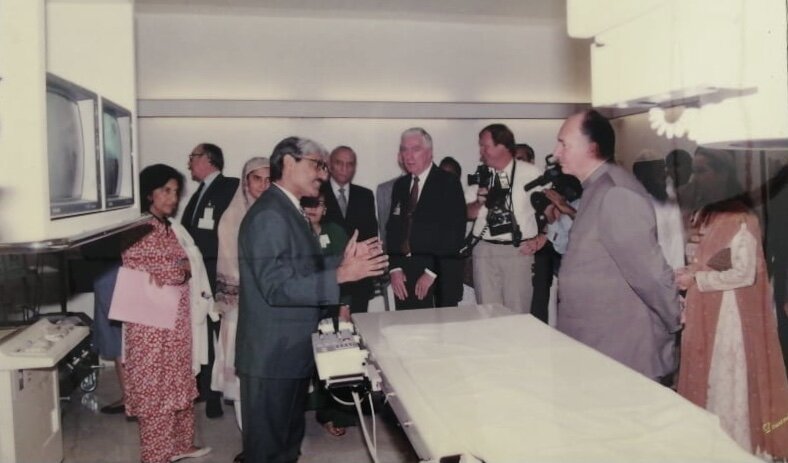
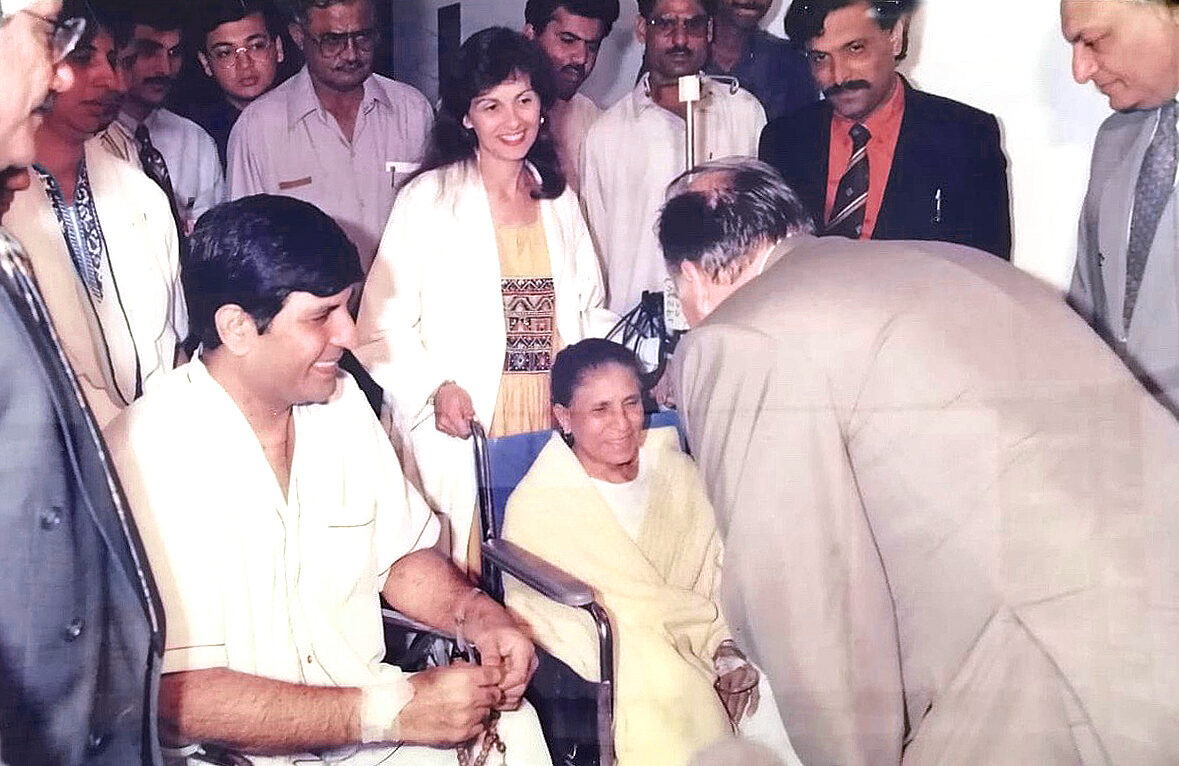
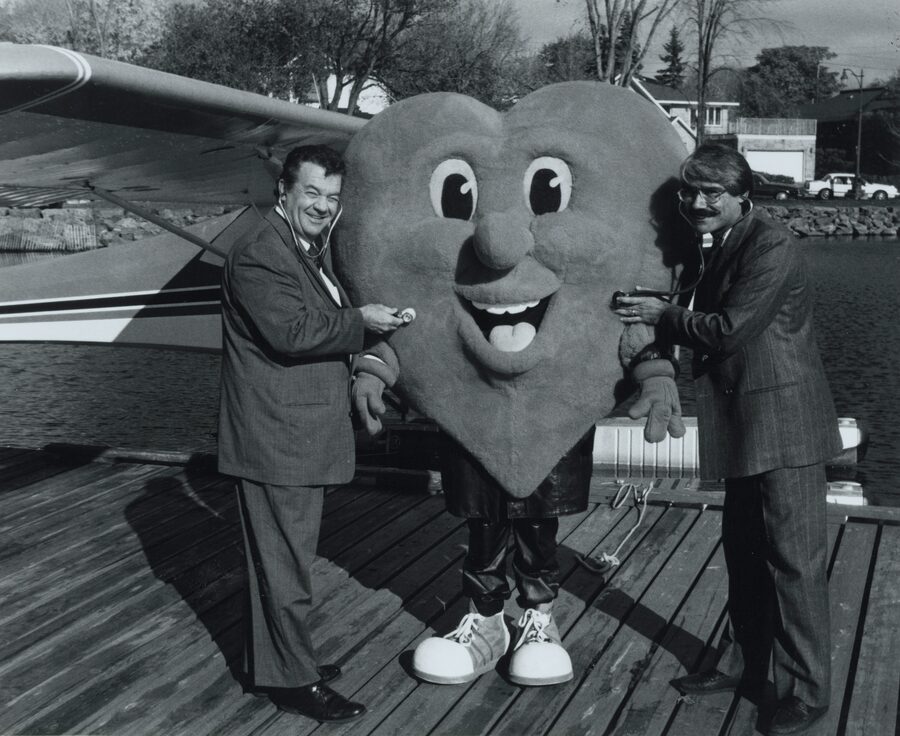
Dr. Alnoor Abdulla, M.D.Opening day for the Nuclear Cardiology program he established at Sudbury Memorial Hospital —
with Premier of Ontario Bob Rae, MPP Shelley Martel, Murdoch, and hospital leadership among the
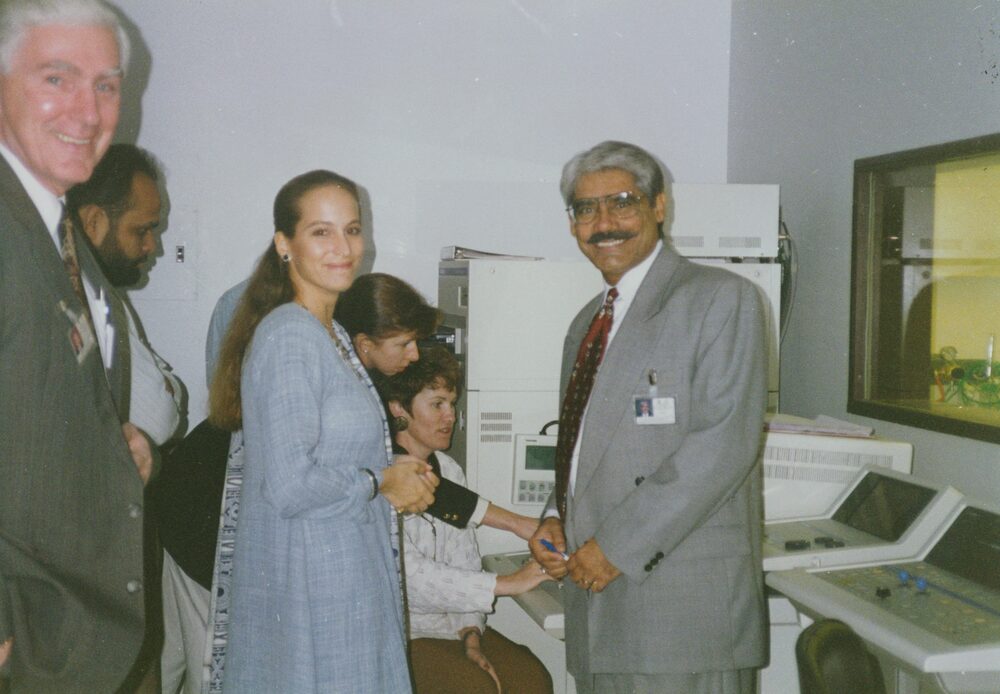
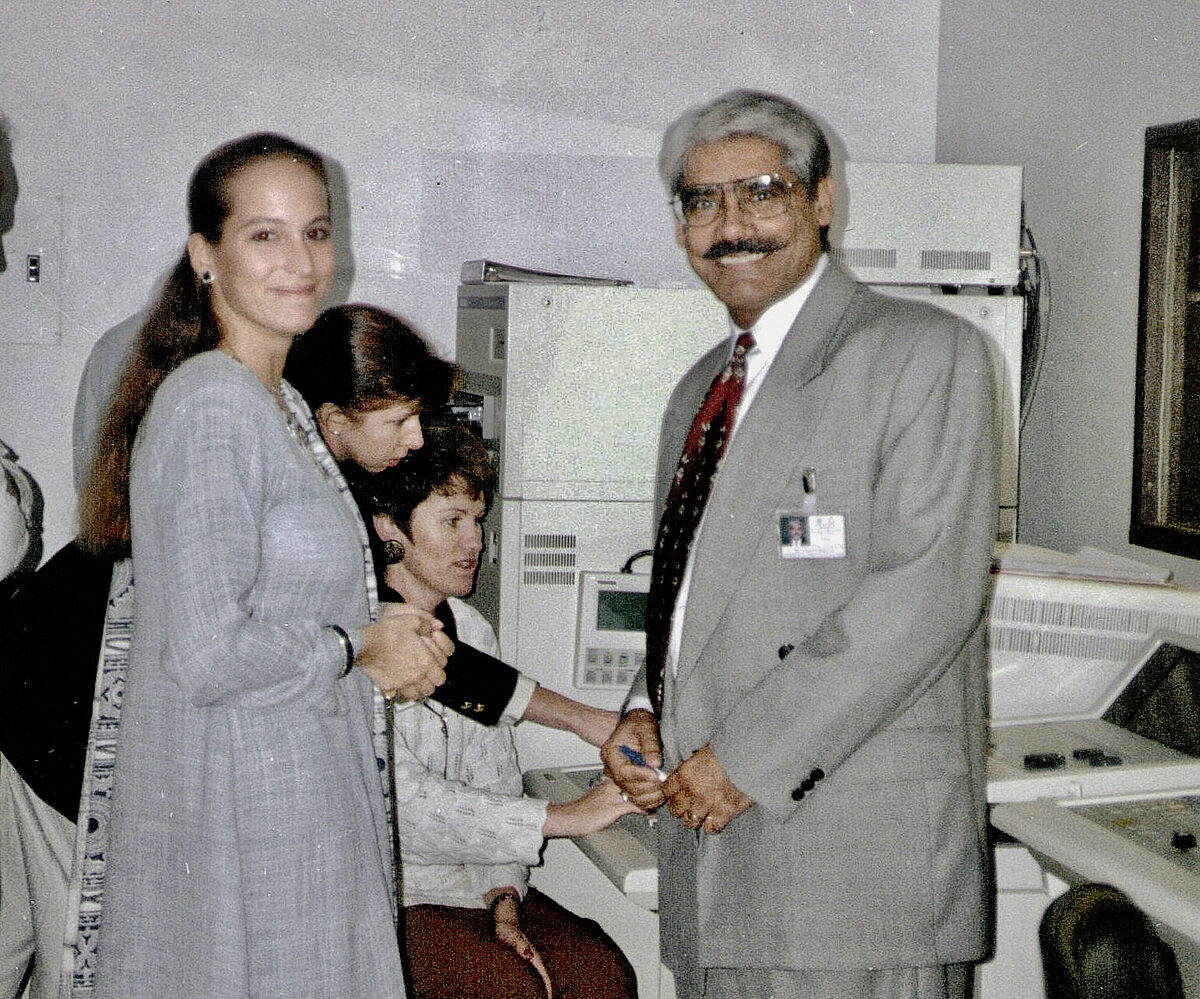
dignitaries present.With Princess Zahra Aga Khan and colleagues in the cardiac catheterization control room, AKU.
Azania School, Dar-es-Salaam, Tanzania, East Africa · Cambridge University &
London University “Advanced” Level Certificates
1970 – 1972
Makerere University Medical School
Kampala, Uganda, East Africa
1972 – 1975
Doctor of Medicine (M.D.)
The University of British Columbia, Vancouver, Canada
1975 – 1976
Rotating Internship
St. Paul's Hospital (UBC), Vancouver
1976 – 1979
Residency — Internal Medicine
St. Paul's Hospital (UBC), Vancouver · recipient of the Ken Evelyn Award for
Outstanding Resident
1979 – 1980
ICU/CCU Fellowship
St. Paul's Hospital (UBC), Vancouver
1980 – 1981
Clinical–Research Fellowship, Nuclear Cardiology
Cedars-Sinai Medical Centre, UCLA — under Dr. H.J.C. Swan, Dr. James Forrester, Dr.
Daniel Berman & Dr. Jamshid Maddahi · supported by the Aga Khan Foundation, Geneva
Nuclear Physics Certification
Certified Radiation Safety Officer — Nuclear Cardiology (State of California & Province of
Ontario, Atomic Energy Control Board)
Certified X-Ray Supervisor & Operator — State of California
1981 – 1982
Clinical Fellowship in Cardiology (Final Year)
University of Southern California / Los Angeles County Medical Centre — under Dr.
Shahbudin Rahimtoola
Emory University (Atlanta), under Dr. Andreas Grüntzig, and St. Michael's Hospital,
University of Toronto, under Dr. R. Chisholm · Clinical Traineeship Award, Royal College of
Physicians & Surgeons of Canada
Certified X-Ray Supervisor & Operator — State of California (1980–81)
Level II Certification, Cardiac / Coronary CT Angiography — San Francisco (2008)
Vancouver, BC604-377-9929alnoor.abdulla@gmail.com
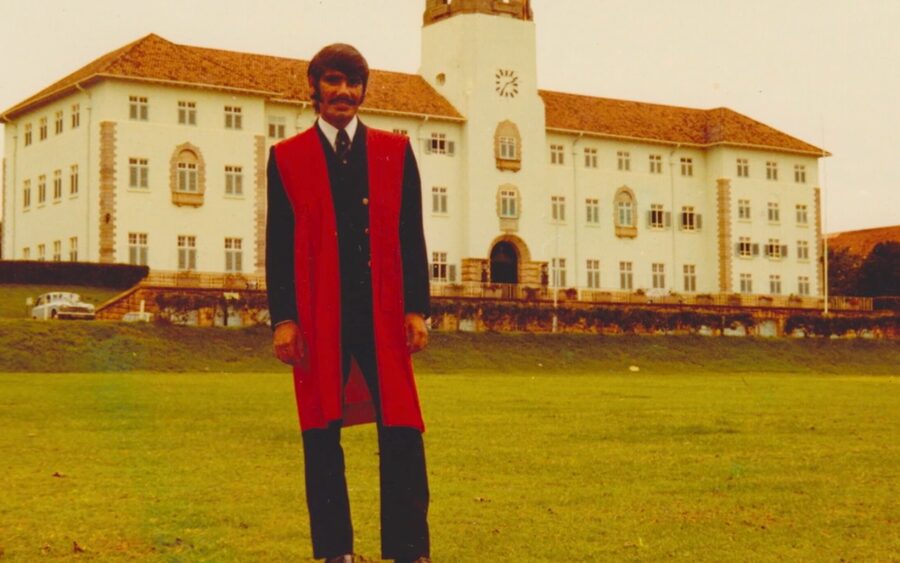
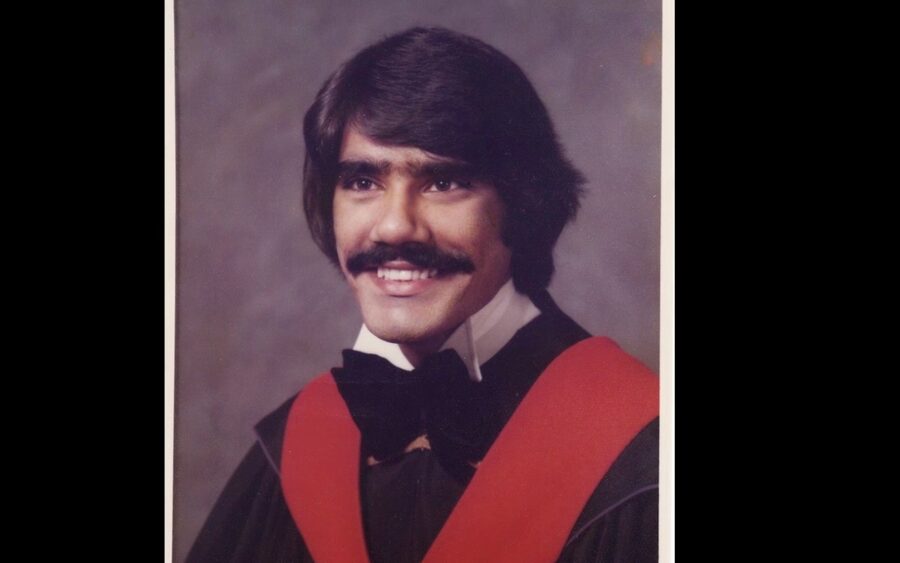
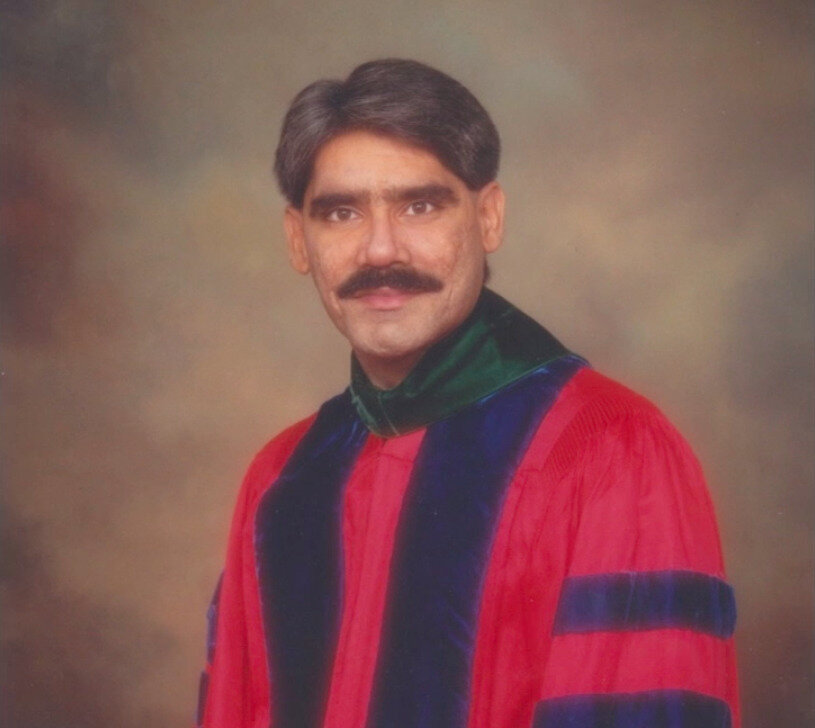
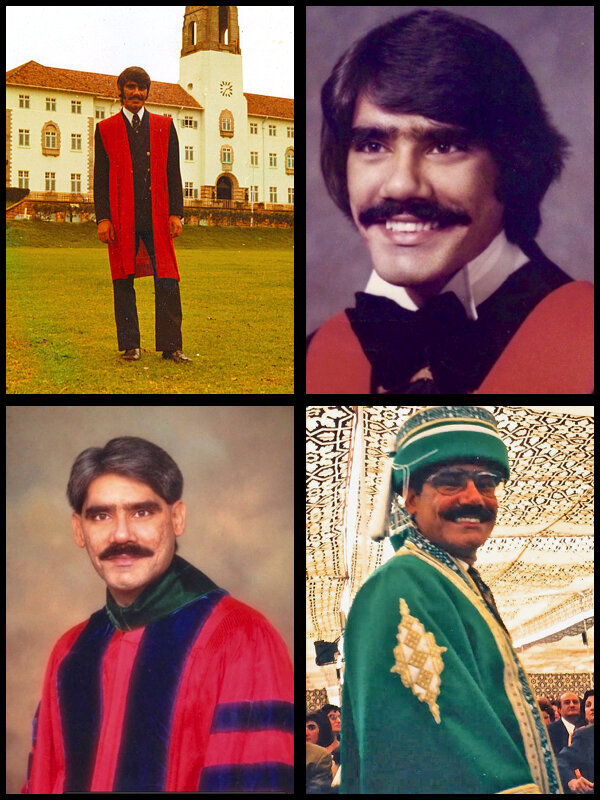
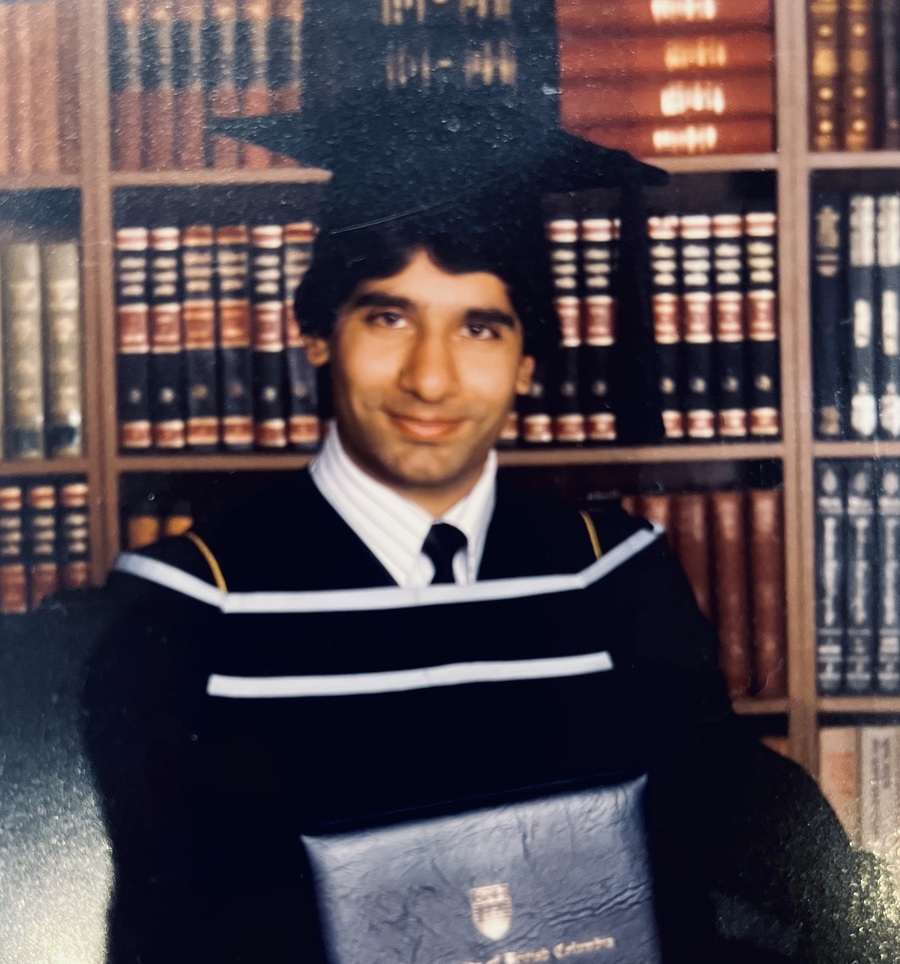
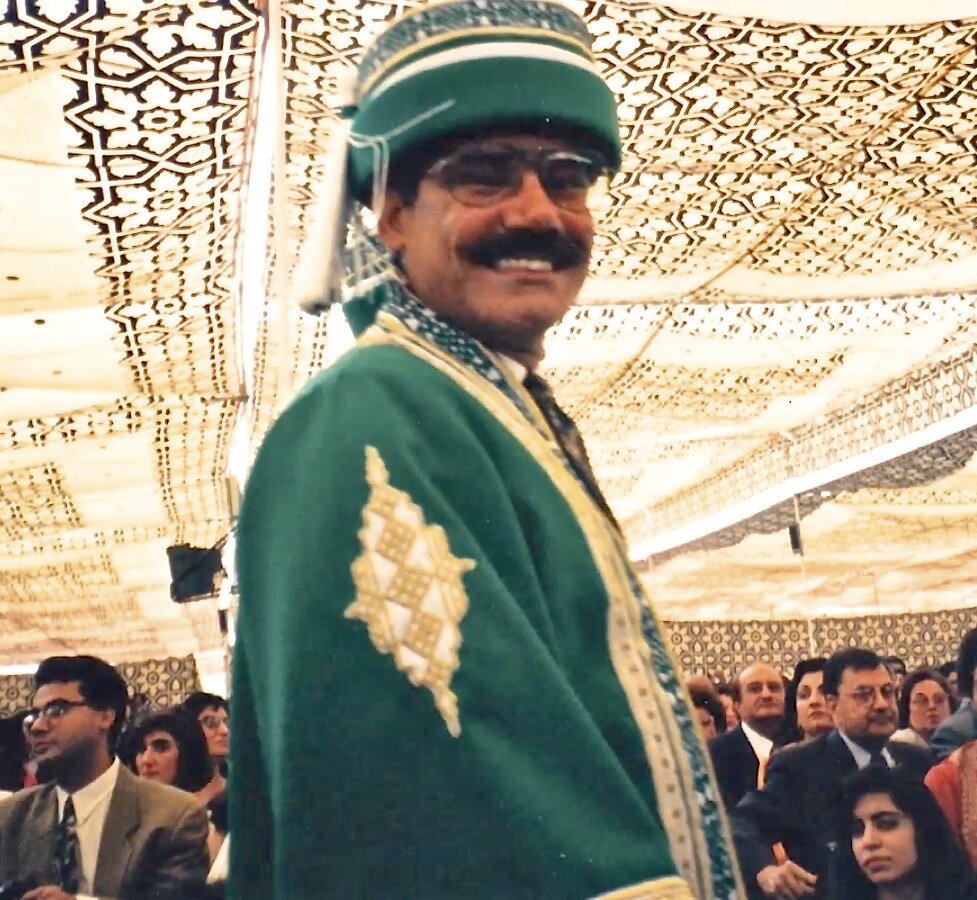
At Makerere University Medical School, Kampala, Uganda.M.D. graduation portrait, the University of British Columbia, 1975.In the ceremonial gown marking his Fellowship of the American College of Cardiology (FACC), 1984.
Academic and ceremonial regalia across his training and fellowships.
02 · Full Professional Background
Full Professional Background
A complete, chronological record of clinical, academic, and
program-leadership positions held across four decades, including simultaneous private practices maintained
alongside institutional roles.
1977
Family Practice, Locum
Mission, B.C.
1977 – 1978
Family Practice
Caledonian Medical Clinic, Nanaimo, B.C.
1982 – 1983
Private Practice — Invasive, Non-Invasive & Nuclear Cardiology
Lancaster Community Hospital (AVHMC, Palmdale Hospitals), California
Established and directed the first Nuclear Cardiology Laboratory in the
community setting — not university affiliated
1984 – 1994
Consultant, Invasive & Non-Invasive Cardiology
Sudbury Memorial Hospital, Sudbury General Hospital & Laurentian Hospital, Ontario
Established the region's first Nuclear Cardiology Laboratory; Medical Director
& Radiation Safety Officer, and the region's first Pacemaker Clinic
Director, Nuclear Cardiology (1984–94) and Director, Pacemaker Clinic (1984–94)
Established and headed the Sudbury Regional Hospital's first Prevention &
Rehabilitation Center (1989–94)
Deputy Chief, Cardiovascular Department (1989–90); Chief, Cardiovascular Department
(1990–92)
Cardiology outreach clinics in Blind River (1984–94) and Elliot Lake (1992–94)
1989 – 1994
Simultaneous Private Practice (Solo), Cardiodynamics
Sudbury, Canada
Established and headed a major Ambulatory Cardiac Centre with specialized cardiac consulting clinics and
a non-invasive cardiac lab (stress testing, Holter, Echo-Doppler, Pacemaker Clinic, Nuclear Cardiology)
1994 – 1998
Head of Cardiology
The Aga Khan University Hospital, Karachi, Pakistan
Founder — established and directed the first comprehensive academic,
tertiary-care cardiology program; Associate Professor, Dept. of Medicine (1994–96), then Professor
(1996–98)
Director, Cardiac Catheterization Lab (1994–98) — established and headed the lab
1998 – 2000
Cardiology Consultant / Private Practice
University of Ottawa Heart Institute, Ottawa, Canada
Associate Professor (VPT), University of Ottawa (1999–2001)
Assisted in establishing the first separate Ambulatory Cardiac Centre
1999
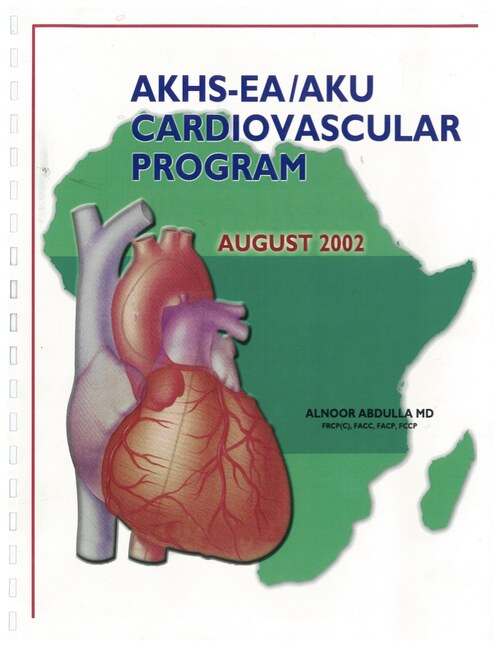
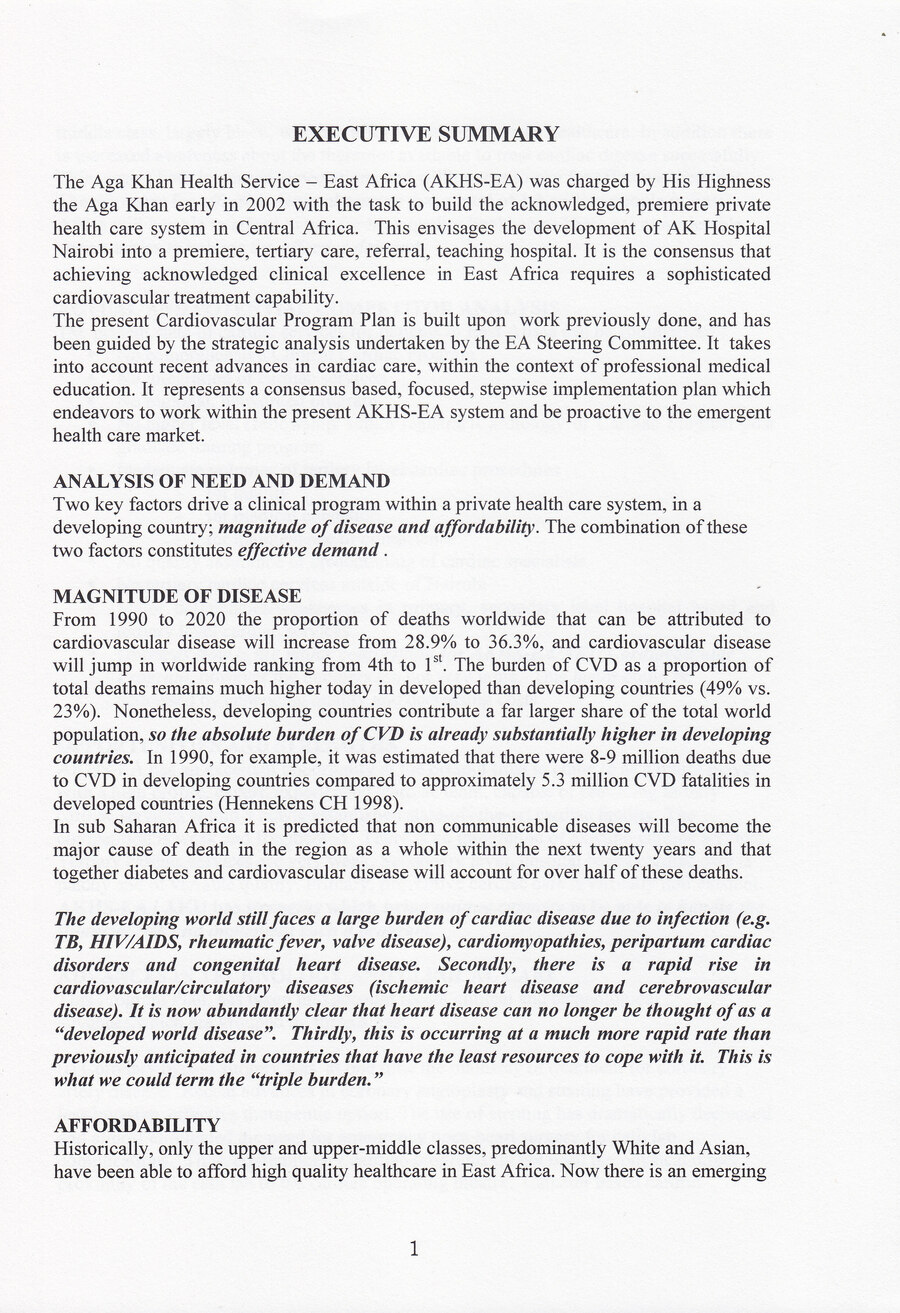
Contract, Aga Khan Health Service, East Africa
Developed the proposal and feasibility study for the first
comprehensive, integrated cardiac program with AKU; updated the plan in 2002 and authored the Strategic Plan
1999 – 2002
Cardiology Consultant
Peterborough Regional Health Centre, Ontario
Planned, implemented, and directed the new Regional Cardiac Catheterization Centre (1999–2000) —
one of the first stand-alone cardiac cath and angiography labs without cardiac
surgical back-up support
Simultaneous private practice as invasive staff cardiologist (1999–2002)
1999 – 2006
Interventional Cardiology
University Health Network (Toronto General Hospital)
Lecturer, Department of Medicine, University of Toronto (2000–06)
Completed requirement for Interventional Cardiology Fellowship and Board Certification (ABIM)
2001 – 2003
Simultaneous Part-Time Private Practice (Solo), Comprehensive Clinical Cardiology
Oshawa, Ontario
2002 – 2006
Private Practice (Solo), Comprehensive Cardiac Care & Nuclear Cardiology (IHF — provincial government
certified)
Greater Toronto Area, Ontario · Medical Director, Comprehensive Cardiac Care
2005 – 2010
Cardiology Consultant
Continuum Medical Care, West Vancouver, B.C.
2005 – 2012
Private Practice (Solo), Cardiology Consultant
Vancouver, B.C.
2012 – Present
Cardiology Educational Consultant & Medical Navigation and Patient Advocate
Vancouver, B.C.
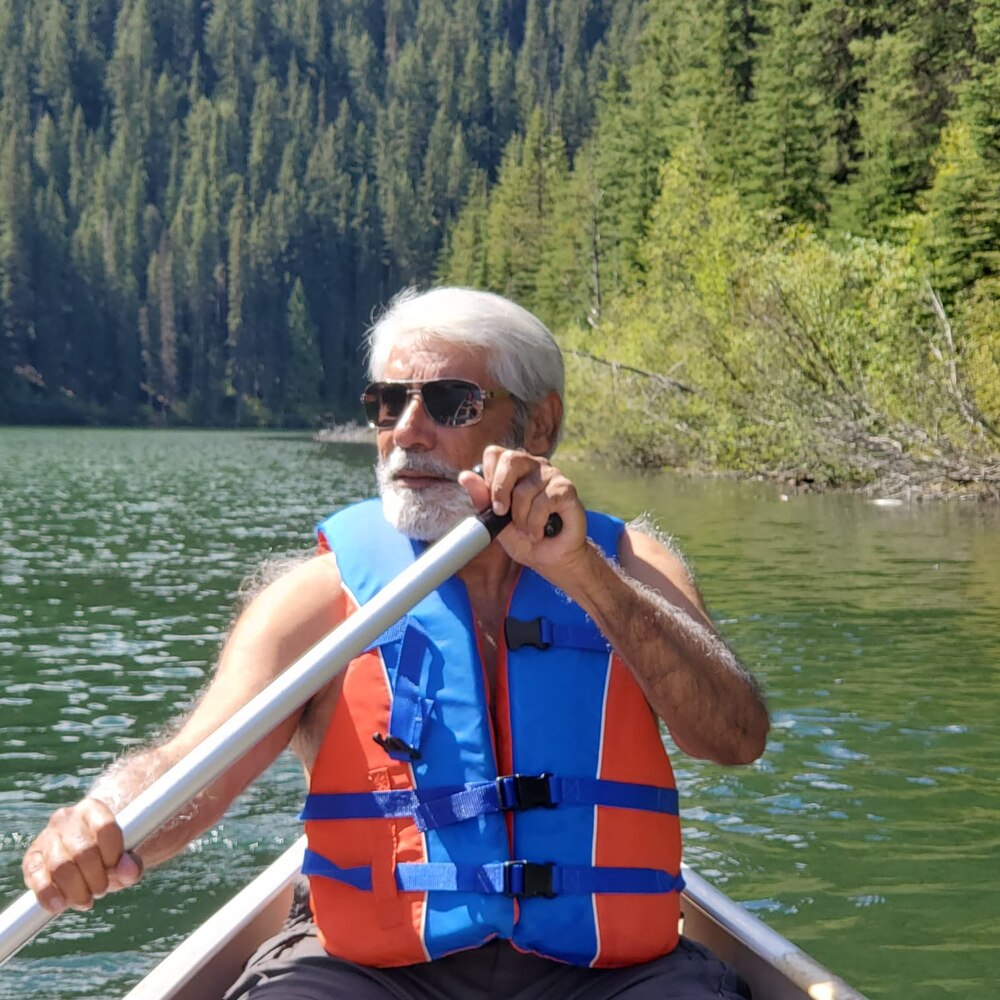
Never stopped rowing forward — the only direction.
03 · Honors and Awards
Career Honours (Selected)
1983 — Aga Khan Silver Jubilee “Service Medal,”
presented by His Highness the Aga Khan
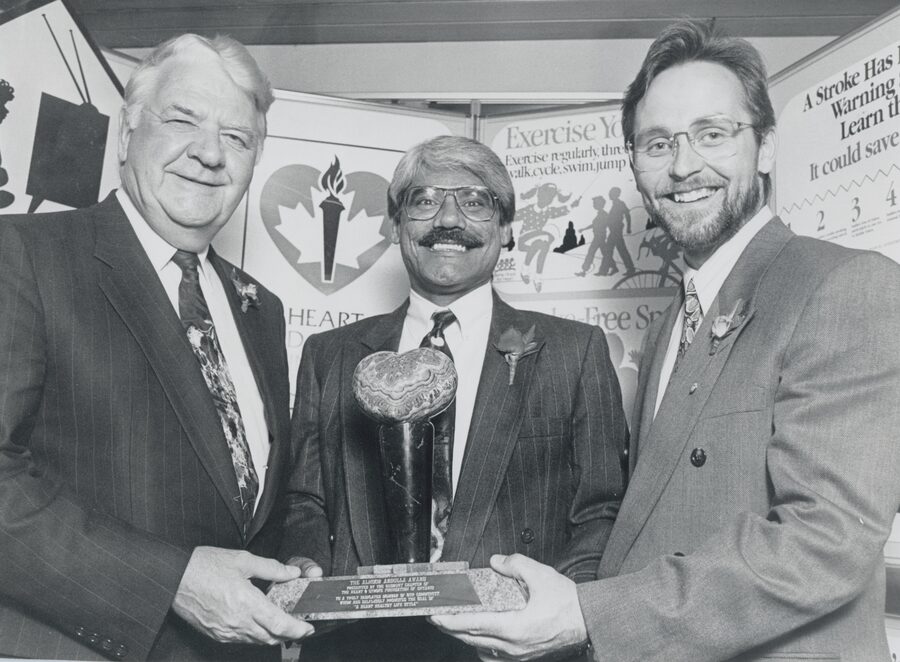
1992 — Named Award, “Dr. Abdulla Award,” created by the
Heart & Stroke Foundation of Ontario, Sudbury, in his honour
1993 — Commemorative Medal, “Service to Canada,”
presented by the Governor General of Canada on the 125th Anniversary of Confederation
2000 — Recognized “Founder,” of the Cardiac Care Network
of Ontario
2012 — Nehru Humanitarian Service Award, UBC / Goel Family
Foundation
View the full record of honours and awards (1969–2012)
1969 — Best Individual Exhibit, National Students' Science Congress, Kenya
1971 — Alexander–Galloway Prize in Anatomy, and First Place (Distinction) in Biochemistry, Makerere
University
1972 — May & Baker Prize in Pharmacology; First Place (Distinction) in Pharmacology, Makerere
University
1972 — Vancouver Foundation Award for Excellence: Physical Diagnosis, UBC
1972 — Bursary Award, UBC
1974 — Tommy Diespecker Memorial Scholarship Award, Clinical Medicine
1975 — CIBA–Geigy Graduating Class Prize in Psychiatry, UBC
1980 — Ken Evelyn Award, Outstanding Resident, UBC
1980 — Aga Khan Foundation (Geneva) International Scholarship Award for Clinical Research in Nuclear
Cardiology, UCLA
1983 — Physician's Recognition Award, American Medical Association (3-year cycle award for CME
activities)
1983 — Who's Who, California, USA
1983 — Aga Khan Silver Jubilee “Service Medal,” awarded by His Highness the Aga Khan
1985 — Clinical Traineeship Award, Royal College of Physicians & Surgeons of Canada
1986 — Physician's Recognition Award, American Medical Association (3-year cycle award for CME
activities)
1990 — Who's Who, Sudbury, Ontario
1990 — Canadian Aga Khan High Achievers Award, Professional Category
1992 — Outstanding Service Award, Heart & Stroke Foundation of Ontario
1992 — Physician's Recognition Award, American Medical Association (3-year cycle award for CME
activities)
1992 — Named Award “Dr. Abdulla Award,” Heart & Stroke Foundation, Sudbury, ON
1993 — National Commemorative Medal, “Service to Canada,” Governor General of Canada, 125th
Anniversary of Confederation
1995 — Best Poster Presentation Award, Second Annual National Symposium, Aga Khan University
1995 — Detweiler Clinical Traineeship Award, Royal College of Physicians & Surgeons of Canada
1996 — Physician's Recognition Award, American Medical Association (3-year cycle award for CME
activities)
1996 — Outstanding Speaker Award, AKU CME Seminars 1995
1998 — “Heart of Cardiology” Award, The Aga Khan University
1999 — Physician's Recognition Award, American Medical Association (3-year cycle award for CME
activities)
2000 — Recognized “Founder,” Cardiac Care Network of Ontario
2003 — Physician's Recognition Award, American Medical Association (3-year cycle award for CME
activities)
2006 — Physician's Recognition Award, American Medical Association (3-year cycle award for CME
activities)
2012 — Nehru Humanitarian Service Award, UBC / Goel Family Foundation
2012 — Fellow Emeritus, American College of Cardiology
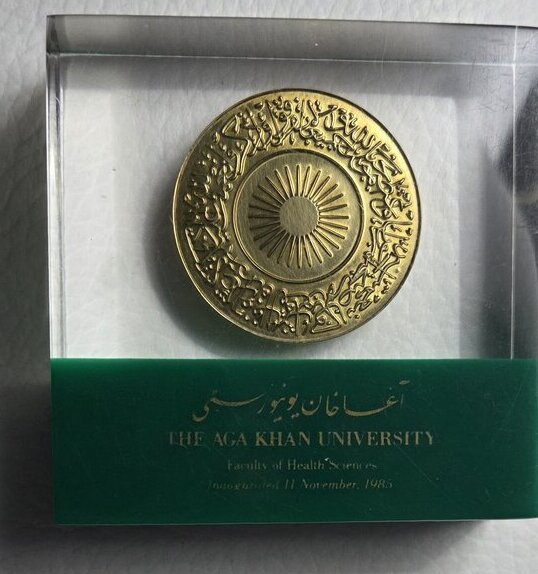
Aga Khan Silver Jubilee Service Medal, 1983 — marking the 25th anniversary (1957–1982) of
the Aga Khan's Imamat.Governor General of Canada's Commemorative Medal for “Service to Canada,” 1993 — 125th
anniversary of Confederation.The Nehru Humanitarian Service Award, UBC / Goel Family Foundation, 2012.
04 · Research and Publications
Landmark Research & Clinical Trial Leadership
Dr. Abdulla served as Principal Investigator or site
investigator on several practice-defining international cardiovascular trials, and as a national guidelines
panelist for the Canadian Cardiovascular Society.
Principal Investigator
GUSTO Trial (1991–93)
Sudbury Memorial Hospital site. An international randomized trial of four
thrombolytic strategies for acute MI, published in the New England Journal of Medicine (1993).
Principal Investigator
HOPE Trial (1993–94)
Sudbury site — one of the landmark trials establishing ACE-inhibitor therapy
for cardiovascular risk reduction.
Principal Investigator
INTER-HEART & Carvedilol HF Trials
Sudbury, then Aga Khan University, Karachi site (1992–94) — international
collaborations on global cardiovascular risk and heart failure therapy, begun as Principal Investigator in
Canada and continued at AKU after his 1994 move.
Selected Landmark Publications
A few of the 67 publications and guideline
panels above, on their own significance.
Circulation, 1985 · J.A.C.C., 1986
Quantitative Thallium-201 Washout Analysis
From his Cedars-Sinai/UCLA fellowship under Dr. Daniel Berman and Dr. H.J.C.
Swan, this pair of papers established that measuring how quickly thallium washes out of the heart muscle
— not just the static image — could uncover coronary disease that traditional imaging missed.
Adding washout analysis lifted detection sensitivity across every major coronary branch (LAD 74%→82%,
LCx 40%→61%, RCA 78%→90%), work that helped move nuclear cardiology from visual read to
quantitative science.
Primary Panelist, 1994
Canada's First National Heart Failure Guidelines
As Primary Panelist on the Canadian Cardiovascular Society's first-ever
Consensus Conference on Heart Failure, Dr. Abdulla helped review the trial evidence and draft the original
treatment recommendations — including establishing ACE inhibitors as mandatory first-line therapy
— that were then distributed to physicians nationally, published as a special supplement to the
Canadian Journal of Cardiology (Vol. 10, 1994).
The province-wide outcomes studies run by the Provincial Adult Cardiac Care
Network of Ontario benchmarked in-hospital mortality after bypass surgery across all nine of the province's
cardiac surgery centres — eight university-affiliated academic and major teaching hospitals, each with
interns, residents, and the full depth of academic support services. His Northeastern Ontario Cardiovascular
Program in Sudbury was the ninth — the only community-based centre in the group, with none of that
academic infrastructure — and still delivered cardiovascular surgery outcomes matching the standard
set by the province's academic centres.
View the full list of clinical trials, guideline panels & research publications (67)
National Guidelines Panels
Canadian Cardiovascular Society (CCS) First Consensus Guidelines on Heart Failure — Primary Panelist
(1994)
CCS Consensus Conference on Atrial Fibrillation — Secondary Panelist (1996)
Selected Clinical Trials (Principal / Site Investigator)
Iohexol — Canadian Multicentre Assessment of Safety & Efficacy, Sudbury Memorial Hospital (1985–86)
GUSTO I — Sudbury Memorial Hospital, Principal Investigator (1991–93)
Lisinopril in the Treatment of Hypertension — Canadian Postmarketing Surveillance Study, Sudbury
(1992–93)
HOPE Trial — Sudbury, Principal Investigator (1993–94)
International Multicentre Carvedilol in Heart Failure Trial — Sudbury, then AKU Karachi, Principal
Investigator (1992–94)
INTER-HEART Trial, Canadian Cardiovascular Collaboration — Sudbury, then AKU Karachi, Principal
Investigator (1993–94)
OAT Trial (NIH-sponsored) — Peterborough Regional Health Centre, Principal Investigator (2001–02)
VPR Vascular Protection Registry — Toronto (2004–05)
Stein H., Abdulla A., Robinson H., Ford D.: Salmonella Reactive Arthritis:Arthritis & Rheumatism, 23
(2): 206-210, 1980 (Manuscript).
Bateman T., Maddahi J., Gray R., Abdulla A., Raymond M., Panteleo N.,Rozanski A., Swan J.C., Berman D.:
Pattern of diffuse slow washout of Thallium-201 from the myocardium: Its clinical and angiographic
correlates. American Journal of Cardiology 49(4): 968, 1982.
Shah P.K., Abdulla A., Pichler M., Shellock F., Berman D., Singh B., Swan H.J.C.: Effects of
Nitroprusside-induced reduction of elevated preload and afterload on global and regional ventricular
function in acute myocardial infarction. (Manuscript) Amer. Heart J, 105(4): 531-542, April 1983.
Abdulla A., Maddahi J., Garcia E., Rozanski A., Swan H.J.C., Berman D.: Slow regional clearance of
myocardial Thallium-201 in the absence of perfusion defect: Its contribution to detection of individual
coronary artery stenosis and mechanisms for its occurrence. (Manuscript) Circulation 71(1): 72-79, 1985.
Peretz D., Abdulla A.: The management of cardioinhibitory hypersensitive carotid sinus syncope with
permanent cardiacpacing: A twelve year prospective study. (Manuscript) Canadian Journal of Cardiology
1(2): 86-91, March 1985.
Maddahi J., Abdulla A., Garcia E., Swan H.J.C., Berman D.: Non‑ invasive identification of left main an
Triple vessel coronary artery disease: Improved accuracy using quantitative analysis of regional
myocardial stress distribution and washout of Thallium-201. (Manuscript) J.A.C.C. 7(1): 53-60, January
1986.
Abdulla A.: Activitrax TM Case Study: Congenital A-V Nodal Block. Medtronic News, p. 21, Summer 1986.
Abdulla A.: Rate Responsive Implantable Pacing (Manuscript): Transplantation / Implantation Today, 4:
60-71, February 1987.
Francisco W. Hong Tai En. Iohexol: A Canadian Multicentre Assessment of Safety and Efficacy: Winthrop
Diagnostic Imaging. Abdulla, A. Participating Co-Investigator - Angiocardiography 1987.
Huckell, V, et al: Lisinopril in the Treatment of Hypertension: A Canadian Postmarketing Surveillance
Study. Clinical Therapeutics 15(2), 1993. Abdulla A. - participating Co-Investigator.
The GUSTO Investigators (Abdulla A., principal investigator SMH - site). An International Randomized
Trial Comparing Four Thrombolytic Strategies for Acute Myocardial Infarction. NEJM. Vol.329 (10): 673-682,
September 1993.
Johnstone DE, Abdulla A. et al: Diagnosis and Management of Heart Failure, Canadian Cardiovascular
Society's Consensus Canadian Journal of Cardiology Vol. 10 (6): 613 - 631, July/Aug 1994.
Jaglal SB, Tu JV, Naylor CD and the Steering Committee of the Provincial Adult Cardiac Care Network of
Ontario Abdulla A. et al: Higher Operative Mortality in Female Patients Following Coronary Artery Bypass
Surgery: A Population-Based Study. Clin and Invest Med 18(2): 55-63, 1994.
Johnstone DE, Abdulla A. et al: Diagnosis and Management of Heart Failure - Consensus Guidelines. The
Canadian Journal of Clinical Pharmacology, Winter 1994.
Tu JV, Naylor CD and the Steering Committee of the Provincial Adult Cardiac Care Network of Ontario
Abdulla A. et al: Multicenter Validation of a Risk Index for Mortality, ICU stay, and Overall Hospital
Length of Stay Following Cardiac Surgery. Circulation 91(3): 677-684, 1995.
Tu JV, Naylor CD and the Steering Committee of the Provincial Adult Cardiac Care Network of Ontario
Abdulla A. et al: Coronary Artery Bypass Mortality rates in Ontario: a Canadian approach to quality
assurance in cardiac surgery. Circulation 94:2429-2433, 1996.
Tu JV, Naylor CD and the Steering Committee of the Provincial Adult Cardiac Care Network of Ontario
Abdulla A. et al: Coronary Artery Bypass Surgery in Ontario & New York State: Which rate is right?
Ann. Intern. Med. 126:13-19, 1997.
Abdulla A., Faruqui A., Panel Discussion on Incidence and Prevention of Coronary Heart Disease: Monthly
Medical Digest, Pakistan. Nov-Dec 1995.
Canadian Cardiovascular Society Consensus Conference on Atrial Fibrillation. Secondary Panelist, Abdulla
A., et al: Canadian Journal of Cardiology, Vol., 12, Supp. A, page 7A - 61A. January 1996.
Conference Abstracts (35)
Stein H., Abdulla A., Robinson H., Ford D.: Salmonella Reactive Arthritis: Arthritis & Rheumatism, ,
22: June 1979 (Abstract).
Abdulla A., Maddahi J., Garcia E., Gutman J., Waxman A., Rozanski A.,Berman D Mechanism of improved
detection of individual coronary artery stenosis by addition of quantitative assessment of myocardial
washout to analysis of Thallium-201 scintigrams. J Nucl Med 22 (6): 25, 1981.
Maddahi J., Abdulla A., Berman D., Garcia E., Rozansk A., Waxman A.,Forrester J., Swan H.J.C.:
Quantitative analysis of TL-201 myocardial stress distribution and washout improves the identification of
the left main and triple vessel coronary artery disease. J Nucl Med 22 (6): 25, 1981.
Brachman M., Gutman J., Rozanski A., Tanasescu D., Ramanna L., Abdulla A., Maddahi J., Wawman A., Berman
D.: Assessment of right ventricular TL-201 stress and early distribution scintigraphy: A method for
detecting proximal right coronary artery stenosis. J Nucl Med 22 (6): 83, 1981.
Abdulla A., Maddahi J., Barbour D., Garcia E., Swan H.J.C., Berman D.:Non-invasive identification of
left main and triple vessel coronary artery disease in patients with prior myocardial infarction.
Circulation 64: IV-184, 1981.
Gutman J., Rozanski A., Panteleo N., Levy R., Maddahi J.,Abdulla A., Swan H.J.C., Waxman A., Berman D.:
Localization of individual coronary stenoses by two-view exercise radio-nuclide ventriculography.
Circulation 64: IV-234, 1981.
Gutman J., Rozanski A., Maddahi J., Brachman M., Levy R., Panteleo N., Abdulla A., Waxman A., Berman D.:
Contribution of right ventricular scintigraphic analysis to the detection and localization of right
coronary artery stenosis. Circulation 64:IV-260, 1981.
Abdulla A., Maddahi J., Berman D., Garcia E., Swan H.J.C., Forrester J.S., (Intr by H. Staniloff):
Non-invasive identifi-cation of left main and triple vessel coronary artery disease by quantitative
analysis of TL-201 myocardial stress distribution and washout. Abstract: Canadian Cardiovascular Society
Annual Meeting, Montreal, 1981.
Abdulla A., Maddahi J., Garcia E., Forrester J., Swan H.J.C., Berman D.:Myocardial TL-201 isolated
washout abnormality: Mechanism for its occurrence and its contribution to enhanced detection of ischemic
myocardial segments. Abstract: Circulation 64: IV-105, 1981.
Bateman T., Maddahi J., Gray R., Abdulla A., Raymond M., Panteleo N., Rozanski A., Swan H.J.C., Berman
D.: Scintigraphic pattern of diffuse slow washout of myocardial Thallium-201: A new indicator of high risk
coronary artery disease. Clin.Res. 30(1): 3A, 1982.
Peretz D., Abdulla A.: The management of cardioinhibitory hypersensitive carotid sinus syncope with
permanent cardiacpacing: A twelve year prospective study. Annals June 1983, Vol: 16 (4): 312 (Abstract).
Abdulla A., Dhanani H., May M., Basir N., Kazmi K., Ahmad I., Quraishi A., Demographic, Clinical and
Angiographic Profile of Patients Undergoing Cardiac Angiography at the Aga Khan University Hospital,
Karachi, Pakistan: Abstract, Second Annual National Symposium AKU. September 1995.
Abdulla A., Dhanani H., May M., Basir N., Kazmi K., Ahmad I., Quraishi A., Extent of Coronary Artery
Disease and Degree of Left Ventricular Dysfunction in Patients Catheterized for Ischemic Heart Disease
Assessment: Abstract, Second Annual National Symposium AKU. September 1995.
Abdulla A., Dhanani H., May M., Basir N., Kazmi K., Ahmad I., Quraishi A., Does Severity of Angina
Pectoris Predict the Severity of Coronary Artery Disease? Abstract, Second Annual National Symposium AKU.
September 1995.
Abdulla A., Rahim R., Quraishi A., Basir N., Kazmi K., Ahmad I., Khan M. A. Cardiac Catheterization at
the Aga Khan University Hospital - What Is the Clinical Spectrum? Abstract: Fifth Biennial PMRC Research
Congress, December 1995. and Congress'96 January 1996, Lahore, Pakistan. CPS, Pakistan & RCPS,
Glasgow.
Quraishi A., Abdulla A., Irshad A., Arain F.A., Qureshi W.A., Kazmi K., Basir M.N., Ahmad I., Khan M. A.
Clinical Profile of Patients with Clinical Angina and Angiographically Proven Normal Coronary Arteries.
Abstract: Third Annual National Symposium AKU. September 1996.
Abdulla A., Kazmi K., Quraishi A., Basir M.N., Ahmad I., Khan M. A. Percutaneous Transluminal Coronary
Angioplasty: Experience at AKUH. Abstract: Third Annual National Symposium AKU. September 1996.
Kazmi K., Dodani S., Hassan M., Abdulla A. Clinical Value of Transthoracic Echocardiography in Patients
with Ischemic Infarcts and TIA. Abstract: Third Annual National Symposium AKU. September 1996.
Abdulla A., Qureshi A.R., Qureshi W.A., Noorani A, Hassan S.B. Therapeutic Recommendations Following
Cardiac Cath/Angiography - Consensus Decision Making. Abstract. XIV Annual Cardiology Conference December
1996, Hyderabad, Pakistan. Pakistan Cardiac Society.
Kazmi K, Abdulla A. Comparison of the Aga Khan University Hospital, Percutaneous Coronary Angioplasty
Experience with ACC National Database Results. Abstract. XIV Annual Cardiology Conference December 1996,
Hyderabad, Pakistan. Pakistan Cardiac Society.
Qureshi A.R., Abdulla A., Irshad A, Arain F.A., Qureshi W.A. Normal Coronary Angiograms: Prevalence
& Comparison with Patients Having Coronoray Artery Disease. Abstract. XIV Annual Cardiology Conference
December 1996, Hyderabad, Pakistan. Pakistan Cardiac Society.
Basir N.B., Abdulla A., Siddiqui K.M. Predictors of outcome in CPR. Abstract. XIV Annual Cardiology
Conference December 1996, Hyderabad, Pakistan. Pakistan Cardiac Society and Pakistan Society of Physicians
Annual Meeting, February 1997, Pearl Continental Hotel, Karachi.
Basir N.B, Abdulla A., Siddiqui K.M. Pre Arrest Morbidity Index in CPR. Sixth Biennial PMRS Research
Congress, December 1996 Lahore
Kazmi K, Quraishi A.R., Abdulla A. Coronary Angioplasty (PTCA), Quality Assurance in the Third World:
Comparative Outcome Analysis Against Contemporary First World Experience. Abstract. XIII Biennal Congress
of Cardiology, Pakistan Cardiac Society, December 1997 Karachi
Kazmi K, Dodani S, Hassan M, Abdulla A. Accuracy of "Sensitive Rapid Troponin T" Assay at Admission
Point of Care in Predicting Outcome of Patients with Unstable Angina. Abstract. XIII Biennal Congress of
Cardiology, Pakistan Cardiac Society, December 1997 Karachi
Siddiqui K., Basir M.N., Abdulla A. Evaluation of Cardiopulmonary Resuscitation, in a Third World
Setting, to Determine Major Predictors of Outcome. June 1997, Research Seminar - Department of Medicine,
AKUH
Abdulla A., Kazmi K., Quraishi A.R. Can Initial Results from a New Angioplasty (PTCA) Program in the
Third World be Expected to Match the Contemporary Western Experience? 6th Scientific Conference, September
1998. The AgaKhan Hospital , Nairobi, Kenya
Kuschnir, (Abdulla A., Principal Investigator - Pakistan) et al: Evaluation of Carvedilol in Patients
with Chronic Congestive Heart Failure. November 1998, American Heart Association 71st Scientific Sessions,
Dallas, Texas
Syed Najaf Nadeem, Ata-ur-Reheman Quraishi, Asad Pathan, Hafeez Ahmad, Khawar Kazmi, Sajid Dhakam, Fahim
Jafry, Alnoor Abdulla. Evolution of a newly Established Percutaneous Coronary Intervention Program (PCI)
with Improvement in Clinical outcomes. First 10 years Experience (1995-2005) Experience from a South Asian
Center. January 2007 , 16th Annual Singapore Live Vascular Endotherapy Course, Singapore.
Syed M Nadeem, Ata Quraishi, Asad Pathan, Hafeez Ahmed, Fahim Jafary, K A Kazmi, Sajid Dhakam, Alnoor
Abdulla. Evolution of a newly established percutaneous Coronary intervention program with improvement in
clinical outcomes. First 10 years (1995-2005) experience from a South Asian Center. Catheter &
Cardiovascular Interventions 2007; 69 (6): S46.
Nadeem SN, Abdulla A, Kamal A, Quraishi AR, Shah I, Beydoun H, O’Neill B, Cox J. Are South Asians at
increased risk of death after acute myocardial infarction? A real time comparison between South Asian and
North American cohorts. Canadian Cardiovascular Congress 2007, Quebec, Montreal, Canada
SN Nadeem, AR Quraishi, A Pathan, FH Jafary, H Ahmad, KA Kazmi, SH Dhakam, Alnoor Abdulla. Evolution of
a Newly Established Percutaneous Coronary Intervention (PCI) Program with Improvement in Clinical
Outcomes. First 10-Years (1995 to 2005) Experience from a South Asian Center. SAARC Congress of
Cardiology, Karachi, Pakistan. April 01, 2006.
SM. Najaf Ali, A. Abdulla, Khawar Kazmi, Asad Pathan. Clinical follow-up Of Patients Undergoing Coronary
Angioplasty: Single Center Experience. The 12th Asian-Pacific Congress of Cardiology and 7th Asian
Congress of Pediatric Cardiology. October 17 - 20, 1999 Lahore, Pakistan.
SM. Najaf Ali, A. Abdulla, Khawar Kazmi, Asad Pathan. Immediate and Long-term Clinical Outcome of
Coronary Angioplasty in Diabetics vs. Non-Diabetics. The 12th Asian-Pacific Congress of Cardiology and 7th
Asian Congress of Pediatric Cardiology. October 17 - 20, 1999 Lahore, Pakistan
SM. Najaf Ali, A. Abdulla, Khawar Kazmi, Asad Pathan. Multi-Vessel Coronary Angioplasty: Single Center
Experience. The 12th Asian-Pacific Congress of Cardiology and 7th Asian Congress of Pediatric Cardiology.
October 17 - 20, 1999 Lahore, Pakistan.
Audio-Visual & Teaching Material
Abdulla A.: Medifacts Audio Cassette: Post Myocardial Infarction Management, Vol. XIX (11), November
1989.
Abdulla A., Baigre R.: Holding The Line: The Spectrum of Left Ventricular Dysfunction in Heart Failure.
Fulford-Brown Productions Teaching Video February 1993.
This is the complete record on file: 19 peer-reviewed manuscripts, 35 conference
abstracts, 13 clinical trials (1980–2009), and 2 audio-visual/teaching pieces. The full CV is also
available as a download — see Resources.
05 · Presentation and Lectures
Keynote & Invited Academic Addresses
Across four decades (1982–2022), Dr. Abdulla has delivered
more than 300 invited lectures, keynote addresses, CME sessions, and teaching engagements across four continents
— spanning special conference addresses, chairperson and moderator roles at CME events, medical student
and resident teaching, allied health education, and patient and public education.
1990 & 1993 · Keynote Speaker
Aga Khan Ismaili Education Board Graduation & Award Ceremonies —
“Personal Ethics in Relation to Career Growth” (Toronto, 1990) and “Characteristics and
Ethics of Success” (Edmonton, 1993).
1998 · Keynote Address
“In Pursuit of Medical Excellence — A Personal Journey,” Aga
Khan Health Professionals Symposium, Houston, Texas.
1996 · Invited Speaker
Comprehensive Board of Trustees of the Aga Khan University — a special trip
to Paris, France, to present an update on the Cardiovascular Program at Aga Khan University.
1996 · Invited Speaker
“Management of Heart Failure,” Cardiology Update 1996, The
Institute of Cardiology, National Hospital of Sri Lanka, Colombo.
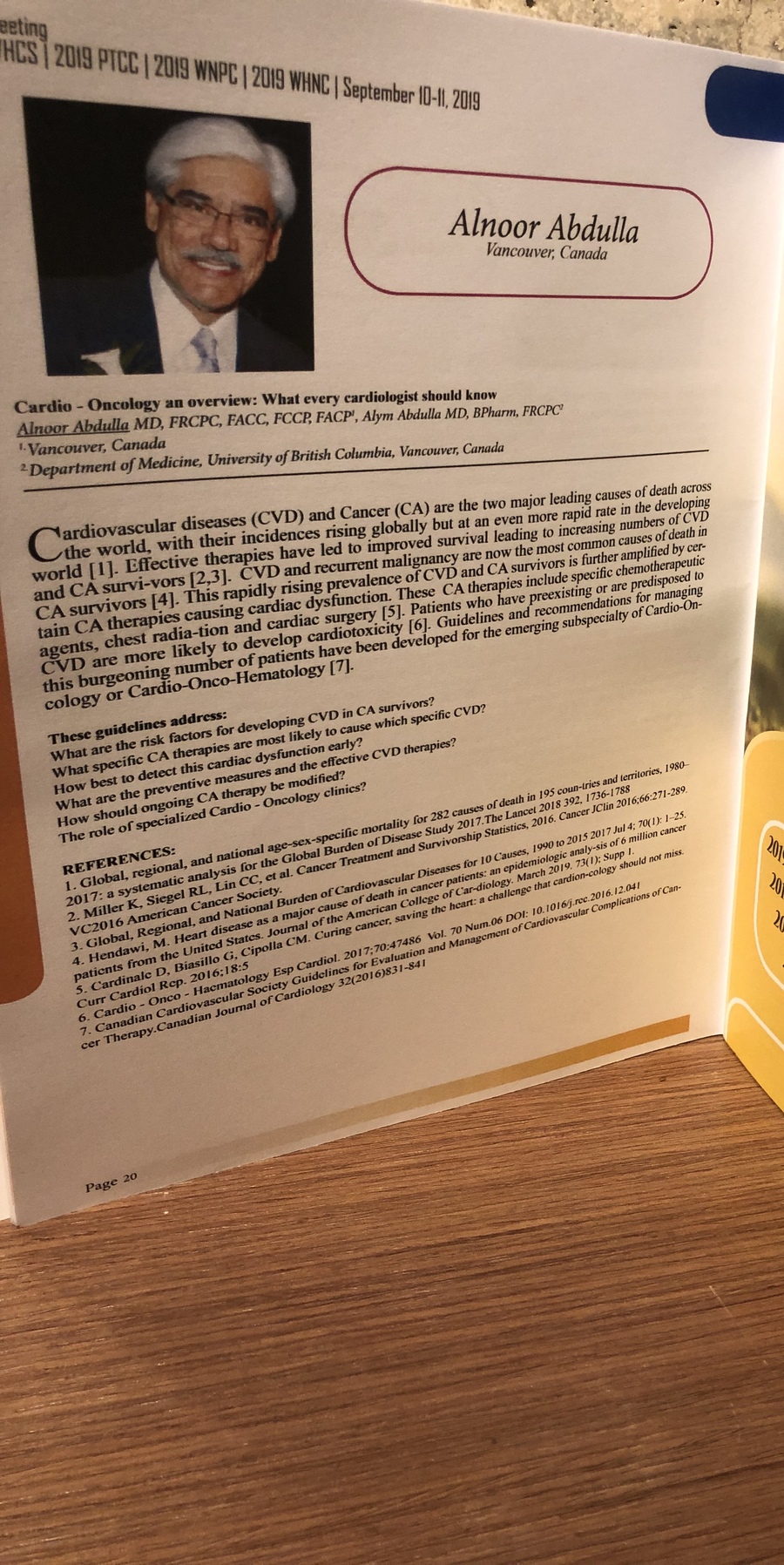
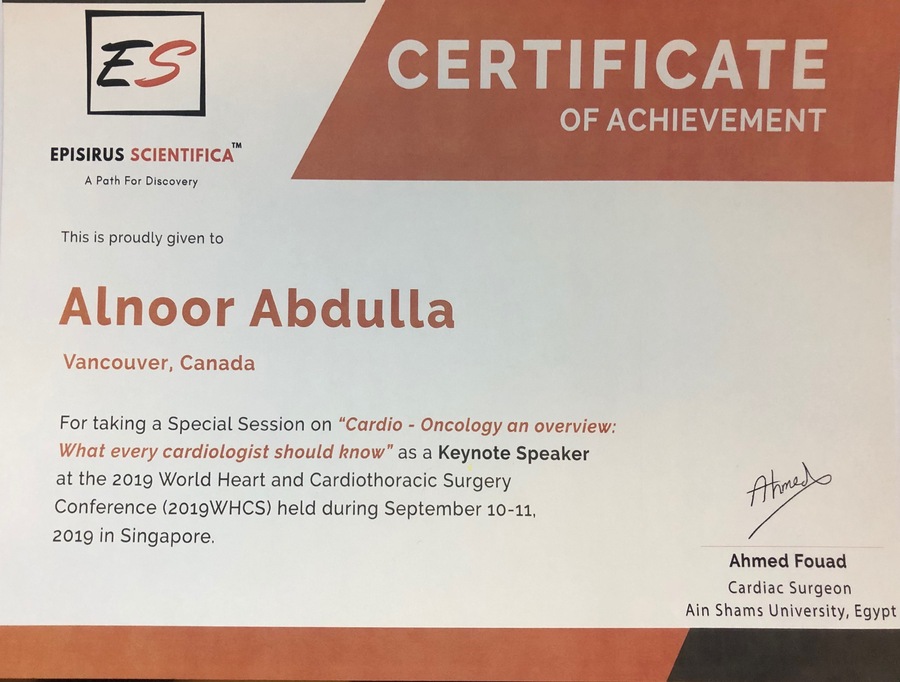
2019 · Keynote Speaker
“Cardio-Oncology: An Overview — What Every Cardiologist Should
Know,” World Heart & Cardiothoracic Surgery Conference, Singapore — co-authored with his
son, Dr. Alym Abdulla. Cardio-oncology had only been formally recognized as a cardiology subspecialty by the
American College of Cardiology in 2015; this talk came early in bringing the field's central problem, the
cardiac toll of cancer therapies, to the attention of general cardiologists.
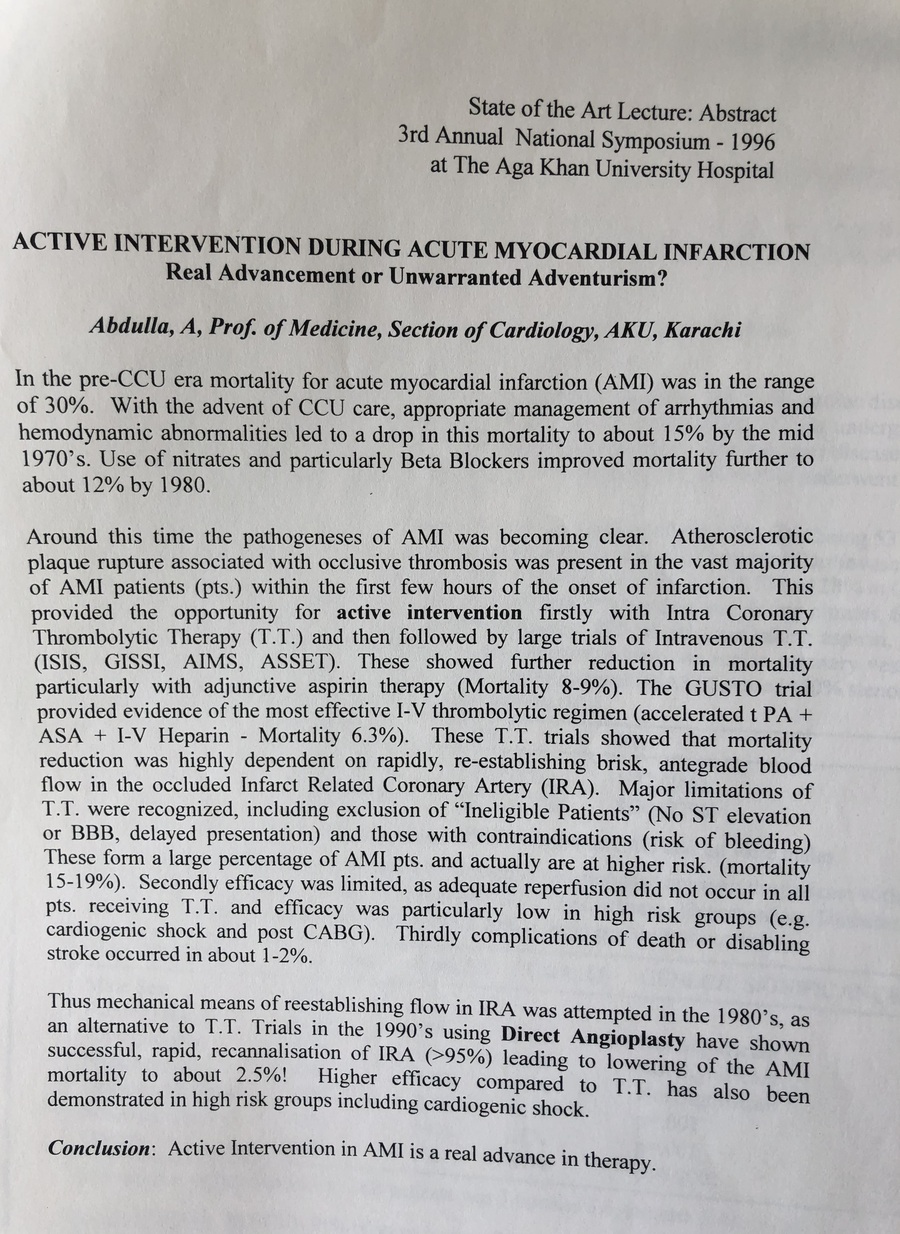
1996 · State of the Art Lecture
“Active Intervention During Acute Myocardial Infarction: Real
Advancement or Unwarranted Adventurism?” Third Annual National Symposium, Aga Khan University, Karachi
— making the case for primary angioplasty (PCI) over thrombolytic therapy in acute MI, a position the
American College of Cardiology would adopt as a Class I guideline recommendation in 1999.
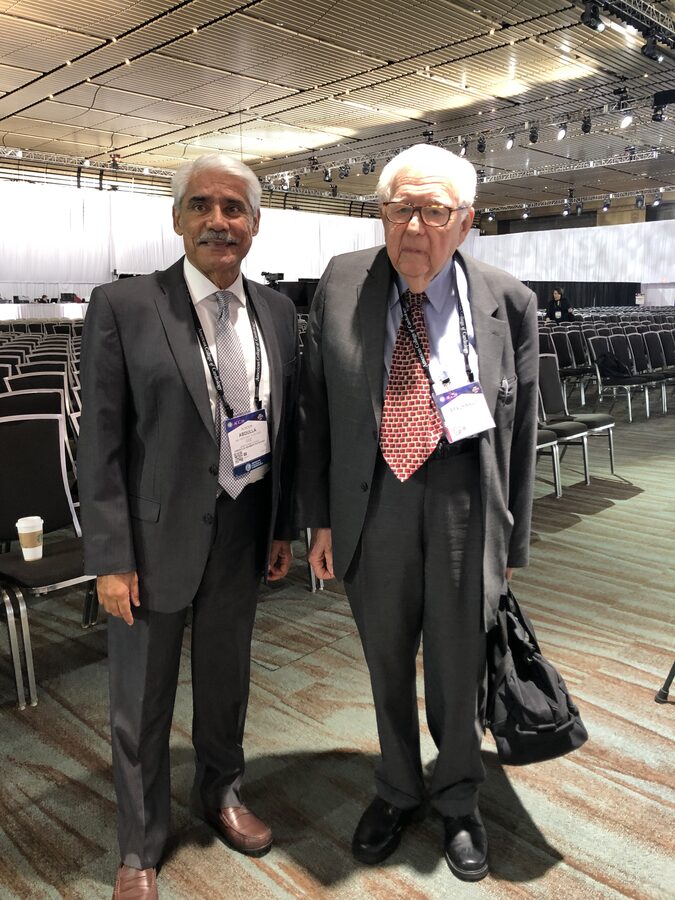
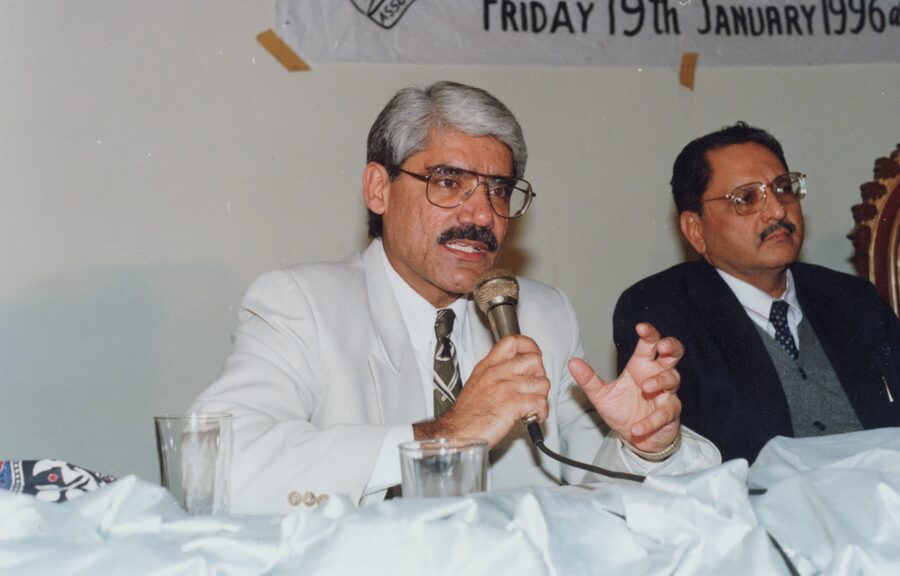
With the late Dr. Eugene Braunwald at an American College of Cardiology conference.Speaking at the Pakistan Medical Association Sindh Symposium on Coronary Heart Diseases, January
1996, alongside Dr. Azhar Faruqui, head of Pakistan's National Cardiovascular Institute in Karachi.
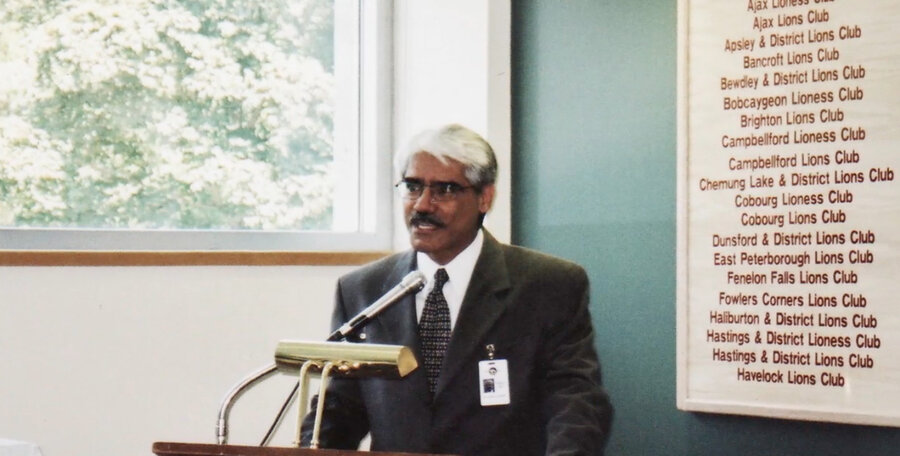
Delivering the keynote address at a regional Lions Clubs meeting, Ontario.The 1996 abstract itself — his State of the Art Lecture making the case for primary PCI, AKU's
Third Annual National Symposium.The published abstract — “Cardio-Oncology: An Overview,” co-authored with Alym, 2019
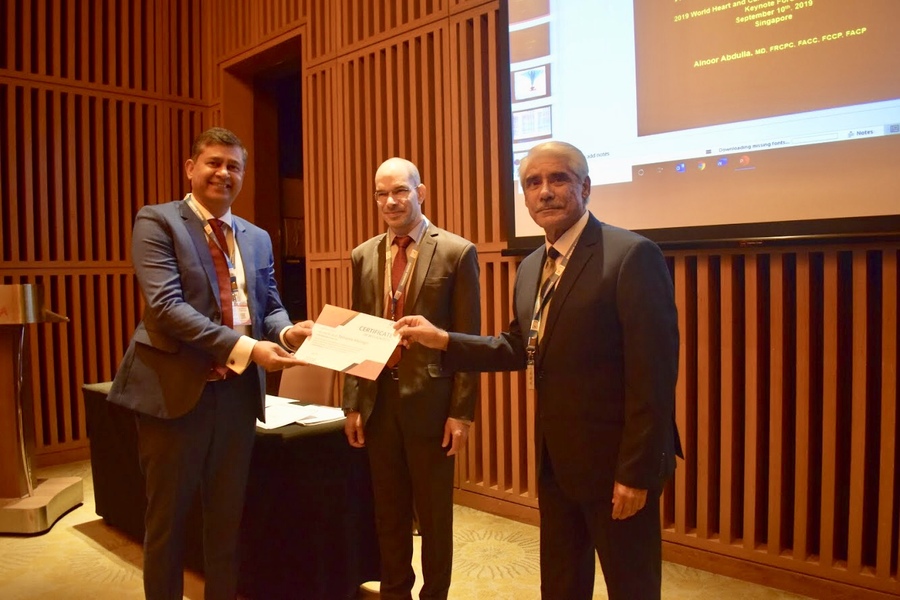
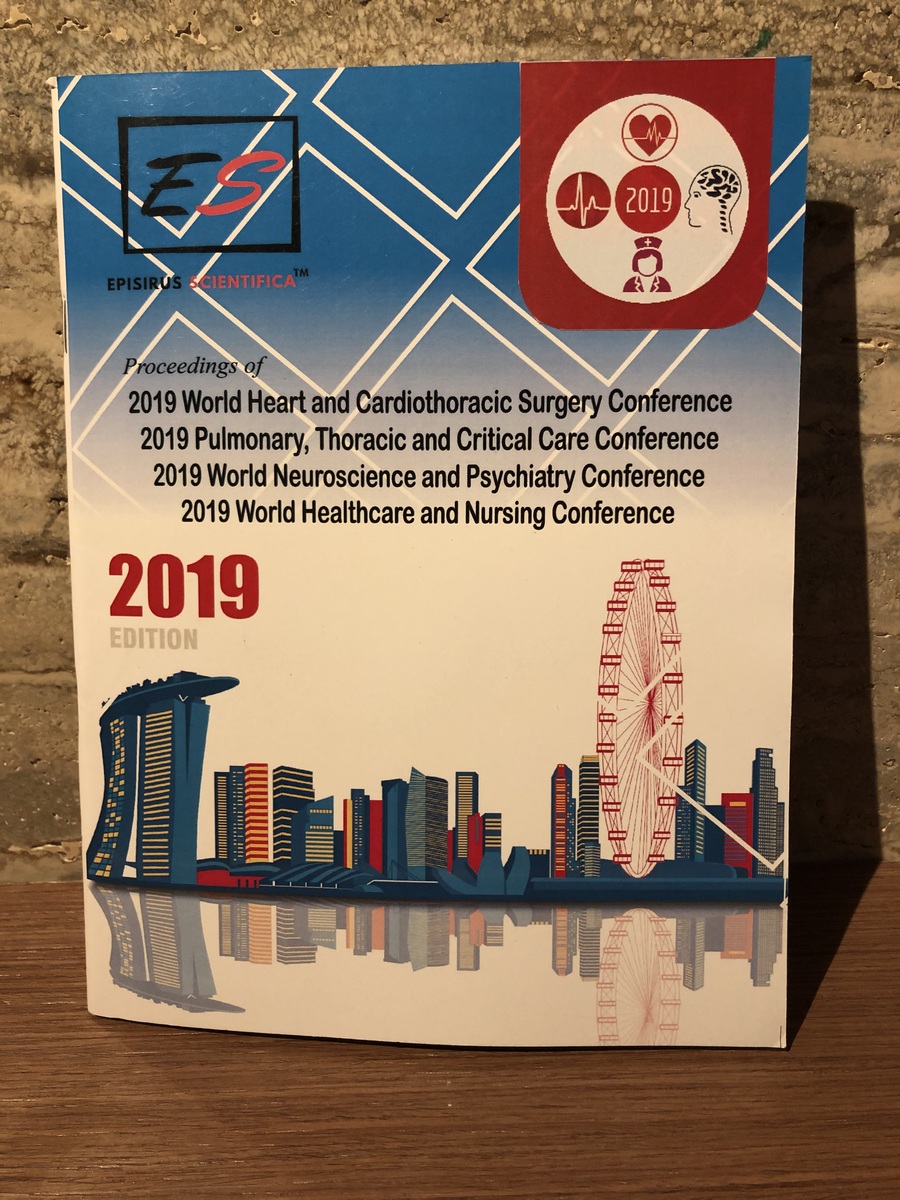
World Heart & Cardiothoracic Surgery Conference, Singapore.Certificate of Achievement as Keynote Speaker, 2019WHCS, Singapore.Receiving the certificate on stage, Singapore.The 2019 conference proceedings volume in which the abstract was published.
View the complete presentation record, 1982–2022 (309)
Special Addresses & Invited Lectures (37)
01/12/1988 — Invited Speaker: 26th Annual Scientific Meeting sponsored by Ontario
Chapter of Family Physicians of Canada. "Post MI Management", Toronto, ON. Canada.
27/06/1990 — Invited Speaker: First Annual Kawartha Cardiology Conference "Hypertension
- A Cardiologist's View in 1990” Peterborough, ON. Canada.
29/07/1990 — Keynote Speaker: The Ontario University Graduation Ceremony, The Aga Khan
Ismaili Education Board: “Personal Ethics in relation to Career Growth” Toronto, Ontario, Canada.
07/05/1992 — Invited Speaker: The Sudbury Chapter Heart & Stroke Foundation of
Ontario Annual Board Meeting, "Heart & Stroke – Education & Research." Sudbury, Ontario, Canada.
06/06/1993 — Keynote Speaker: The Aga Khan Ismaili Education Board Graduation &
Award Ceremony 1993, Edmonton"Characteristics and Ethics of Success", Edmonton, Alberta, Canada.
10/02/1994 — Invited Speaker: Rotary Club of Sudbury, "Forging Linkages in Health
Development with Third World Countries", Sudbury Ontario, Canada.
23/04/1994 — Invited Speaker: New Frontiers in Pacing Symposium Phoenix, AZ USA.
"Cardiac Pacing for Hypertrophic Cardiomyopathy", Phoenix, AZ, USA.
22/06/1994 — Invited Speaker: Fifth Annual Kawartha Cardiology Conference,
"Hypertension: Lessons from Ambulatory Monitoring” Peterborough, ON Canada.
05/12/1994 — Invited Speaker: The Aga Khan University - Volunteers Day Seminar
“Cardiology Program at Aga Khan University”: Karachi, Pakistan.
11/07/1995 — Invited Speaker: W.H.O. International Council on Heart Failure Education
(Pakistan) Symposium, "Management of Heart Failure", Karachi, Pakistan.
10/08/1995 — Invited Speaker: Symposium on Preventive Cardiology – National Inst. of
Cardiovascular Disease, "Primary Prevention of Myocardial Infarction" Karachi, Pakistan.
19/01/1996 — Invited Speaker: Pakistan Medical Association – Sindh Symposium on
Coronary Heart Diseases, "Diagnosis of Coronary Artery Disease", Hyderabad, Pakistan.
08/03/1996 — Invited Speaker: 11th Annual Symposium of Pakistan Society of Physicians,
“Interventional Therapy in Coronary Artery Disease” Karachi, Pakistan.
22/04/1996 — Invited Speaker: Comprehensive Board of Trustees of the Aga Khan
University, “Cardiovascular Program at Aga Khan University – Update” Paris, France.
06/06/1996 — Invited Speaker: AKU Faculty Assembly, “Comprehensive Cardiovascular
Program at Aga Khan University – Update” Karachi, Pakistan.
21/09/1996 — Invited Speaker: Third Annual National Symposium, The Aga Khan University
Third Annual National Symposium, The Aga Khan University “Active Intervention During Acute Myocardial
Infarction: Real Advancement or Unwarranted Adventurism?” Karachi, Pakistan.
03/11/1996 — Invited Speaker: The Institute of Cardiology, National Hospital, Sri
Lanka, Colombo “Management of Heart Failure” Cardiology Update 1996, Sri Lanka, Colombo.
23/11/1996 — Invited Speaker: Cardiology Program Aga Khan University - Update and
Future Planning: Board of Trustees of AKU, Karachi, Pakistan.
19/12/1996 — Invited Speaker: University of Toronto, Sunnybrook Health Sciences Centre
“Tertiary Care Cardiology in a Developing Country” Ontario, Canada.
20/02/1997 — Invited Speaker: 34th Annual Symposium, Jinnah Post Graduate Medical
Centre “Active Intervention in Acute Myocardial Infarction”, Karachi, Pakistan.
09/05/1998 — Keynote Address: Aga Khan Health Professionals Symposium 1998, “In Pursuit
of Medical Excellence - A Personal Journey”. Houston, Texas.
15/05/1998 — Invited Speaker: AKU Donor Dialogue Sessions, Ismaili Health Professionals
gathering: “Aga Khan University Cardiology Program Development”. Toronto, Canada.
17/05/1998 — Invited Speaker: AKU Donor Dialogue Sessions, - Aga Khan Ismaili
Leadership Forum. “Aga Khan University Cardiology Program Development”. Toronto, Canada.
11/12/1998 — Invited Speaker: 2nd Bienniel International Congress of Cardiovascular and
Thoracic Surgery, December 1998 “Contemporary Myocardial Revascularization”., Karachi, Pakistan.
15/02/2000 — Invited Speaker: Ontario Heart and Stroke Foundation,
“Cardiac
Catheterization and Angiography”. Peterborough, ON Canada.
30/04/2000 — Plenary Speaker, Invited Speaker:. The Aga Khan Health Board for Ontario
Heart Health Seminar, “Cardiac Catheterization and Angiography” Toronto, Canada.
10/09/2019 — Keynote Speaker: 2019 World Heart and Cardiothoracic Surgery
Conference-WHCS: “Cardio-Oncology: An Overview- What every cardiologist should know” Singapore.
29/07/2021 — Keynote Speaker: Scholars Cardiology International Webinar 2021 "Novel
Insights and Exploring Recent Advancements in Cardiology and Cardiovascular Diseases "“Are Statins Passe’
Life Beyound Statins” International Conference.
11/10/2021 — Keynote Speaker: Heart Congress: Scholars International Conference World
Heart Summit 11-12 Oct 2021 “Lifesavers in Heart Failure in 2021” - Do you know them? International
Conference.
19/11/2021 — Keynote Speaker: 2021 World Heart and Cardiothoracic Surgery Conference:
Nov 19-20 2021 “Life Savers in Heart Failure: Do you know them?” International Conference.
21/03/2022 — Invited Speaker: 12th World Summit on Heart and Acute Cardiac Care” 21st
& 22nd of March, 2022 Theme: “Novel Advance and Remedial Therapies in the Field of Cardiology and
Heart Disease “LDL Cholesterol Management 2022” – London, UK.
11/04/2022 — Invited Speaker: 33rd European Heart and Heart failure Congress April 11
-12th 2022, “Foundational Therapies in Heart Failure Management – 2022” – Paris, France.
25/05/2022 — Invited Speaker: International Conference and Expo on Heart and Cardio
Care" Theme: Exploring new horizons in the field of Cardiology and Heart diseases “Lipid management 2022”
Conference, May 25-26, 2022.
15/07/2022 — Keynote Speaker: International WYN Cardiology Forum 2022 “Statins -
Benefits and Limitations Where do we go from here? What is the future?” – International Conference.
22/07/2022 — Keynote Speaker: 11Th World Heart Congress “New Therapies in Lipid
Management” International Conference.
09/09/2022 — Keynote Speaker: 2022 World Heart and Cardiothoracic Surgery Conference-
Sept 9-10 2022 “Statins - Benefits and Limitations: Where do we go from here? What is the future?”
Bangkok, Thailand.
Continuing Medical Education: Lectures & Presentations (146)
04/01/1983 — Speaker: Nuclear Cardiology Overview: Medical Staff Lancaster Community
Hospital. Lancaster, California.
01/02/1983 — Speaker: Nuclear Cardiology Overview : Medical Staff Mira Loma Hospital,
County of Los Angeles. Lancaster, California.
30/04/1984 — Guest Speaker: Nuclear Cardiology, Annual Medical Staff Meeting, Sudbury
Memorial Hospital. Sudbury, ON, Canada.
06/06/1984 — Speaker: "First-Line Treatment in Hypertension- Controversies", Medical
Staff. Sudbury, Ontario, Canada.
31/01/1985 — Speaker: "Controversies in the Management of Mild Hypertension", Porcupine
District Medical Society. Timmins, ON, Canada.
23/02/1985 — Speaker: "Controversies in Management of Hypertension", St. Joseph's
Hospital Medical Staff. Elliot Lake, ON, Canada.
21/05/1985 — Speaker: "Controversies in the Management of Hypertension", Medical Staff,
Algoma West Academy of Medicine. Sault Ste. Marie, Ontario, Canada.
20/09/1985 — Guest Speaker: Nuclear Cardiac Imaging, Ontario Medical Association,
District 9, Annual Meeting. Sudbury, Ontario, Canada.
26/02/1986 — Guest Speaker: "Current Advances in Ventricular Arrhythmia Therapy",
Sudbury & District Medical Society Meeting. Sudbury, ON, Canada.
05/12/1986 — Guest Speaker: Risk Stratification of Patients Following Myocardial
Infarction, Sudbury & District Medical Society, Clinical Day in Cardiology. Sudbury, Ontario.
09/04/1987 — Guest Speaker: "Mitral Valve Prolapse", Medical Staff, Algoma West Academy
of Medicine. Sault Ste. Marie, Ontario.
01/03/1988 — Guest Speaker: "Drug Therapy in Hypertension, Angina & CHF", Porcupine
District Medical Society. Timmins, Ontario.
24/03/1988 — Guest Speaker: "Developing Trends in the Treatment of Mild to Moderate
Hypertension", Sudbury District Medical Society. Sudbury, Ontario.
01/06/1988 — Speaker: Clinical Day. "Cardiac Investigations- Which Test for Which
Patient?" Sponsored by Sudbury District Medical Society. Sudbury, Ontario.
02/09/1988 — Guest Speaker: "Hyperlipidemia and Hypertension", Matheson, Ontario,
Canada.
21/10/1988 — Guest Speaker: "New Look at Cardiovascular Risk Factors",. Kapuskasing,
Ontario.
27/10/1988 — Guest Speaker: "From Step Care to Sequential Mono Therapy in Hypertension
- Update 1988", North Bay, Ontario.
11/01/1989 — Guest Speaker: "New Perspectives in the Treatment of Hyperlipidemia" and
"From Step Care to Sequential Monotherapy in Hypertension" Elliot Lake Ontario.
18/09/1993 — Guest Speaker: "Diastolic Dysfunction in Hypertension",. Bruce Mines,
Ontario.
05/10/1993 — Speaker: "Cardiac Circadian Rhythms and Ambulatory Monitoring B.P. and
E.C.G.", .Sudbury, Ontario.
19/10/1993 — Guest Speaker: "Cardiac Circadian Rhythms and Ambulatory Monitoring B.P.
and E.C.G.", Parry Sound, Ontario.
12/1993 — Guest Speaker: "Nuclear Cardiology - Role in Ischemic Heart Disease", The Aga
Khan University Hospital. Karachi, Pakistan.
11/01/1994 — Guest Speaker: "Diagnosis and Management of Acute Myocardial Infarction -
1994", Manitoulin, Ontario.
08/02/1994 — Speaker: "Ambulatory Monitoring and Circadian Rhythms; Assessment of
Cardiovascular Risk", North Bay, Ontario. Sudbury, Ontario.
16/02/1994 — Speaker: "Role of Alpha I Blockade in Hypertension Therapy", Sudbury,
Ontario.
22/03/1994 — Guest Speaker: "Thrombolytic Therapy in Acute MI- Update 1994", The Aga
Khan University Hospital. Karachi, Pakistan.
06/09/1994 — Guest Speaker:"Managing Heart Failure in Primary Care", Regional Training
Session. Pegasus Health Care. Toronto Ontario.
25/01/1995 — Speaker: "Current Role of Coronary Angiography", Update on Cardiovascular
Diseases, The Aga Khan University Hospital. Karachi, Pakistan.
06/10/1995 — Guest Speaker: "Coronary Angiography - Current Applications", CME Seminar,
The Aga Khan University. Quetta, Pakistan.
07/10/1995 — Guest Speaker: "Primary Prevention of Myocardial Infarction", CME Seminar,
AKU & Bolan Medical College, Quetta, Pakistan.
15/12/1995 — Speaker: "Risk factors in the Pathogenesis of coronaryartery disease",
Karachi, Pakistan.
01/05/1996 — Speaker: "Cardiovascular Database: A basis for future research" The Aga
Khan University Faculty Research Seminar, Karachi, Pakistan.
07/06/1996 — Speaker: "Management of Supraventricular Arrhythmia”, Round Table
Discussion on the management of Arrythmias, Karachi, Pakistan.
09/10/1996 — Speaker: “Coronary Angioplasty: Current Indications and Outcomes of AKUH”.
Continuing Medical Education Program, The Aga Khan University Hospital, Karachi, Pakistan.
16/10/1996 — Speaker: "AKUH Angioplasty Experience" The Aga Khan University Dept. of
Medicine Research Seminar, Karachi, Pakistan.
31/10/96 — Speaker: “Angiotensin II Receptor Blockade”. Pakistan Cardiac Society
Karachi Chapter at The Aga Khan University Hospital, Karachi, Pakistan.
27/04/97 — Guest Speaker: “Modern Trends in the Management of Hypertension”. Pakistan
Cardiac Society Hyderabad Chapter, Hyderabad, Pakistan.
15/05/2010 — Speaker: The GP’s Role in the Management of Acute Coronary Syndrome
Southern Saskatchewan Multi-Therapeutic Program , Regina, Saskachewan, Canada.
26/04/2012 — Advisory Board: Hyperlipidemia, Vancouver BC, Canada.
27/06/2012 — Speaker: Hypertension Vancouver, BC Canada.
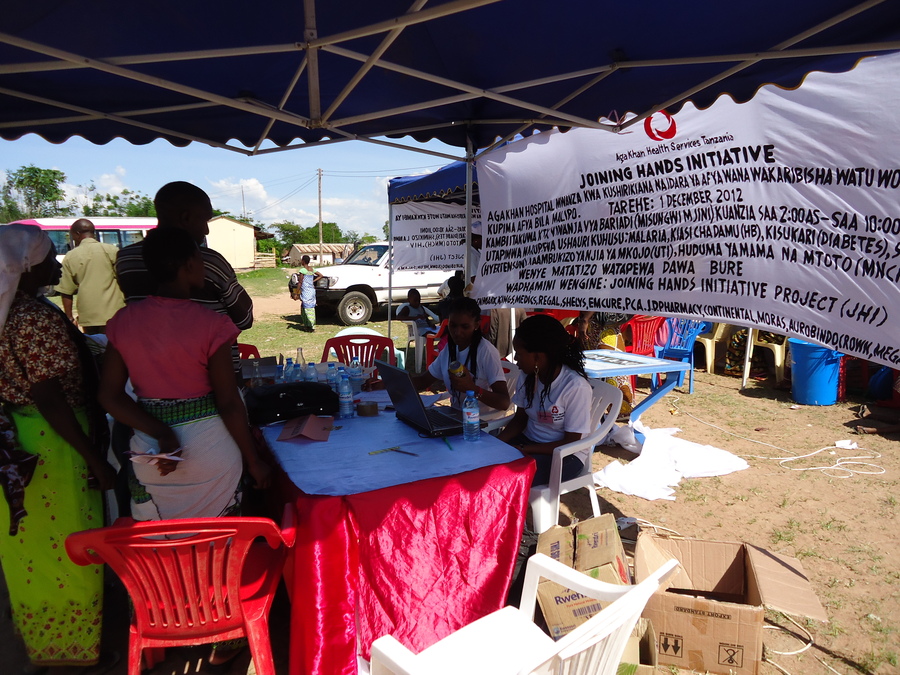
30/11/2012 — Guest Speaker, Aga Khan Health Board Tanzania – Global Cardiovascular
Disease Trends & Causes: Mwanza, Tanzania.
05/12/2012 — Guest Speaker, Global Health --CUHAS/ BUGANDO: Global Cardiovascular
Disease Burden: Mwanza, Tanzania.
13/12/2012 — Guest Speaker, Misungwi District Hospital: Hypertension: Mwanza, Tanzania.
14/12/2012 — Guest Speaker, Aga Khan Health Board Tanzania – Hypertension: Mwanza,
Tanzania.
22/06/2021 — Guest Speaker, Minoru Medical Education Society: Are Statins Passe-The LDL
Story Part 1, Richmond, BC Canada.
24/06/2021 — Guest Speaker, Minoru Medical Education Society: Part II - Beyond Statins
and LDL—Why Go There? THE HDL, TG, Lp(a) story! Richmond, BC Canada.
16/11/2021 — Guest Speaker, Minoru Medical Education Society: Life Savers in Heart
failure 2021: Do you know them? Richmond, BC, Canada.
Chairperson / Moderator, CME Events (38)
24/01/1985 — Moderator for Discussion: "The Use of Calcium Channel Blocking Agents in
Angina Pectoris", Medical Staff. Sudbury, Ontario.
28/01/1989 — Chairman: "Risk Management in Heart Disease", Sponsored by Heart &
Stroke Foundation of Ontario. Sudbury, Ontario.
09/02/1989 — Chairman: "Update on Lipid Metabolism and Effects of Anti-hypertensive
Drugs", Sponsored by Sudbury & District Medical Society, Sudbury, Ontario.
21/02/1989 — Chairman: "Conference Presentation on Ventricular Arrhythmia - Selection
of Drug Therapy", Sudbury, Ontario.
28/05/1998 — Chairperson: "Interesting Case Presentation", The Pakistan Cardiac
Society, Karachi Chapter at the Aga Khan University, Karachi, Pakistan.
11/12/1998 — Co-Chair: “Interventional Cardiology” 2nd Bienniel International Congress
of Cardiovascular and Thoracic Surgery, December 1998, Karachi, Pakistan.
Medical Student & Resident Teaching (7)
03/1990 — Preceptor for Elective in Cardiology: University of Ottawa. Family Practice
Program. Ottawa, Ontario.
04-05/1990 — Preceptor for Elective in Cardiology: Aga Khan University. Karachi,
Pakistan.
10/1990 — Preceptor for Elective in Cardiology: Family Practice Program, University of
Ottawa. Ottawa, Ontario.
03-04/1994 — Preceptor for Elective in Cardiology: Final year medical student,
University Of Cambridge. London, England.
15/02/1996 — Speaker: "Relevance of Cardiovascular Anatomy to Specific Clinical Disease
States", 1st year Medical Students Anatomy Class - The Aga Khan University, Karachi, Pakistan.
10/1994-06/1996 — Head of Cardiology, Associate Professor: Department of Medicine, The
Aga Khan University, Hospital. Regular Med. Student Phase I & III and Med. Resident teaching. Karachi
Pakistan.
07/1996-06/1998 — Head of Cardiology, Professor: Department Medicine, The Aga Khan
University, Hospital, Karachi, Pakistan. Regular Med. Student Phase I & III and Med. Resident
teaching.
03/1990 — Preceptor: Elective in Cardiology, Laurentian University Nursing Students.
Sudbury, Ontario.
05/05/1990 — Speaker: "Changing Trend for Healthier Lifestyles", Ontario College of
Pharmacists & Ontario Pharmaceutical Association, Annual Conference. North Bay, Ontario.
10/1990 — Preceptor: Elective in Cardiology, Cambrian College Nursing Students.
Sudbury, Ontario.
09/12/1990 — Preceptor: Elective in Cardiology, Laurentian University Nursing Students.
Sudbury, Ontario.
04/06/1992 — Guest Speaker: "Cardiovascular Risk Factors & Cardiovascular
Investigations." Aga Khan Health Services, Nairobi, Kenya.
10/08/1993 — Speaker: "Pacing therapy in Hypertrophic Cardiomyopathy", Sponsored by
Medtronic of Canada Ltd. Toronto, Ontario.
05/06/1994 — Speaker: "Cardiac Pacing in IHSS" , Cardiology Technologists Association
of Ontario, Annual Meeting, London, Ontario.
15/02/1995 — Speaker: "What is a Heart Attack", Signs and Symptoms Seminar - The Aga
Khan University, Karachi, Pakistan.
27/01/1996 — Speaker: "Cardiology/Cardiac Surgery", Signs and Symptoms. Seminar:
Cardiac Angiography The Aga Khan University, Karachi, Pakistan.
02/03/1996 — Speaker: "Update on Cardiovascular Program at AKUH" Donor Dialogue
Program, AKUH, Karachi.
06/06/1996 — Speaker: “Data base and Quality Assurance in Cardiology” Directors and
Managers Meeting, AKUH, Karachi.
06/11/1996 — Speaker: “Role of Nuclear Cardiology as part of Tertiarry Care Cardiac
Program”. Resource Development Seminar, AKUH, Karachi.
06/05/2001 — Speaker: “Heart Health Fair”, Physician’s Seminar, Aga Khan Health Board
Ontario, Toronto ON.
Patient & Public Education (50)
04-05/1995 — Dawn, Karachi Pakistan, Series of Five Newspaper articles on Heart Health
Promotion. 1995 Non-Invasive Cardiopulmonary Diagnostic Testing, The Aga Khan University Hospital. 1995
Cardiac Angiography, The Aga Khan University Hospital. 1995 Cardiac Rehabilitation, The Aga Khan
University Hospital. 1995 Cardiac Surgery, The Aga Khan University Hospital. 1996 Transesophageal
Echocardiography, The Aga Khan University Hospital. 1997 Coronary Angioplasty, The Aga Khan University
Hospital. 1997 Myocardial Infarction, The Aga Khan University Hospital. 1997 Permanent Pacemaker, The Aga
Khan University Hospital. Audio-Visual Public Medical Education – Radio & Television Media:.
31/01/1985 — Television Interview: Today Show (CICI). Cardiology Patient Education.
Sudbury, Ontario.
14/02/1985 — Television Interview: Midday Show (MCTV) "Management of Acute Myocardial
Infarction". Sudbury, Ontario.
18/02/1985 — Television Interview: Today Show (CICI) "Non-invasive Cardiac Testing".
Sudbury, Ontario.
18/02/1985 — Probe Radio Show: "Nuclear Cardiology and Angiography". Sudbury, Ontario.
03/04/1985 — Television Production: "Complete Coronary Angiography Procedure". Sudbury
Memorial Hospital. Sudbury, Ontario.
15/05/1990 — CBC Radio Interview. "Value of Aspirin in Cardiovascular Disease".
Sudbury, Ontario.
11/04/1991 — MCTV Radio Interview. The Don Mark Show. Nuclear Cardiology testing.
Sudbury, Ontario.
25/10/1991 — MCTV Don Mark Show. Nuclear Cardiology Procedure. Sudbury, Ontario.
17/11/1991 — CJMX Open Line Talk Show, host - Gary Beach. "Heart Attacks Don't Have to
be Fatal". Sudbury Ontario.
10/02/1992 — CHNO Radio Show with Dave Deloye - "Three Sessions: 1) Angioplasty, 2)
Thrombolytic Therapy, 3) Cardiac Risk Factors". Sudbury, Ontario.
16/06/1992 — Cable 7 Television Program "1) Cardiovascular Risk Factors, 2)
Hypertension/Stroke", Heart & Stroke Foundation. Sudbury, Ontario.
02/03/2022 — Media Television Interview: Wealth & Estate Financial Canada TV
series: “Achieve Financial Success: Discover the Ultimate 5 Pillars of Wealth Creation” Public Education:
Oral Presentations.
03/02/1999 — Invited Speaker: “Cardiovascular Risk Factors and Coronary Disease
Prevention”. Shoppers Drug Mart Heart Health Program, Ottawa, ON Canada.
19/01/2000 — Speaker: “New Cardiac Cath Program”. Community Health Service Meeting.
Peterborough, Ontario.
04/2000 — Speaker: “New Cardiac Cath Program”. Joint Medical Executive Meeting, HKPR
(Peterborough and Region). Peterborough, Ontario.
10/2000 — Speaker: “ New Cardiac Cath Program”, Peterborough County Medical Secretary
Association. Peterborough, Ontario.
27/02/2011 — Guest Speaker, Aga Khan Health Board Ottawa – Heart Health, Ottawa, ON
Canada.
05/06/2011 — Guest Speaker, Aga Khan Health Board Ottawa – Heart Health, Ottawa, ON
Canada.
24/06/2011 — Guest Speaker, Aga Khan Health Board Prairies – Heart Health, Calgary, AB
Canada.
11/02/2012 — Guest Speaker, Aga Khan Health Board Prairies – Heart Health, Calgary, AB
Canada.
13/06/2012 — Guest Speaker, Aga Khan Health Board BC – Heart Health, Vancouver BC
Canada.
22/07/2012 — Guest Speaker, Aga Khan Health Board BC – Heart Health, Vancouver, BC
Canada.
17/04/2013 — Guest Speaker, Aga Khan Care for Elderly – South Asian Cardiovascular Risk
& Management, Burnaby, BC Canada.
18/04/2013 — Guest Speaker, Aga Khan Care for Elderly – South Asian Cardiovascular Risk
& Management, Vancouver, BC Canada.
30/05/2013 — Guest Speaker, Aga Khan Care for Elderly –Cardiovascular Medications,
Vancouver, BC Canada.
20/02/2021 — Invited Speaker: Makerere University Alumni Cardiology International
Webinar: Cardiovascular Disease – Global & South Asian Perspective.
27/03/2022 — Invited Speaker: International Webinar – From London, UK: Understanding
and Protecting yourself against Cardiac Disease.
27/06/2021 — Invited Speaker: Tanzania Teachers Alumni Cardiology International
Webinar: No Heart Attack or Stroke? Made Simple.
06/05/2021 — Invited Speaker: Rotary Club Burnaby, BC Canada Heart Disease – What can
you do? Made simple.
19/02/2022 — Invited Speaker: Ottawa Women’s Group, Women & Heart Disease – A
Different perspective, Ottawa, ON, Canada.
02/03/2022 — Webinar Speaker- Interview Format Five Factors for Life & Financial
Planning Toronto, ON Canada.
23/10/2022 — Invited Speaker: International Webinar From Edmonton, AB Canada. “Dementia
– Hearing loss”.
08/12/2022 — Speaker: Aga Khan Health Board, Heart Health Doha, Qatar.
This is the complete record on file: 37 special addresses & invited lectures,
146 continuing medical education lectures & presentations, 38 chairperson/moderator sessions at CME
events, 7 medical student & resident teaching appointments, 31 allied health education sessions, and 50
patient & public education engagements — 309 in total, 1982–2022. The full CV is also
available as a download — see Resources.
06 · Beyond Medicine
Canada's Far North, and a Family's Legacy
Of everything in his life outside the clinic, this is the story
Dr. Abdulla returns to most — because it is where his Canadian life truly began, and because, four decades
later, it circled back in a way he could never have planned.
In the summer of 1973, between his first and second years of medical school at UBC, Dr. Abdulla needed a
summer job that came with a place to live. An ad at UBC was looking for a camp First Aid Attendant,
certificate required; he enrolled in a St. John Ambulance course, got his certificate, and was hired by
Canex Placer, a mining company running a lead and zinc exploration camp in the Northwest Territories — 200
kilometres from the nearest human settlement. He flew to Watson Lake, Yukon, then by ski-plane into a camp
of canvas tents and a kitchen trailer, still under snow in early June, with no trees, no roads, and no other
sign of anyone for miles in any direction.
He was the only person of colour in a camp of rough, hard-drinking miners working double shifts around the
clock — and, having grown up without alcohol, pork, or gambling in his life, about as far from that world as
it was possible to be. The camp's Japanese cook noticed, within a few days, that Dr. Abdulla was quietly
making do with bread and jam on the nights pork was served, and began quietly preparing him a second dish
without being asked.
His father had taught him to shoot and to be at ease in the wild, and it showed. He would head out alone
into the surrounding valleys with a rifle, comfortable in a landscape that unsettled everyone else — and
when he beat the camp's helicopter pilot in a long-range shooting contest, the miners' wariness turned to
respect. It was the beginning of a lifelong love of hunting and fishing that has stayed with him ever since.
With time on his hands between first-aid calls, he also solved a problem that had nothing to do with
medicine. Ore samples were normally flown out to Vancouver for lead and zinc analysis, with results taking
seven to ten days to return — too slow to know, in real time, which sites were worth staking. Working out
that heavy-metal concentration could be estimated from light absorption through a thin sample, he built a
simple light-meter apparatus from supplies he requested, calibrated it against known samples, and began
producing same-day concentration estimates that closely matched the results later confirmed from Vancouver.
The camp doubled its staking pace that summer — and Dr. Abdulla, still not yet twenty, earned a double
salary and watched his first Northern Lights before the season was out.
That December, back in Vancouver and immersed in Aga Khan community work — he had by then become Chairman
of the BC Aga Khan Ismaili youth organization and founding editor of its first community magazine,
Forum — Dr. Abdulla received word that his mother had died in Tanzania. She was 46, and had spent
her life working to see him become a doctor. It was the most devastating loss of his life, and for a time it
derailed him completely. What brought him back, slowly, over the following weeks, was the conviction that
her spirit was still watching over him and his young brother Rahim, only six at the time — and that
honouring her sacrifice meant finishing what she had given everything to make possible.
He graduated in Medicine from UBC in May 1975, receiving his diploma from Walter Gage — the university
president who had helped him get started three years earlier — in Dr. Gage's final act before retirement.
His father, his brother Rahim, and his fiancée (and future wife) Almas were there to watch.
Summer 1973
The Far North
Canex Placer Mining Co. — NWT exploration camp200km from the nearest settlementFirst Aid Attendant, St. John Ambulance certifiedDevised a same-day ore-analysis methodWitnessed the Aurora Borealis
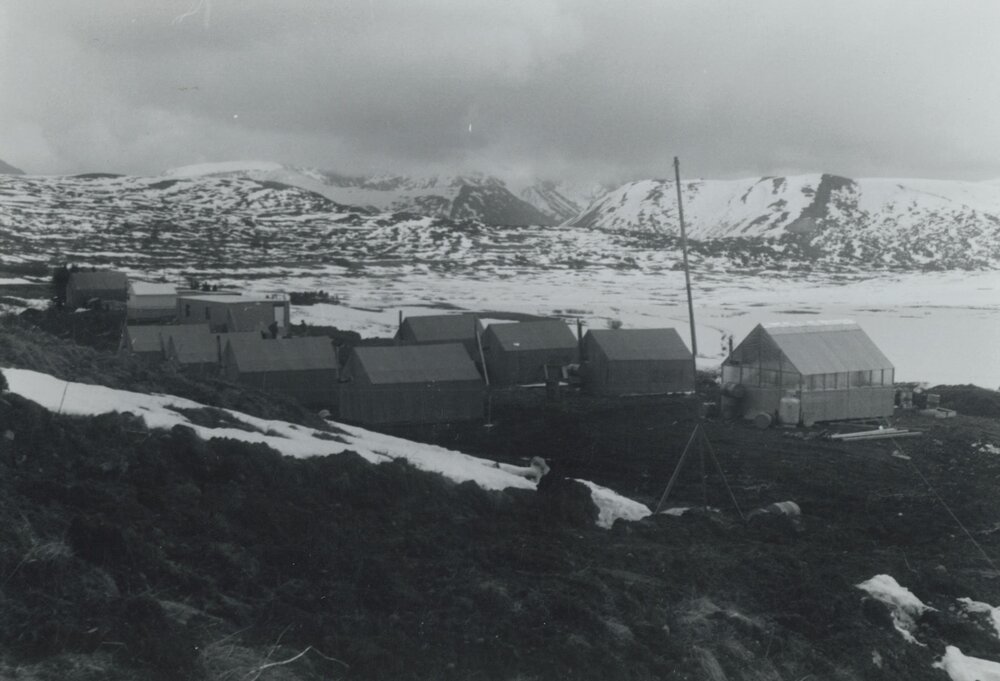
The Canex Placer camp itself — canvas tents and a kitchen trailer on the tundra, 200km from
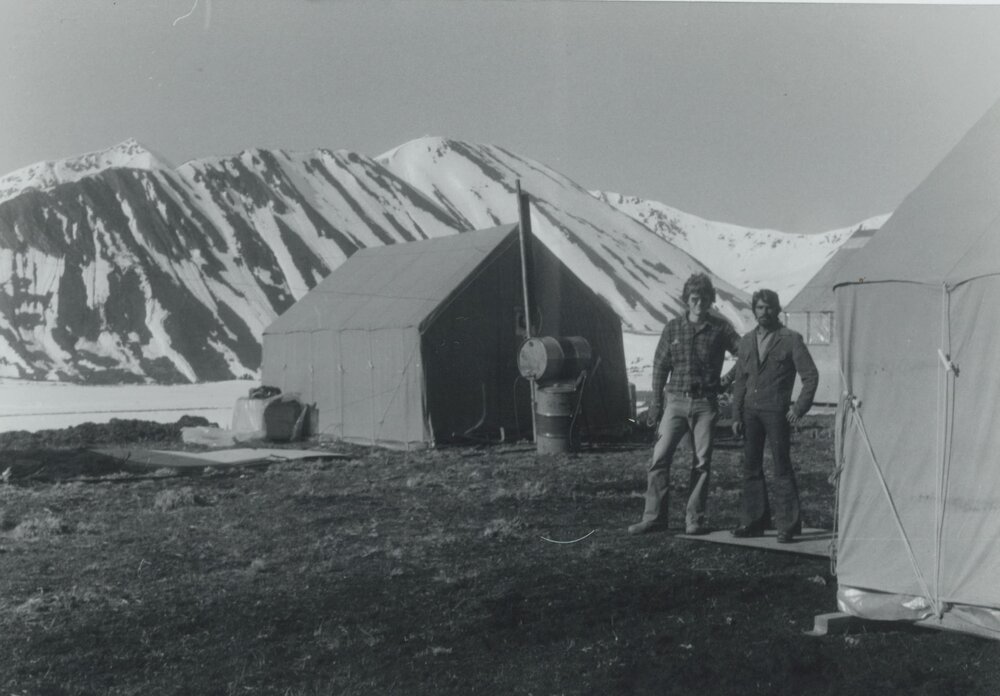
the nearest settlement.Dr. Abdulla (right) with a camp colleague, outside one of the tents.
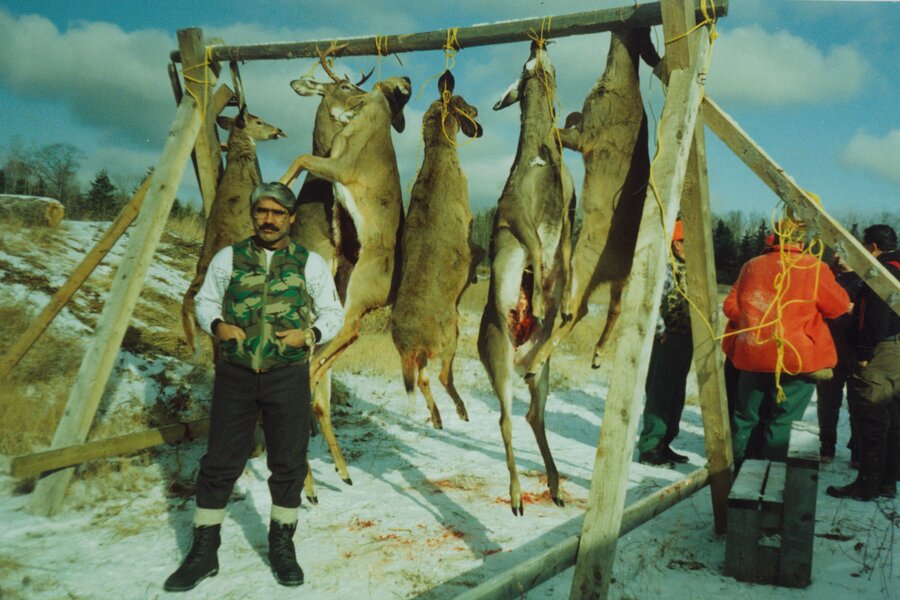
Deer hunting, Manitoulin Island, Ontario — a pursuit that traces back to that first Canadian
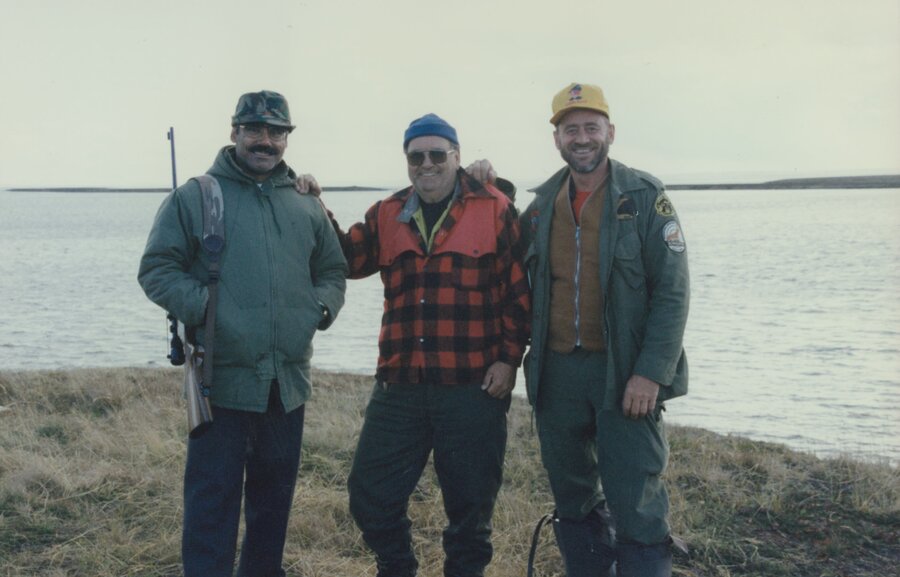
summer.Fishing for Arctic char, Ungava Bay, in Quebec's far north.With his hunting buddy in Northern Ontario, Monique's father, and a third member of the group.
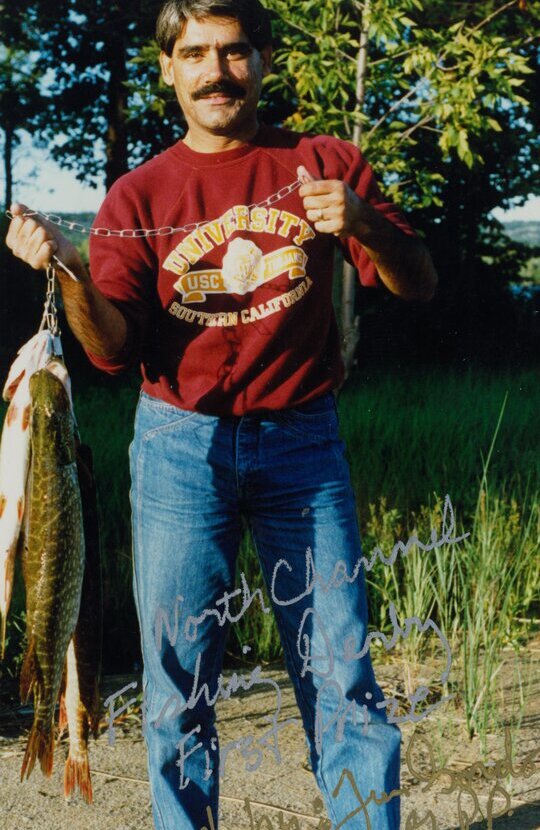
Pike and trout fishing on a Canadian lake.
Full Circle — A Family's Legacy
Each of Dr. Abdulla's three children built a
distinguished career in a different field entirely — one of them, like his father, in medicine. The
family's ties to UBC also run through three generations. Rahim, the six-year-old brother Dr. Abdulla brought to
Canada and helped raise after their mother's death, went on to earn his own B.Pharm from UBC. Years later, when
Dr. Abdulla's work took him to Pakistan to help build the AKU cardiac program, Rahim and his wife moved to
Sudbury to help raise his young sons in his absence — the same care once given to him, returned in full.
He later settled in Ottawa, where he built a successful pharmacy business and went on to open two multispecialty
medical clinics alongside it. And in May 2015 — almost to the day, forty years after his father's own MD
convocation — Dr. Abdulla's son, Alym, graduated in Medicine from UBC as well, having earned a B.Pharm
there beforehand. Alym was the gold medallist and valedictorian of his graduating class, and delivered the class
address; he went on to complete his residency in Internal Medicine, followed by subspecialty training in
Hematology, and is now a hematologist (FRCPC) at Royal Columbian Hospital.
His daughter, Arifa, studied business at McGill
University and built an independent career in healthcare consulting, rising to Director at Deloitte, where she
now advises healthcare organizations on the planning and design of new programs and facilities. His son Asif
took an unconventional path — starting in computer engineering, then serving in border security before
earning entry into the RCMP — before finding his true calling in law: a degree in criminology, then law,
specializing in taxation. He became one of Canada's leading tax lawyers, the youngest ever granted full
partnership at his firm, and has since been recognized with an award for excellence in the field.
That commitment to education traces back to the
choices Dr. Abdulla made as a young man building a life in Canada. After settling in Vancouver and completing
his own medical training, he brought his father to Canada as well, sending him to Vancouver Community College
for a diploma in Registered Industrial Accounting; his father went on to a long career with the Department of
Veterans Affairs, working there until his passing. He covered the full cost of Rahim's private high school
education, with Rahim later funding part of his own university years through Canada Student Loans. And when it
came to his own three children, Dr. Abdulla covered every expense of their university educations himself —
not tuition alone, but living costs throughout — so each of them entered their careers fully credentialed
and entirely free of student debt.
That same instinct to teach has already reached
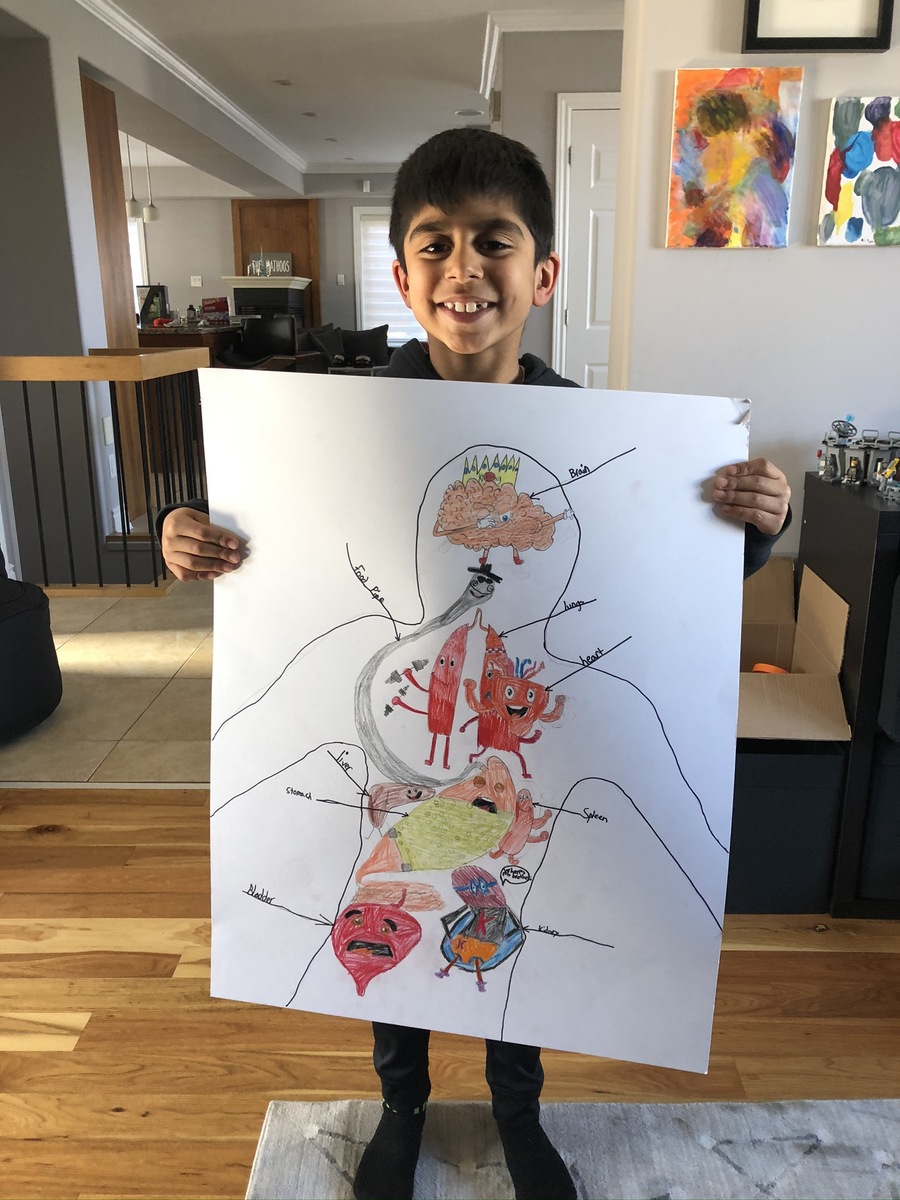
the next generation: Dr. Abdulla sketched the rough outline of a human body for his grandson, who filled it in,
organ by organ, each one given its own character and personality — his own small way of starting health
education in childhood, from the youngest kids onward.
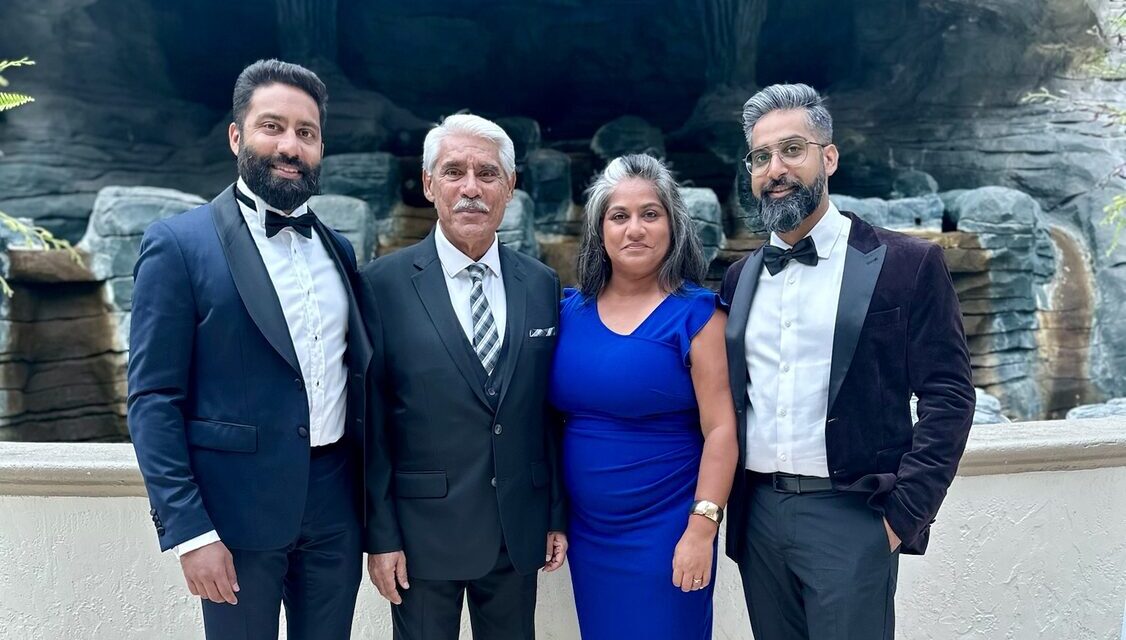
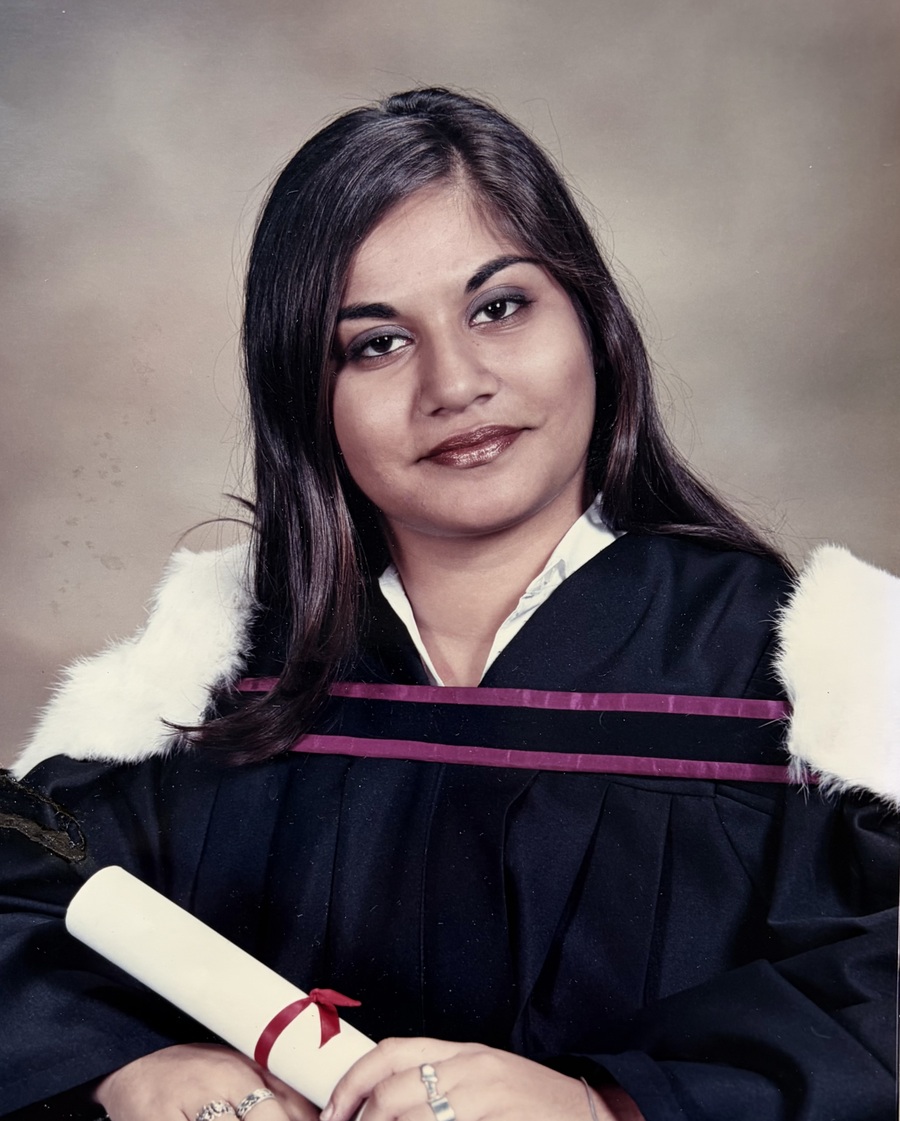
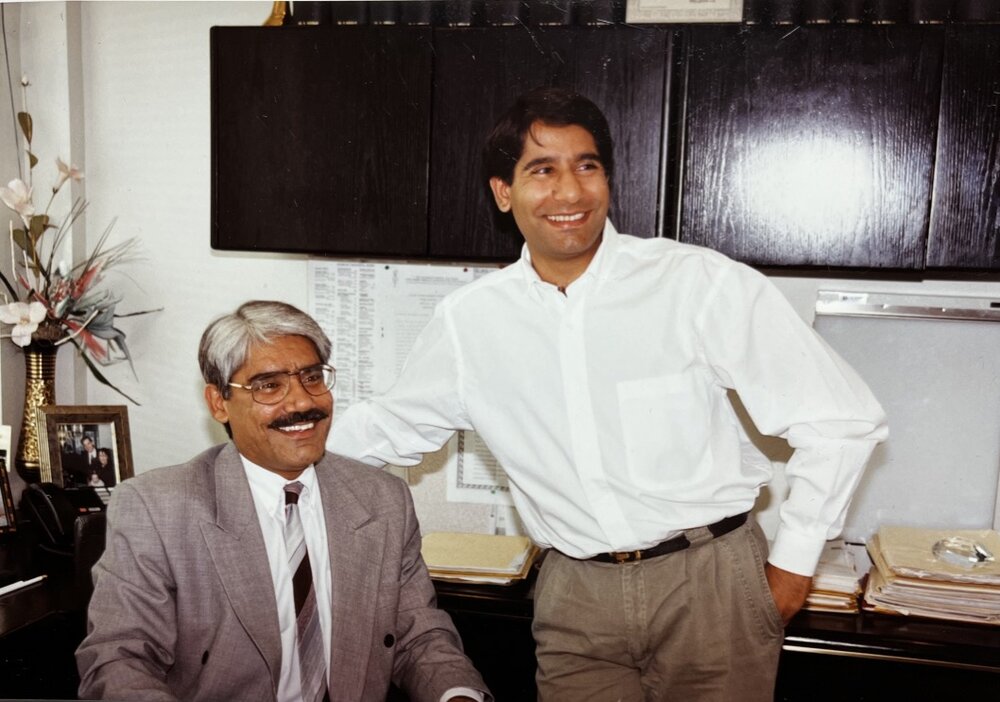
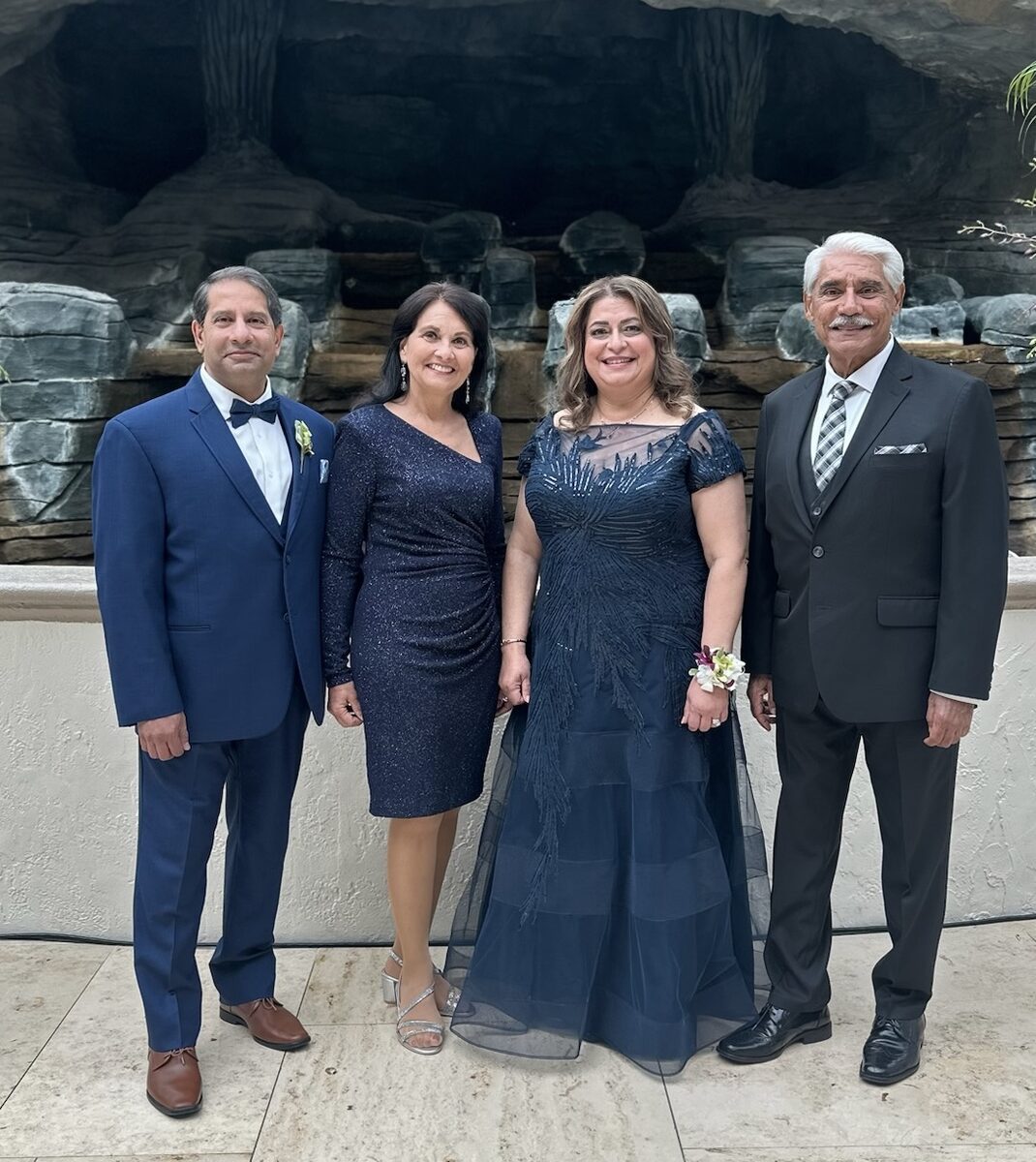
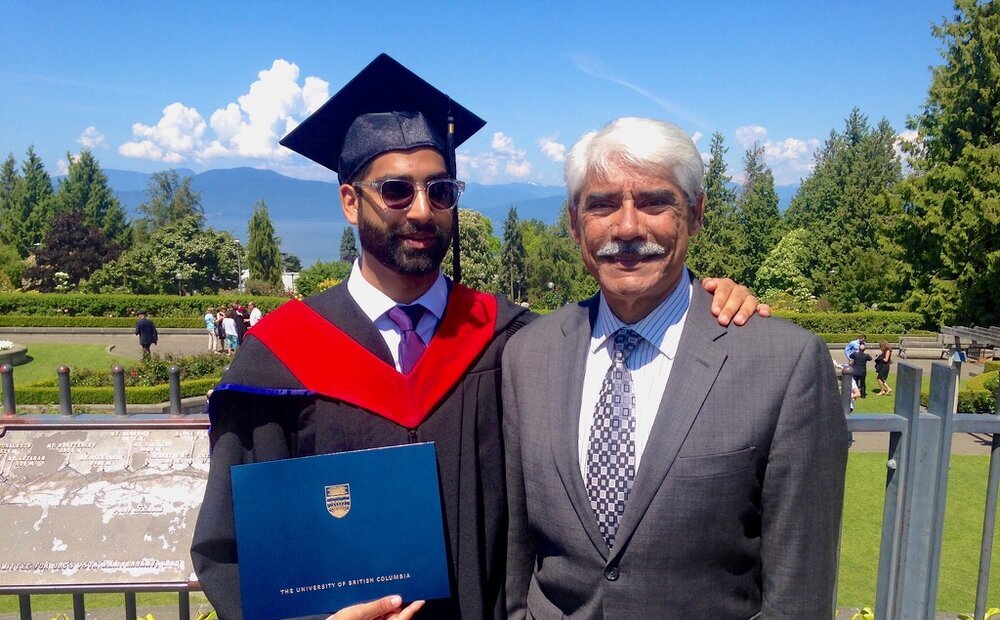
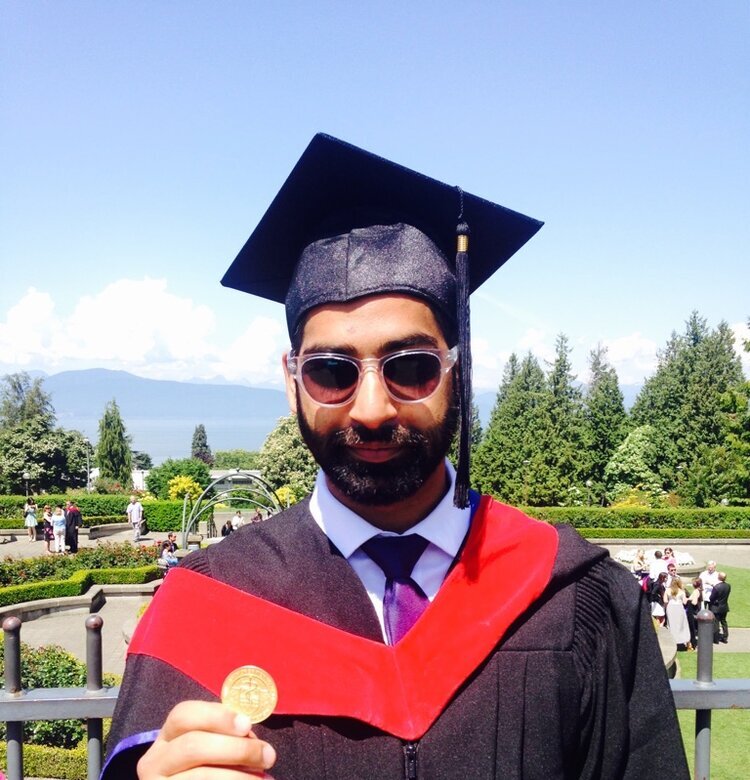
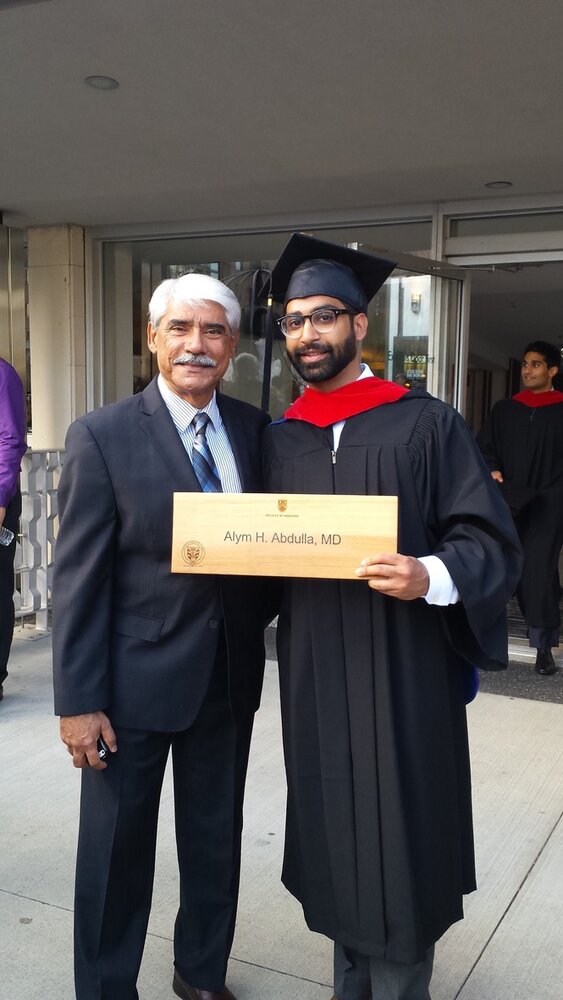
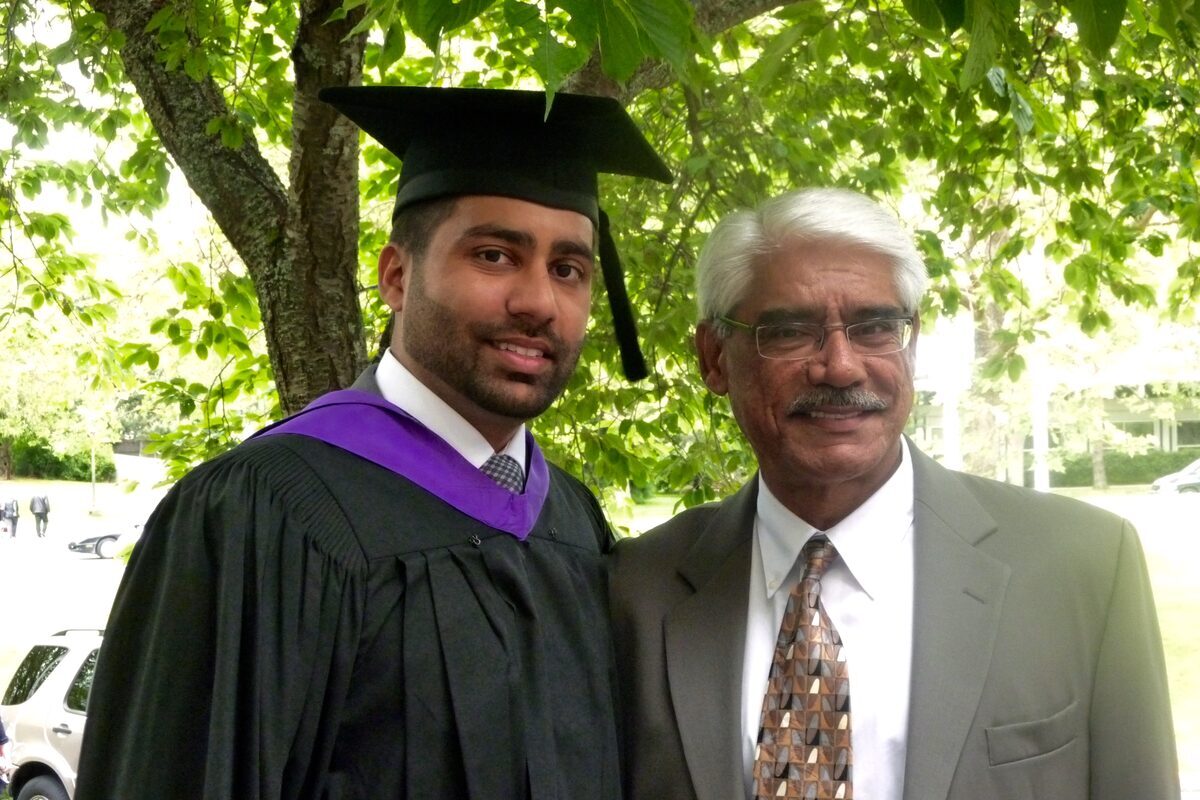
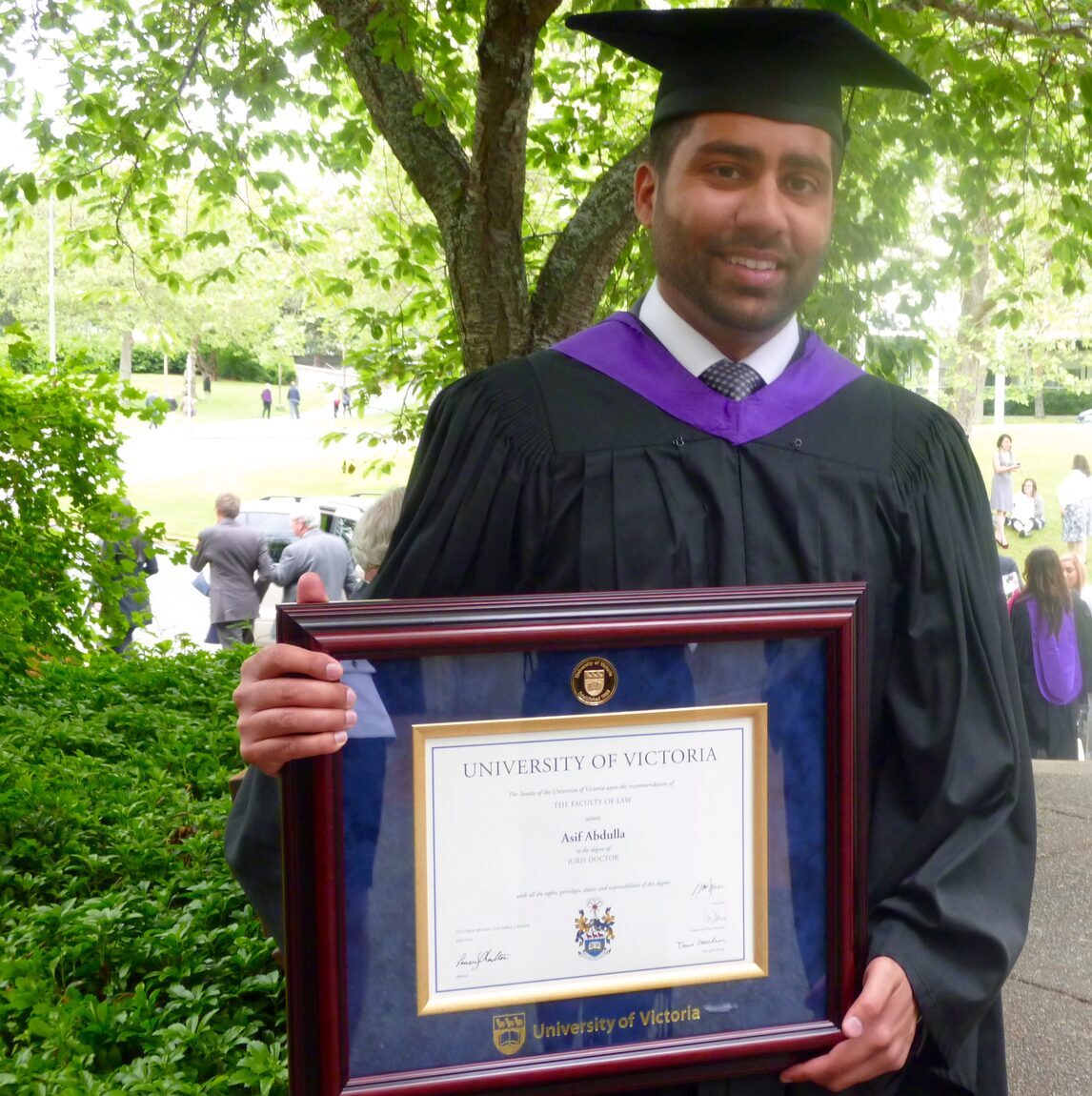
Asif, Dr. Abdulla, Arifa, and Alym.Arifa on her graduation day, McGill University.Rahim on his graduation day, UBC Faculty of Pharmaceutical Sciences.With his brother Rahim (B.Pharm, UBC), in his office.Rahim, his wife Shahin, Monique, and Dr. Abdulla.With Alym at his UBC Medicine graduation, May 2015.Alym with his gold medal — UBC Faculty of Medicine, Class of 2015.“Alym H. Abdulla, MD” — father and son, graduation day.With Asif at his Juris Doctor graduation, University of Victoria.Asif with his Juris Doctor diploma, University of Victoria.His grandson with their human-body project — Dr. Abdulla drew the outline, his grandson
filled in every organ.
07 · Testimonials
What Colleagues and Patients Say
Over more than four decades in practice, Dr. Abdulla has
accumulated more than 200 patient letters and over 500 formal evaluations of his teaching and presentations. The
nine testimonials below — drawn from his LinkedIn recommendations, in each person's own words — are a small,
representative sample of that record.
“Dr Abdulla’s compassionate approach and his persistence changed my life. With a previous
cardiologist using only the national protocols for A-Fib treatment, for ten years I was actually
experiencing increased frequency and increased duration of A-Fib events. When he first saw me he refused to
accept that my condition could not be improved. He determined that I was in a minority group for A-Fib
(vagally mediated) and that I had to receive a different strategy for my condition. Within a year I was
experiencing almost zero events, and they were all very short in duration. The quality of life improved for
me dramatically. Dr Abdulla is the only physician in my experience, in more than 50 years, who came to every
appointment having already read the file and with a page of notes. He encourages patients to learn about
their condition to be able to have useful conversations with him. He was clear and patient when explaining
the science of my condition, and frank and honest about the choices I had for my treatment. My life is
dramatically better for having had Dr. Abdulla as my cardiologist.”
Randal
Ormston Writer, Producer & Photographer, VISTA Arts Inc. · former patient
“Dr. Abdulla is among the most competent interventional cardiologists in medicine. His knowledge is
current, cosmopolitan, and overarching. His insights go beyond the normal diagnosis in that he overlays
knowledge of culture, diet, and inherited predispositions over the existing medical template to evaluate and
diagnose conditions. My experience has been overwhelmingly mesmerising. What a brilliant star! It is my
distinct privilege to know him and to benefit from his supervision.”
Shams
Bhaloo former patient
“I was referred to Dr. Abdulla after some serious cardiovascular complications. From the day I visited
him to the day he decided to retire, he looked after me with great care, compassion, and integrity. He is
very knowledgeable and an expert in the field of cardiovascular disease, including the complications that
arise from it. Under his guidance, my health improved substantially, and I have been stable for the last six
years, leading a healthy life. Before he retired, he referred me to one of his very competent colleagues to
ensure that I received continued good care. I shall miss him for his compassion and for his care, but
equally for his sense of humour!”
Tazdin
Esmail Pharmaceutical & Biotechnology Executive · former patient
“I was privileged to be under the care of Dr. Abdulla to get a second opinion on my medical condition,
and I am extremely grateful to him for the accurate diagnosis he provided. Dr. Abdulla is very patient and
truly cares about his patients. He is very thorough, and listens, and is therefore able to give you the
right advice. I am also appreciative of the fact that he is the only doctor I have encountered who does not
go straight to ‘the drug prescription’ route — he always looks at natural alternatives first. To
put it simply: the manner in which he consults, and the time he gives to his patients, is very reassuring,
and that in itself is a big step toward healing and getting back to normalcy. I am sad that we do not have
him in the clinical system, as we definitely need more doctors like him.”
Brenda
D’Souza HR Administrator & Bookkeeper · former patient
“One of the best medical educators I have ever come across.”
Dr.
Walter Chow MD, Walter Chow Medical Inc.
“One of the best educators I know. Dr. Abdulla is able to distill and explain complex concepts and
make them relevant and practical for the healthcare audience. His passion for his craft shows in his care
for patients.”
Gabriel
Pedrosa, BSc, CCPE Healthcare Solutions Manager, Paladin Labs
“I worked with Dr. Alnoor Abdulla when he presented CHE (Continuing Health Education) programs in the
field of cardiology to physicians in the Vancouver area, while I was with two large multinational
pharmaceutical companies. His passion and knowledge in his presentations was always evident. Physician
evaluations were positive, and he influenced change in practices and understanding of cardiovascular risk
management, especially in the South Asian population, which is at higher risk for CV disease.”
Karl
Panz Specialty & Hospital Sales, Key Account Management
“Dr. Abdulla is passionate about education and improving healthcare outcomes for patients. I had the
opportunity to work with Dr. Abdulla on many occasions and found him to be extremely knowledgeable,
professional, and willing to go above and beyond to help his colleagues.”
Michele
Glen Senior Oncology Account Manager
“I’ve had the pleasure and privilege of working with Dr. Abdulla on a variety of different
projects. Dr. Abdulla was always very passionate about every task he took on, and considered how his actions
would ultimately affect patient care. I found him to be a great teacher, even when he was not asked to be.
He innately finds a way of communicating to his audience that allows them to understand and embody the
concepts he is conveying. I look forward to the opportunity of working with him again, in whatever capacity
it may be.”
William
Arlotta Medical Science Liaison, AstraZeneca
02 · Since 2012
Medical Navigation & Patient Advocacy
Forty-plus years of clinical leadership, now applied to helping individual patients and families find their
way through complex, multi-system illness — for clients across Canada, the United States, and around the
world.
This work continues in the same pro bono spirit that has run
through Dr. Abdulla's entire career. He does not charge for it, and does not solicit new clients — families
reach him by word of mouth from around the world, and he continues to make himself available to them out of
the same commitment to service that has defined his life's work.
Scope of Practice & Patient Advocacy Notice
Dr. Abdulla reviews clinical pictures with families, explains medical terminology and treatment options
discussed by care teams, helps prepare questions for treating physicians, and supports clearer communication.
He does not diagnose, prescribe, replace treating physicians, or make treatment decisions on behalf of
patients.
“This service provides patient advocacy, education, and guidance only. It is not an
emergency medical service, and Dr. Abdulla is not the physician of record for any patient. This service does
not diagnose medical conditions, prescribe medications, or provide treatment plans. All medical decisions,
diagnoses, treatments, and prescriptions remain solely between the patient and their treating physicians and
healthcare providers.”
System Integration
Unifying the Specialist Silos
Synthesizes fragmented specialist data into a single, coherent clinical
roadmap — ensuring patients do not fall through the gaps that open up between disconnected specialty teams.
High-Stakes Advocacy
Navigating Complex Systems
Draws on decades of institutional knowledge of how hospital systems actually
work to secure optimal, timely care for private clients facing serious or ambiguous diagnoses.
Clinical Strategy
Stable, Medically-Sound Leadership
Provides families managing multi-system illness with grounded clinical
judgment focused on long-term health outcomes and genuinely informed decision-making.
Why Medical Navigation?
Modern healthcare is powerful but fragmented — a patient with a complex or multi-system illness may see
half a dozen specialists who rarely speak directly to one another. Dr. Abdulla's Medical Navigation practice
exists to close that gap: acting as a single, clinically fluent point of continuity who can read the whole
picture, ask the right questions of each specialist team, and help a family make confident, well-informed
decisions at every stage of care.
This work draws directly on a career spent building the very systems patients now have to navigate — as a
front-line clinician, department chief, program founder, and principal investigator on major international
cardiac trials. Few advocates bring that combination of bedside experience and institutional insight.
Practice Since
2012 – Present
Medical Navigation & Cardiac Education Consultant, Vancouver, BC
Applying 40+ years of clinical leadership to provide
high-level strategic oversight for families managing complex cardiovascular and multi-system illnesses — a
genuinely international practice, spanning:
The AmericasEuropeAsiaAfricaThe Caribbean
What This Looks Like in Practice
Three anonymized examples — details changed or omitted to protect privacy — of
the kind of situations families bring to Dr. Abdulla.
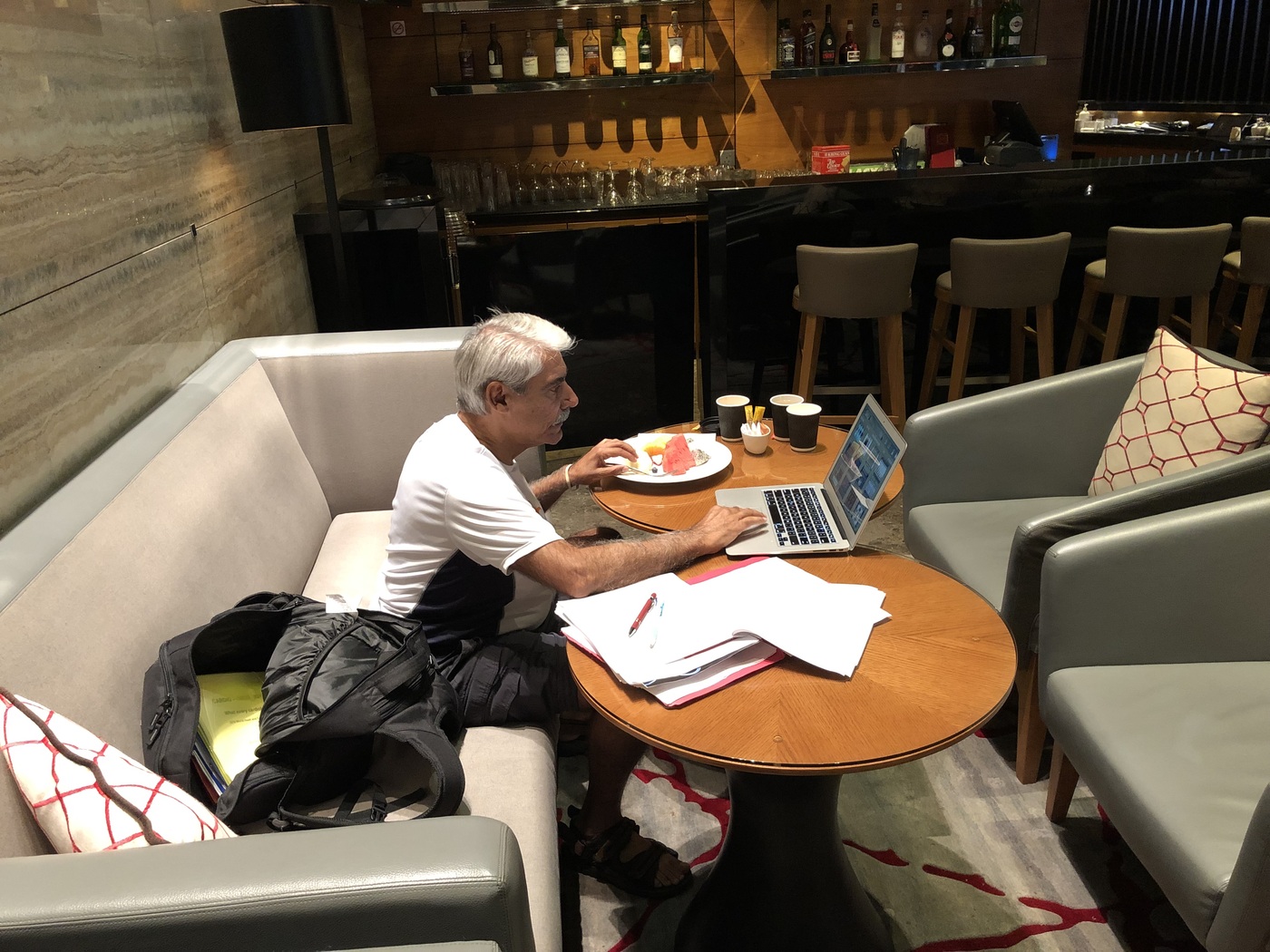
Singapore, 2019 — past midnight after delivering a keynote address, reviewing medical reports and
test results sent in from patients in other time zones. This is what being reachable across the world, at
any hour, actually looks like.
Fragmented Specialist Care
A relative was admitted to a tertiary hospital's intensive care unit with a
dangerous heart rhythm and fluid building up around her heart. Over the following days, as the ICU team
rotated between physicians, doctors drained the fluid and worked to control the rhythm — but no one had yet
connected these findings back to her medical history: she had survived three prior cancers, one of which had
involved radiation to her chest. Reviewing her full record with the family, Dr. Abdulla recognized the
underlying process was very likely oncological rather than primarily cardiac — a recurrence at the lining of
the heart itself, in the same territory he had spoken about years earlier in a 2019 keynote on
cardio-oncology, before it existed as a formal cardiology subspecialty. When a chest MRI confirmed it, the
next physician on rotation initially treated the case as already settled. Dr. Abdulla worked through the
chart with her, step by step, until it was clear the case needed to go back to the oncology team who already
knew the patient — and made sure that transfer actually happened. The oncology team has since
confirmed the diagnosis and started her on a course of radiation treatment.
Reaching Across Borders
A family physician in Central Asia, who had heard of Dr. Abdulla through a
mutual contact, called about a four-year-old boy whose lips and fingertips turned blue from time to time.
Working through an interpreter with the family, Dr. Abdulla suspected a congenital heart defect and arranged
for an echocardiogram locally, which confirmed a hole between the heart's upper chambers, with blood
beginning to flow the wrong way as pressure built on one side. He arranged for the child to be seen at a
pediatric cardiology centre in a neighbouring country and helped arrange the means for the family to travel
there, where the child remains under specialist care today. Word of the case reached a relative elsewhere in
the family, who had her own three-month-old daughter checked as a precaution — and found a similar but
far smaller defect, stable and straightforward to repair locally, needing no referral at all. Two children,
two very different paths, reached only because a family somewhere in the world knew how to find him.
An Uncommon Diagnosis
A patient came to him when another cardiologist's practice changed hands —
someone who had been treated for atrial fibrillation the same way for years. On his very first full
assessment, Dr. Abdulla recognized the treatment itself was working against the patient: this wasn't
ordinary atrial fibrillation, but a rarer, vagally-mediated form, where the usual first-line medications
push the arrhythmia in the wrong direction rather than correcting it. He changed the medication regimen
accordingly, and the patient improved dramatically almost immediately. They have remained close friends ever
since.
One of many documents relayed back and forth during the boy's care above — test results
translated into English as they came in, first from Tajikistan and then from Moscow.
That case is one example of something Dr.
Abdulla sees again and again: people find their way to him across geography, politics, race, and religion, and
he does what he can to help in every case.
Documented Case Examples
Two further cases, drawn directly from Dr. Abdulla's own working files —
patient-identifying details redacted, shown here to illustrate what sustained, cross-specialty navigation
actually looks like on paper.
Longitudinal, Cross-Border Advocacy
A Decade of Coordinated Care
2017 — Dr. Abdulla's own hand-drawn interpretation of the coronary anatomy, worked out
from angiogram video and images sent from India, so the patient's son in Canada could understand it and
explain it to his father.2018 — as trust built with the patient's doctors in India, Dr. Abdulla helped the family
understand what each medication was for, discussing his own suggestions directly with the treating
physicians.2020 — cardiac, diabetes, and psychiatric medications now all in the picture, with real
risk of interaction between them. Dr. Abdulla continued helping the family and physicians coordinate the
growing complexity.
A professional working in Canada reached out about his father's cardiac care
in India, after an angiogram raised the question of bypass surgery. Dr. Abdulla reviewed the video and images
himself, working out the interpretation above so father and son could understand the anatomy together —
and, in consultation with the treating team, the family chose medication over surgery. Over the following
years, as the picture grew more complex — a diabetes specialist, then a psychiatrist, whose medications
could interact with his heart medications — Dr. Abdulla continued helping the family and each new
physician coordinate care across that widening circle of specialists. The patient has since migrated to Canada
and is thriving; his son now speaks proudly, to anyone who will listen, about the doctor who helped guide his
father's care for the better part of a decade.
Specialist-to-Specialist Consultation
A Long-Distance Second Opinion
December 2019 — a coronary arteriographic report from the Toronto case. Reviewing extra
angiogram footage shared by the treating cardiologist, Dr. Abdulla identified a crushed stent, not a
cholesterol blockage, behind the patient's symptoms.
A family whose relative was already under specialist care at a major Toronto
teaching hospital reached out when the treating team faced a difficult call: after a previous bypass and
multiple stents, should the next step be another angioplasty, another bypass, or medication alone? The
cardiologist managing the case — a former colleague of Dr. Abdulla's from his years working in Toronto
— shared additional angiogram footage with him directly. Reviewing it, Dr. Abdulla identified that the
underlying problem was a previously placed stent that had become crushed, not a new cholesterol blockage,
pointing toward a high-pressure balloon technique rather than a repeat bypass. The treating cardiologist made
the final call and carried out the procedure himself; the patient has done well in the years since.
How Patient Advocacy Can Help
System Navigation
Helps families understand complex hospital environments — from
admission through discharge planning and follow-up care.
Clinical Translation
Translates dense, fast-moving medical consultations and specialist
recommendations into clear, understandable language.
Objective Guidance
Offers an objective clinical perspective, so families can weigh treatment
pathways without added confusion.
Dedicated Representation
Helps families communicate with medical staff, so questions get asked and
care plans are understood.
What Is a Patient Advocate?
A patient advocate is someone who helps patients understand, navigate, and make informed decisions about
their healthcare. A patient advocate may assist with:
Understanding the clinical situation and key concerns
Reviewing available reports, test results, and specialist input
Explaining medical issues in plain language
Helping families prepare informed questions for treating physicians
Providing education and advocacy while keeping decisions with patients and their care teams
Healthcare systems can be complex and overwhelming, particularly with serious
illness, multiple providers, or insurance issues — a dedicated patient advocate helps ensure clear
information, appropriate care, and consistent support throughout.
Types of Patient Advocates
Hospital or
healthcare-facility advocates Employed by hospitals to help patients address concerns and
improve their care experience.
Independent patient
advocates Private professionals engaged by patients or families for personalized support — Dr.
Abdulla's role.
Family members or
caregivers Often act as informal advocates, speaking on behalf of the patient.
03 · 1982 – 2012
Academic Leadership & Institutional Program Development
A career defined by founding and directing tertiary cardiology programs — from Ontario to Pakistan to East
Africa — and by leading landmark international research.
2012 – Present
Medical Navigation & Cardiac Education Consultant
Vancouver, BC
Applying four decades of clinical leadership to strategic oversight for
complex cardiovascular and multi-system cases.
1999 – 2002
Director of Cardiac Catheterization
Peterborough Regional Health Centre, Ontario
National regulatory pioneer: planned, implemented, and directed a new regional cardiac
catheterization centre — one of Canada's first safe, “stand-alone”
invasive cath labs operating without on-site cardiac surgical backup, helping evolve national medical
norms.
1998 – 2000
Associate Professor & Co-Founder, Ambulatory Cardiac Centre
University of Ottawa Heart Institute
Spearheaded the shift toward high-efficiency outpatient cardiac management within a world-class academic
environment, improving patient throughput and continuity of care.
1994 – 1998
Professor & First Head of Cardiology
The Aga Khan University, Karachi, Pakistan
International program architect: after a decade-long relationship with the institution,
designed and launched AKU's first tertiary cardiac program and Cardiac
Catheterization Lab, holding every clinical protocol to rigorous international (ACC) standards — see
“A Twenty-Five-Year Partnership” below.
Associate Professor (1994–96), then Professor (1996–98), Department of Medicine; taught Phase I &
III medical students and residents throughout.
Contracted separately by the Aga Khan Health Service, East Africa (1999): developed the proposal and
feasibility study for the first comprehensive, integrated cardiac program with
AKU; updated the plan and authored the Strategic Plan in 2002. That program is now fully operational — His
Highness the Aga Khan personally inaugurated its Heart and Cancer Centre in Nairobi in 2007, built on the
integrated, space-consolidated Cardiac Centre model Dr. Abdulla had developed and championed.
A lasting legacy: the program's reach went well beyond the institution itself —
establishing AKU's first accredited cardiology fellowship meant training the fellows who would go on to
become the next generation of cardiology leaders internationally. His first fellow, Dr. Ata ur Rehman
Qureshi, is now Head of Cardiology at Dalhousie University, Halifax; his second, Dr. Syed
“Najaf” Nadeem, went on to serve as Associate Professor at Dalhousie University and the
Dalhousie/QEII Health Sciences Centre; in August 2020 he moved to Toronto, joining Humber River Hospital
— an academic teaching hospital of the University of Toronto — as an innovation leader in its
Division of Cardiology, and has since been named Head of the Division of Cardiology there.
1984 – 1994
Adjunct Professor & Chief of Cardiovascular Department
Sudbury Memorial, Sudbury General & Laurentian Hospitals, Ontario
Adjunct Professor, Laurentian University, Sudbury.
Departmental leadership as Deputy Chief (1989–90) and Chief (1990–92).
Clinical founder of the region's first Nuclear Cardiology
program (serving as Medical Director & Radiation Safety Officer, licensed under the Atomic Energy
Commission of Canada), the region's first Pacemaker Clinic, and a Cardiac
Rehabilitation program he established and headed.
Extended specialist cardiology care to underserved communities via outreach clinics in Blind River
(1984–94) and Elliot Lake (1992–94).
With $1.4 million in Ontario Government funding over its seven-year run, established the region's
first community-wide Heart Health Program — see the full story below.
Honoured as a “Founder” by the Cardiac Care Network of Ontario (2000) for these
contributions.
1982 – 1983
Program Founder, Nuclear Cardiology
Lancaster Community Hospital (AVHMC, Palmdale Hospitals), California
The first program-development role of his career: established and directed the
first Nuclear Cardiology Laboratory in a community, non-university-affiliated
hospital setting.
1982 – 2012
Clinical Consultant & Private Practice
Vancouver · Toronto · Southern California
Sustained, high-volume clinical consultancy across major Canadian and U.S. centres, including the
University Health Network (Toronto General Hospital), alongside solo private practices in Vancouver and
West Vancouver.
A Twenty-Five-Year Partnership
Aga Khan University & the AKDN
The AKU cardiac program wasn't a sudden recruitment in 1994 — it
was the culmination of a relationship with the Aga Khan network that had already spanned more than a decade.
Dr. Abdulla's ties to the network began even before AKU itself: in 1979 he applied for, and was awarded,
the Aga Khan Foundation International Scholarship Programme — two years of funding (1980–81,
1981–82) that supported his Nuclear Cardiology Research Fellowship at Cedars-Sinai/UCLA, before he
transferred, with full funding secured independently, to the University of Southern California to train
under Dr. Shahabudin Rahimtoola.
First contact about AKU itself came in 1981, through President Lutaf Bhatia of the Aga Khan Eastern U.S.
Council. By December 1983 — by then running his first Nuclear Cardiology program in Lancaster, California —
he was invited to Karachi to interview with Dean Cheves Smythe, Dr. Camer Vellani, and President S.K. Lakha.
They mutually agreed the timing wasn't yet right: the medical school was still in its basic-science years,
and the hospital was only beginning clinical services.
Over the following decade, while building his career in Sudbury, he continued to support AKDN institutions
— including the Aga Khan Foundation, the Aga Khan Rural Support Programme, and Jamati institutions such as
the Institute of Ismaili Studies and Jamatkhana building projects — with an endowment gift to AKU in 1988.
In 1990, with AKU's Policy Board having approved development of an invasive cardiology and cardiac surgery
program, Dean Smythe travelled to Sudbury personally with detailed program plans; talks grew serious enough
that Smythe later wrote, “We would like to find a way to do business with you.” The program was
then put on hold in the aftermath of the Gulf War — a pause Dr. Abdulla has come to see as fortuitous, given
how much stronger the eventual 1994 program was for the delay.
The path resumed in March 1993, when President S.K. Lakha called with news that the program had been given
the go-ahead, targeted to open at AKU's 1994 convocation. Dr. Abdulla spent the months that followed working
two fronts at once: on-site at AKU bringing the clinical plan up to 1994 standards — formalized in a
comprehensive blueprint he sent Acting Dean Camer Vellani that November and December — and in Sudbury
building a formal institutional linkage between AKU and the Northeastern Ontario Cardiovascular Program,
work that led the City of Sudbury and Karachi to be formally designated Twin Cities. He signed his AKU
contract on 1 August 1994.
The four years that followed built the program's lasting foundations: its cardiology fellowship became
AKU's first accredited subspecialty fellowship; he set up a prospective,
ACC-standard clinical database — tracking every patient who entered the Cardiac Catheterization Lab
— that has now run continuously for more than 25 years; and the program recorded only a single
cath-lab fatality across his four years there. He was promoted from Associate to full Professor of Medicine
during his tenure. By 1997–98 his focus had turned to a five-year vision for a dedicated AKU Cardiac
Centre, a fully integrated academic heart centre he hoped would become a premier centre of excellence across
South Asia; that particular goal didn't materialize on the timeline he had hoped for, and he chose not to
renew his AKU appointment in 1998. The same integrated model he had championed was realized years later,
both at AKU and, subsequently, in East Africa.
Even while still at AKU, he had begun extending that work to East Africa — developing the AKU/AKHS
cardiac linkage there from 1997, and later authoring the full Strategic Plan for a Tertiary Cardiac Centre
in Kenya, presented in 2002 to AKHS-EA, AKU, and AKDN's Aiglemont secretariat. When His Highness personally
opened the AKU/AKHS-EA Cardiac and Oncology Centre in Nairobi in 2007, it followed the same integrated,
space-consolidated model Dr. Abdulla had proposed years before.
That legacy came full circle in 2014, when Dr. Abdulla — AKU's first Head of Cardiology
(1994–98) — met Dr. Zainab Samad, then the current Head of Cardiology at AKU, at an AKU alumni
event in Vancouver: a symbol of how the leadership he built has passed forward, from one generation of
cardiology leaders to the next. There's a fuller story behind that meeting: Dr. Samad's father, Professor
Samad, was a cardiologist at Karachi's National Cardiovascular Institute — the same institution, under
Dr. Azhar Faruqui, that Dr. Abdulla found himself in friendly rivalry with while building the AKU program in
the 1990s, a dynamic that helped push AKU's cardiac care to a standard other centres went on to model
themselves after. Decades later, the daughter of a cardiologist from that rival institution would go on to
lead the very program he built.
At a Glance
A Quarter-Century Timeline
1980–82 · AKF International Scholarship, Cedars-Sinai/UCLA1981 · First AKU contactDec 1983 · AKU interview — timing not yet right1988 · Endowment gift to AKU1990 · Program put on hold (Gulf War)1 Aug 1994 · AKU contract signed1994–98 · First accredited AKU cardiology fellowship2002 · East Africa Strategic Plan authored2007 · HH opens AKU/AKHS-EA Cardiac & Oncology Centre, Nairobi
The Strategic Plan itself — AKHS-EA/AKU Cardiovascular Program, authored August 2002.
The Strategic Plan's Executive Summary, in Dr. Abdulla's own words.In academic regalia as a member of the AKU faculty — Associate Professor, then full
Professor of Medicine.With Dr. Zainab Samad, then Head of Cardiology at AKU — Vancouver, 2014.
1994 · Opening Day, Aga Khan University Cardiac
Program
His Highness had set two conditions for the
program years earlier — and would not cut the ribbon until he knew one particular answer.
His Highness the Aga Khan had originally planned to launch AKU's cardiovascular program in 1990, but the
Gulf War put those plans on hold. When the program was revived in 1993–94, His Highness's two original
conditions still stood: the program had to be fully ready and functional in time for the University's Tenth
Anniversary Convocation in 1994 — ten years from AKU's founding charter in 1983, two years before the
Hospital and Faculty of Health Sciences themselves opened in 1985 — and — unlike the international funding
behind so much of AKU's other development — its funding had to come entirely from private donors inside
Pakistan, with no foreign money involved.
At the Convocation, His Highness came upstairs with his entourage to formally open the new Cardiac
Catheterization Laboratory. Dr. Abdulla, who had assembled the program's team from Canada, the University of
Maryland, and Pakistan, had been left behind in the narrow corridor as the official party moved forward. His
Highness stood ready at the ribbon, scissors already in hand — and did not cut it. He turned and asked,
"Where is Dr. Alnoor?" Every head turned, including Princess Zahra's; Dr. Abdulla was brought forward
through the crowd. His Highness asked him directly, "Doctor, are we ready?" Dr. Abdulla answered, "Yes, we
are ready" — and only then did he cut the ribbon.
As the group moved to enter the new facility, His Highness told Dr. Abdulla to go ahead of him; in keeping
with his faith, Dr. Abdulla would not walk in front of the Imam, and the two of them fell into a brief
"after you, after you." Princess Zahra broke the impasse by stepping forward herself, and Dr. Abdulla went
with her to lead her into the Catheterization Suite, with His Highness — along with Lee Hilling, CEO of AKU
Hospital, and Dr. Manji, chairman of the board of health services — following behind. It was a telling
moment: here, His Highness was engaging not as Imam but as Chancellor of the University, extending to Dr.
Abdulla the professional deference due the head of the cardiology program he had built.
Once inside, standing across the catheterization table from Dr. Abdulla with Princess Zahra at his side,
and with the Pakistani national press in the room, His Highness questioned him in detail — how the equipment
had been procured, how the team had been assembled, how its quality would be held to the same standard as
major cardiac centres in North America. The questions were deliberate: he was building a public record,
through the press present, for why a tertiary cardiovascular program belonged in a developing country still
contending with infectious disease and maternal and infant mortality. Dr. Abdulla's answer — the shifting
epidemiology of non-communicable disease across the developing world — was the same reasoning he would later
formalize in AKU's East Africa cardiovascular Strategic Plan, and the same reasoning His Highness himself
would use years later at that program's own opening.
Choosing that first patient had not been simple. With the opening date set and the community aware of what
was coming, Dr. Abdulla came under real pressure — from council leaders and from university leadership alike
— to select a particular patient for the honour. He resisted being steered toward any one choice, insisting
on deciding for himself.
He chose a Hindu woman who had worked in the hospital's housekeeping department for more than eight years,
who could not afford cardiac care on her own, and who Dr. Abdulla had recognized in his own clinic as having
classic angina — the same warning signs of blocked arteries he has described elsewhere in his career. AKU
described itself as a non-denominational institution, serving all faiths and communities equally; Dr.
Abdulla decided this first patient should make that claim real, rather than just stated — a deliberate
statement that the program existed for the disease and the person in front of him, regardless of religion,
gender, influence, or ability to pay.
His Highness was visibly moved. As the patient was wheeled out by Monique — the nurse who had assisted in
the procedure the day before, and who would, years later, become his life partner — he placed his hand on
her shoulder and blessed her, then did the same for Monique.
Standing close to Dr. Abdulla in the corridor, His Highness's tone shifted from the formal register of the
tour to something far more personal — the same shift Dr. Abdulla had experienced with him only once before,
in the Sick Bay in Vancouver in 1978. Dr. Abdulla does not recall his exact words, but recounts the sense of
what he said: that they had been waiting a long time for him to come to AKU, to build this program, and to
teach the team there how to work together and deliver quality cardiovascular care. Dr. Abdulla has called it
probably the highlight of his career.
Princess Zahra Aga Khan was struck enough by what she had seen that she returned the following day and
spent more than two hours with Dr. Abdulla, while his Canadian technicians worked on the equipment nearby —
asking in detail how a program like this gets built: the equipment, the training, how the team itself comes
together.
AKU · Karachi · 1994
Opening Day, By the Numbers
First patient chosen without regard to religion, gender, or ability to payProgram built from Canadian, American & Pakistani teamsFunded entirely by private donors inside PakistanSame epidemiological case later formalized in the 2002 East Africa Strategic PlanPrincess Zahra Aga Khan returned the next day for a two-hour briefing
Scissors in hand, ribbon not yet cut: His Highness asks, "Where is Dr. Alnoor?" as Princess Zahra
and the gathered party turn to find him.His Highness asked, "Doctor, are we ready?" — then cut the ribbon with Dr. Abdulla standing beside
him. This photograph was later enlarged and still hangs at the cardiology program's entrance at AKU today.
His Highness — engaging here as Chancellor of the University rather than as Imam — followed as Dr.
Abdulla led Princess Zahra Aga Khan into the new Cardiac Catheterization Lab, with Lee Hilling, CEO of AKU
Hospital, and Dr. Manji, chairman of the board of health services, behind them.
Before the Pakistani national press, His Highness questioned Dr. Abdulla in detail on the program
and its first patient's angiogram, taken the day before — building the public case for a tertiary cardiac
program in a developing nation.His Highness blesses the first patient in the narrow corridor, with Monique behind her and Dr.
Abdulla (in green) beside them, alongside President Shams Kassim-Lakha, President of the University
(spelling to confirm).Princess Zahra returns the next day: two hours spent going through how the program itself was
built, while Dr. Abdulla's Canadian technicians worked on the equipment nearby.
Commemorative medallion, founding of the AKU Faculty of Health Sciences (inaugurated 11 November
1985).Commemorative medallion, founding of the Aga Khan University Hospital (inaugurated 11 November
1985).Crystal keepsake, the Aga Khan University's Tenth Anniversary.
The Fellows He Trained
Decades later, three of the cardiology fellows
Dr. Abdulla trained at AKU — Dr. Ata ur Rehman Qureshi and Dr. Najaf Nadeem, now Heads of Cardiology in Halifax
and Toronto respectively, and Dr. Fahim Haider Jafary, now Senior Consultant Interventional Cardiologist in the
Department of Cardiology at Tan Tock Seng Hospital, Singapore — have stayed in touch over the years. Qureshi and
Nadeem hosted him for dinner in Vancouver during the Canadian Cardiovascular Congress, and he reconnected with
Jafary in Singapore in 2019, on the same trip as his Cardio-Oncology keynote.
L–R: Dr. Nadeem, Dr. Abdulla, Monique Tremblay, Dr. Ata Qureshi, and a fellow AKU
cardiologist — dinner in Vancouver during the Canadian Cardiovascular Congress.With Dr. Fahim Haider Jafary, now Senior Consultant Interventional Cardiologist, Tan Tock Seng
Hospital — Singapore, 2019.
His original Nuclear Cardiology team, Lancaster Community Hospital, California (1982–83).
In his office with nuclear cardiology scan results, Lancaster, California.Celebrating with his cardiac catheterization lab team, Aga Khan University.On an academic panel at the Aga Khan University with Professor Camer Vellani, then Associate Dean
and later Provost of the University.
04 · Ongoing
Public Health, Education & Community Involvement
A parallel career spent translating cardiology for the public — through media, print, and community talks —
and in service to the Aga Khan community and global health initiatives.
Public & Patient Education
Long before “health literacy” was a common phrase, Dr. Abdulla was producing original
patient-education material: an eight-part newspaper series on heart health for the Sudbury Star
(1994), a five-part series for Dawn in Karachi, Pakistan (1995), and a library of plain-language
patient guides at the Aga Khan University Hospital covering everything from cardiac catheterization to
coronary angioplasty.
He created original audio-visual teaching material, including a Medifacts audio cassette on post-MI
management (1989) and the teaching video Holding the Line: The Spectrum of Left Ventricular Dysfunction
in Heart Failure (1993), and appeared regularly on radio and television — from CBC Radio and MCTV in
Sudbury to Pakistan Television (PTV) documentaries and interviews on cardiovascular risk and CPR. (See the
full record of 50 patient & public education engagements in the Presentations section above.)
Community & Global Health Service
Dr. Abdulla's commitment to underserved health systems is highlighted by significant, multi-year,
on-the-ground contributions to building cardiac care services in Pakistan, Kenya, and Tanzania — work that
spanned program design, clinical training, and strategic planning, not just visiting lectures.
He has been a regular volunteer speaker for Aga Khan Health Boards across Canada — British Columbia,
Ontario, the Prairies, and Ottawa — bringing heart-health education directly to community members, and has
extended that work internationally: guest lectures on global cardiovascular disease trends for the Aga Khan
Health Board and CUHAS/Bugando in Mwanza, Tanzania (2012), and for the Aga Khan Health Board in Doha, Qatar
(2022).
Beyond formal medical audiences, he has spoken widely to community and civic organizations — including
Rotary Clubs, Lions Clubs, the Aga Khan community, Masonic organizations, Heart & Stroke Foundation
events, the Radiation Technologists’ Association, and the Professional Engineers Association — as well
as international webinars reaching the general public. That reach has spanned Canada coast to coast, the
United States, Pakistan, Kenya, Tanzania, Kuwait, and Qatar. This community and civic speaking record is
part of the same 50-engagement patient & public education list detailed in the Presentations section above — see there for the
complete, dated list.
This global health commitment is inseparable from his own story, and from a simple idea he has never lost
sight of: giving back. Dr. Abdulla was born in what was then Tanganyika — now Tanzania — and grew up in its
central province, one of the most underdeveloped regions of what was, at the time, among the most
underdeveloped countries in the world. He started his university education in Uganda and arrived in Canada
as a refugee in 1972 with nothing, going on to reach the highest levels of academic cardiology. He never
forgot where he came from, and giving back has been the organizing principle of his career ever since — not
only to Tanzania and Uganda, but to the wider developing world, bringing North American-level tertiary
cardiac care to the places that lacked it most.
Recognition for Service
Community & Civic Honours
Among his community-facing recognitions: the 1990 Canadian Aga Khan High
Achievers Award, Professional Category. His full record of honours and awards — including the Aga Khan
Silver Jubilee Service Medal, the Governor General of Canada's Commemorative Medal for “Service to
Canada,” and the Nehru Humanitarian Service Award — is detailed in the About
section above.
One of his plain-language patient-education booklets, Aga Khan University Hospital, Karachi
— “Permanent Pacemaker: Information for Patients.”“Coronary Angiography: A Guide for Patients,” Aga Khan University Hospital, Karachi.
“Coronary Angioplasty/PTCA: Discharge Instructions for Patients,” Aga Khan University
Hospital, Karachi.“Healthy Heart / Weight & Cholesterol Reduction Program,” his own patient guide.
Marking Heart Health Month, which he writes about every February — a favourite photo of him as a
heart-health promoter.
In December 2012, Dr. Abdulla travelled to
Mwanza, Tanzania to help establish additional diagnostic capability at the Aga Khan Hospital there — primarily
cardiac ultrasound. While there, he also participated in and helped organize the Aga Khan Health Services
“Joining Hands Initiative” — a free community health screening camp in Bariadi, Mwanza, offering
testing and counselling for malaria, blood pressure, diabetes, and urinary tract infection, along with maternal
and child health services, at no cost to the community.
The Joining Hands Initiative free health screening camp, Bariadi (Mwanza), Tanzania, 1 December
2012.Community members lined up for screening at the camp.With Aga Khan Health Services Tanzania medical and administration staff, Mwanza.
A Personal Tribute
Following the passing of His Highness Prince Karim Aga Khan IV on 4 February 2025, Dr. Abdulla was invited
to contribute a personal tribute to Moral Values — Special Edition: A Tribute to Aga Khan IV
(1936–2025), a commemorative book compiled by Zulfiqar Meghani. Most contributions came from
heads of state, institutions, and the Aga Khan Development Network itself; Dr. Abdulla's was one of only a
handful of personal, individually-authored reflections included — a distinction he considers a great
honour.
“As an individual member of the Shia Ismaili community, I grew up in a rural
town in central Tanzania, where we had rudimentary running water taps, no electricity till I was 8 years
old, to now living for 52 years in North America. My biggest satisfaction is not just my career… but
that, in any setting whatsoever… I am humbly proud to raise my head and say where I come from and
that I belong to the Shia Ismaili Muslim faith, and that the Aga Khan is our Leader.”
His full tribute traces His Highness's 68-year Imamat
(1957–2025) — his transformation of a small, developing-world community into one flourishing
worldwide in education, health, and civic life; his lifelong work building bridges between Islam and the
West; and his succession by his son, Prince Rahim Aga Khan V, as the 50th hereditary Imam.
Published
Moral Values — Special Edition
“Tribute to Aga Khan IV,” by Dr. Alnoor Abdulla — p. 40,
in Moral Values: A Tribute to Shah Karim Al-Hussaini, compiled by Zulfiqar Meghani, 2025.
A Historic First — Vancouver, 1978
The Aga Khan's First Official Visit to Canada — “The Sick Bay”
Something never done before at any Aga Khan visit anywhere in
the world — and now the standard.
In 1978, His Highness Prince Karim Aga Khan IV made his first official visit to Canada as Imam of the Shia
Ismaili community. At the time, Dr. Abdulla — then a medical resident at St. Paul's Hospital —
was already deeply engaged as a community volunteer: library convenor for the National Religious Board, a
member of the Aga Khan National Education Board, and Member for Health on the Aga Khan Regional Council. As
health convenor for the visit, he assembled a team of health professionals to provide emergency medical
coverage for the thousands of community members expected to gather at the PNE Colosseum.
He then went a step further. Community members who were hospitalized or in palliative and nursing care
would ordinarily have been left out entirely — unable to attend and denied their Didar, their
audience, with the Imam. When Dr. Abdulla proposed bringing them to the visit, Sir Eboo Pirbhai, then the
highest-ranking lay leader in the global Ismaili community, told him directly that the Imam did not want to
see such ill patients in the midst of the congregation. Rather than abandon the idea, Dr. Abdulla adapted
it: he and his team converted the Vancouver Canucks' dressing room at the Colosseum into its own separate
medical facility — the “Sick Bay” — where the patients could be cared for apart from
the general congregation, brought in on a day-pass basis under his own medical responsibility and returned
to their institution every evening for the three days of the visit. An audience with the Imam is a deeply
spiritual, highly charged experience, and the health professionals working the Sick Bay — apart from
the main congregation for three full days — would otherwise have missed sharing fully in it. Dr.
Abdulla did not want a team member's spouse, who would otherwise have been out in the congregation alone,
separated from their partner during something so spiritually significant, so those spouses joined the Sick
Bay team as well, staffing it alongside the doctors and nurses. When the Aga Khan did arrive, it was, by
every account, an incredible thing for those couples to experience together. Roughly twenty patients came
through the Sick Bay: post-operative surgical cases, patients requiring IVs, elderly patients needing
personal care, and a young man in a full body cast recovering from Harrington rod surgery for scoliosis, who
went on to become a world-renowned orthopedic surgeon, known internationally for the club-foot repair
technique he later devised.
The idea was hotly contested. Dr. Abdulla could not accept Sir Eboo's objection: in his heart, he was
convinced the Imam would never want his most vulnerable spiritual children neglected, especially knowing
that for some of them, this would be their last opportunity for Didar with him. What followed was, in
effect, a confrontation between tradition and faith — institutional caution on one side, his own
spiritual conviction about what the Imam himself would actually want on the other. He set up the Sick Bay
anyway. There was no time set aside in the Imam's three-day program for a visit to it at all — but Dr.
Abdulla was convinced, from his own spiritual understanding, that the Imam would not leave Vancouver without
seeing these patients, and told Sir Eboo as much: the real test would be whether the Imam himself chose to
come when the time came, and he would not be stopped by anyone short of the Imam's own word.
Through all three days of the visit, he did not come. Then, on the final day, as the Aga Khan walked down
the red carpet toward the edge of the Colosseum to get into his car and leave, he stopped abruptly, turned
off the carpet, and walked quickly toward the stands and underneath them into the Sick Bay — his
entourage rushing to keep up. Dr. Abdulla, caught behind in the narrow corridor, was not even at the front
of it. The Aga Khan stood at the entrance and asked: “Who is in charge here?” The President of
the National Council answered, “Ya Hazar Imam, it is Dr. Alnoor.” Everyone turned, and Dr.
Abdulla was pushed forward through the corridor to stand beside him. That was when the two of them began to
speak — he blessed and visited with the patients, some of whom would never see him again, and standing
next to Dr. Abdulla, spoke to him directly for the third time in his life, giving him personal guidance he
has carried through his entire career: to cure if possible, but always, above all, to relieve suffering. He
then turned to address all the health professionals present and repeated the same charge to them as a group.
Before leaving, he asked for the medical reports on all the patients — Dr. Abdulla had them ready in a
file.
That moment is documented as an official Firman from the visit: “Help those who are sick and
above all, seek to assist them, so that they neither suffer nor are in discomfort. This is the most
important thing, the most important thing you can do.” — His Highness Prince Karim Aga
Khan IV, Sick Bay Visit, Vancouver, B.C., Wednesday, 15 November 1978.
Nothing like the Sick Bay had been done at any Aga Khan visit anywhere in the world before. It is now the
norm at Aga Khan community visits internationally. Dr. Abdulla went on to set up the same emergency health
infrastructure for the Aga Khan's Silver Jubilee visit to Los Angeles in 1983 and his visit to Toronto in
1992 — and the personal charge given to him that day in the middle of the Sick Bay has stayed the
throughline of his entire career in medicine, from Vancouver to Los Angeles to Sudbury to the Aga Khan
University to Medical Navigation & Patient Advocacy today.
Vancouver · 3 Days · 1978
The Sick Bay, By the Numbers
~20 patients cared forVancouver Canucks dressing room → medical facilityHospital & palliative-care patients, on day passesFirst of its kind at any Aga Khan visit, worldwideModel repeated: Los Angeles 1983, Toronto 1992
A Personal Trust — Los Angeles, 1983
The Aga Khan's Silver Jubilee Visit — First-Responder Physician to the Imam
A request that came directly from Aiglemont, naming a cardiology
fellow still in training.
In 1983, His Highness Prince Karim Aga Khan IV made his Silver Jubilee visit to Los Angeles, marking
twenty-five years since he had assumed the Imamat. Dr. Abdulla was living in Los Angeles at the time, in the
midst of his fellowship in nuclear cardiology at Cedars-Sinai Medical Center, part of UCLA. As he had in
Vancouver five years earlier, he was asked to set up emergency health care for the congregation, and once
again assembled a team of doctors, nurses, and spouses to provide medical coverage and support for the
community throughout the visit.
About a week before the visit, Dr. Abdulla was summoned to the Aga Khan Council office to meet with the
President of the Los Angeles Council, Kurji — who today lives back in Vancouver, BC — and
several senior council members. He had no idea why he was being called in, and on the drive over found
himself worried he had done something wrong.
Instead, the council asked him whether he could hand over the entire congregational emergency health system
— the team, the setup, all of it — to another physician to run during the visit. Dr. Abdulla was
taken aback, until they explained why: word had come from Aiglemont, outside Paris, where the Aga Khan's
secretariat was based, that His Highness had personally requested Dr. Abdulla — by name, a cardiology
fellow still in training at Cedars-Sinai — to serve as first-responder physician for himself, Begum
Salima, and Prince Amyn throughout the visit, should any medical or traumatic emergency arise.
Dr. Abdulla left that meeting overwhelmed. On the drive home, he was panicked and unsure how he was even
going to approach a responsibility of this scale — for the Imam of his faith, and the Imam's wife and
brother, with no fixed setting, no hospital ward, nothing but himself and whatever he could put in place in
a week.
He worked through it step by step. First, preparing himself: thinking through every category of medical or
traumatic emergency that could plausibly arise, and assembling the instruments and medications he might need
to have on hand at any moment. Then the personal logistics: a hotel room at the Beverly Wilshire, next door
to where the Aga Khan's party was staying, so he could be within reach around the clock; his wife, Almas, at
his side as his partner throughout; and a bag packed and ready at all times.
Then came the external logistics: an ambulance on standby wherever he was, and a full list of the medical
specialists who might be needed for any conceivable emergency involving the Aga Khan, Begum Salima, or
Prince Amyn.
There was also the travel itself to plan for. The Aga Khan was staying at the Beverly Wilshire, while the
congregation gathered at a large arena-style venue in South Los Angeles — meaning the entourage would
be moving through Los Angeles traffic and freeways, under police escort, for each leg of the visit. Dr.
Abdulla asked for, and was granted, permission to have his own car driven by someone else, arranged through
the visit committee, so that he could ride in it himself positioned immediately behind the Aga Khan's
vehicle in the police motorcade — close enough to respond instantly if anything happened on the road.
Behind it all was one more question: if a hospital admission was ever needed, where would they go? The
answer was Cedars-Sinai, where Dr. Abdulla was training — a hospital already built for exactly this
kind of care, with a VIP floor reserved for visiting heads of state and dignitaries, and specialists in
nearly every field on staff. He went first to the late Dr. Jeremy Swan, the world-renowned cardiologist and
head of cardiology at Cedars-Sinai, who knew him well from his fellowship. Dr. Swan gave his full support
and personally called the hospital's CEO on Dr. Abdulla's behalf. The CEO, in turn, approved reserving the
VIP inpatient facility for the Aga Khan, Begum Salima, or Prince Amyn should it be needed, and gave Dr.
Abdulla his blessing to approach whichever specialists he required.
One by one, using Dr. Swan's name, Dr. Abdulla went to each specialist he had identified and asked them to
be on twenty-four-hour standby for the two days of the visit. Not one of them said no. And in the end,
neither Cedars-Sinai nor any of the specialists charged a single cent for any of it — their own
tribute, Dr. Abdulla believes, both to the standing he had earned at the institution during his training and
to their respect for the Aga Khan himself.
For the full two days of the visit, Dr. Abdulla stayed within reach of the Aga Khan, Begum Salima, and
Prince Amyn around the clock. By grace, he was never tested — no emergency arose, and not one
specialist ever had to be called in. The entire structure he had built stood ready and, in the end, unused.
After the visit, Dr. Abdulla was presented with the Aga Khan Silver Jubilee Service Medal —
recognition for his work building emergency health services for the Los Angeles congregation, for the
earlier Sick Bay work in Vancouver in 1978, and for his personal role as first-responder physician to the
Aga Khan's family throughout the visit. As far as Dr. Abdulla is aware, it has never happened before or
since that an Ismaili community member was personally named by the Aga Khan to serve as his own
first-responder physician — remarkable given that His Highness has his own health department and
connections to leading hospitals and specialists worldwide. He believes it was, simply, a mark of trust in
the service he had given his community.
Los Angeles · 2 Days · 1983
Los Angeles, 1983 · By the Numbers
Personal first-responder physician to the Aga Khan, Begum Salima & Prince AmynRode in the police motorcade, directly behind the Aga Khan's vehicleFull specialist bench secured at Cedars-Sinai, on 24-hour standbyNo fee charged by the hospital or any specialistAwarded the Aga Khan Silver Jubilee Service Medal, 1983
Signature Community Program
The Sudbury Heart Health Program
Of everything Dr. Abdulla built during his years at the
hospital, this is the program he is most proud of.
In the 1980s, Northeastern Ontario's Sudbury region had among the highest rates of cardiovascular disease
in the Province of Ontario. As a leader in the hospital's tertiary cardiology program, Dr. Abdulla had
already introduced many new services for patient care — but he recognized that hospital-based treatment
alone would never make a real difference to that level of morbidity and mortality. What the region needed
was a community-wide preventive cardiac program.
He built a proposal to the Ontario Ministry of Health documenting the scale of the problem and recommending
a region-wide Heart Health Program engaging the entire community. The Ministry accepted it and awarded $1
million to fund the program's first five years — with the strong political backing of Tom Davies, the
Regional Chairman and head of all the region's mayors, whose support Dr. Abdulla credits as essential to
making it happen. At the time, community-based preventive cardiology programs of this kind were virtually
unheard of.
As Director of the program, Dr. Abdulla assembled a team and built support across every corner of Sudbury
life — political leadership, the health sector, the mining industry (the region's economic engine),
hospitality, education, sports and recreation, faith communities, and civic organizations. It became a
genuine point of community pride, and its results were tangible: legislation banning smoking in sports
arenas and restaurants, heart-healthy menu items at local restaurants, a heart-health curriculum in
elementary and high schools, smoke-free hotel rooms, and direct industry funding for cardiac care
facilities.
He conceived the program, wrote the proposal that won its funding, and directed it from inception until he
left Sudbury in 1994 — and took no salary, fee, or expense reimbursement from the grant for any of it. Every
dollar of the $1.4 million went to the program itself; his own role was entirely volunteer, the same pro
bono ethic that runs through his community and humanitarian work throughout his career.
By the time Dr. Abdulla left Sudbury for the Aga Khan University in Pakistan in 1994, the program was
firmly established and continued for two further years under the leadership of his protégé, Patrick
O'Sullivan, during which the Ministry provided a further $400,000 — bringing the program's total funding to
$1.4 million over its full run. The Sudbury & District Heart & Stroke Foundation later honoured his
service to the community by naming the “Dr. Abdulla Award” after him, and this program was among
the achievements that led to his receiving the Governor General of Canada's “Service to Canada”
award at the 125th anniversary of Confederation.
Community Impact
What the Program Achieved
Smoking banned in arenas & restaurantsHeart-healthy restaurant menusSchool heart-health curriculumSmoke-free hotel roomsIndustry funding for cardiac facilitiesDirected entirely pro bono — no personal compensation
A Heart Health Program community event on the ice, Sudbury — with a young congenital heart disease
patient (between Dr. Abdulla and his mother) who became the program's young ambassador for reaching kids at
the earliest age. Dr. Abdulla's own two sons hold the heart in front, alongside another Sudbury physician's
son.Presenting the first Dr. Abdulla Award to Patrick O'Sullivan (right), with Dr. Paul Field (left),
the cardiac surgeon who performed the first coronary bypass operation in Canada.With Regional Chairman Tom Davies and the program's heart mascot, promoting the Heart Health
Program.Speaking before presenting the inaugural Dr. Abdulla Award to Patrick O'Sullivan, his successor as
the program's director.
Independent Humanitarian Mission
Earthquake Relief — Northern Pakistan,
2006
A self-funded, independent relief mission Dr. Abdulla organized
entirely on his own initiative, at his own expense.
In October 2005, a massive earthquake struck northern Pakistan and Azad Jammu & Kashmir, killing tens
of thousands of people and levelling entire villages. Watching the devastation unfold from Canada, Dr.
Abdulla grew concerned by what he was hearing from colleagues who had already gone to help: relief efforts
on the ground were poorly coordinated, the rugged mountain terrain kept many agencies out of the hardest-hit
areas, and the political and security situation in the northwest — including areas then under Taliban
influence — barred organizations such as the Pakistan Army and various NGOs from operating in parts of
the affected region.
Rather than join an existing relief organization, he spent December 2005 building an entirely independent
mission of his own — unaffiliated with any agency, accepting no funding or discounts from anyone, and
paid for out of his own pocket at the cost of a month's income. Working from Canada, he mapped the
earthquake zone village by village: which areas lay across the line in Azad Jammu & Kashmir, which were
unreachable inside Indian-administered Kashmir, and which were then under Taliban control and therefore not
viable. He arranged his own driver, his own vehicle, and his own guide — a mountain guide experienced
in leading expeditions up K2, the world's second-highest peak. By New Year's Eve he was airborne, arriving
in Pakistan within days of the new year.
One of the reference maps Dr. Abdulla found online in December 2005 while planning the trip
— comparing shelter coverage against the full extent of affected Union Councils across Abbottabad,
Mansehra, Battagram, and Muzaffarabad.A working map of the affected districts — Battagram, Mansehra, Abbottabad, Muzaffarabad
— relative to Islamabad, used to plan the route and coverage for the trip.
Unrestricted access across the earthquake zone was essential, and he secured it through a personal
connection. Years earlier, at the Aga Khan University in Karachi, he had treated an exceptionally complex,
high-risk cardiac case; the patient survived, and his family became close to Dr. Abdulla in the years that
followed. That patient's son had ties to Muhammad Mian Soomro, then Chairman of the Senate of Pakistan
— constitutionally next in line to the presidency. At the family's request, Soomro had word sent
throughout the earthquake zone that Dr. Abdulla was coming, ensuring he was never turned away at a military
checkpoint or roadblock.
His team was small and entirely self-organized: Dr. Abdulla; his common-law partner Monique Tremblay, who
worked alongside him as his cardiac nurse for decades and trained under him in Sudbury (she is today a
trauma coordinator); their driver; and their guide. Two Pakistani NGO workers joined briefly at the outset
but turned back once the team reached its base camp in Abbottabad, leaving Dr. Abdulla and Monique to carry
the mission forward together for the rest of the month.
Reaching the worst-hit villages meant crossing terrain most agencies wouldn't attempt. On one crossing, at
close to sixteen to eighteen thousand feet, the road narrowed to little more than a ledge of dirt and mud
clinging to a mountainside where the earthquake had sheared away part of the slope, dropping off five to six
thousand feet at the edge. A loaded truck ahead of them lost traction on overnight ice; Dr. Abdulla and
Monique watched from their own vehicle as one of its wheels slipped over the edge before they inched past it
on the same narrow shoulder. What would normally have been a forty-five-minute drive in summer took six to
eight hours in the dark. They reached an army base on the far side after nightfall and slept in their
vehicle, with their driver and guide in a tent beside them. By morning light, the base was unrecognizable
— every building had collapsed except one small structure, roughly fifteen by twenty feet, its walls
partly standing, with nothing left inside but a single broken toilet.
Once in the field, Dr. Abdulla circled the entire earthquake zone, assessing which health facilities were
still standing or functioning and what each of the international relief agencies — Malaysian, German,
and others — was doing in different sectors. Within the first week or two, word of his independent
survey reached the United Nations and the humanitarian organizations based at the main NGO camp in
Muzaffarabad, and they began seeking him out. He joined their weekly coordination meetings, reporting on
where he had travelled, what he had observed, and which practices were working and which weren't —
effectively filling, on the ground, the coordination gap he had identified from Canada months earlier. The
mission lasted one month, the most he could afford to be away from his practice and absorb the lost income,
and, like his other community work, it was entirely pro bono: no honorarium, no reimbursement, and no
institutional backing — undertaken because he saw a gap that needed filling and had the means to fill
it.
At a Glance
The Mission
January 2006 · one monthSelf-funded — no institutional backingTeam of two: Dr. Abdulla & Monique TremblayZone-wide independent surveyWeekly reports to UN & NGO coordination meetingsAccess secured zone-wide via personal connection
Coordinating at the World Health Organization's tent in Bagh, one of the district hubs in the
earthquake zone.With a local Pakistani physician and colleague at one of the mountain relief camps.The rugged terrain that kept many relief agencies out of the hardest-hit villages.The mountain pass crossing described above — a truck ahead slipping on ice in the dark, on a
road partly sheared away by the earthquake.All that remained standing at the destroyed army base by morning light.Monique Tremblay amid the rubble of the base at first light.Monique Tremblay with a local guide inside a Red Cross relief tent.Monique above one of the earthquake-damaged villages, high in the mountains of Azad Kashmir.
Selected Media & Public Appearances
CBC Radio — “Value of Aspirin in
Cardiovascular Disease,” Sudbury, 1990